Comparisons
How Much Does a Small Business Website Cost in 2026?
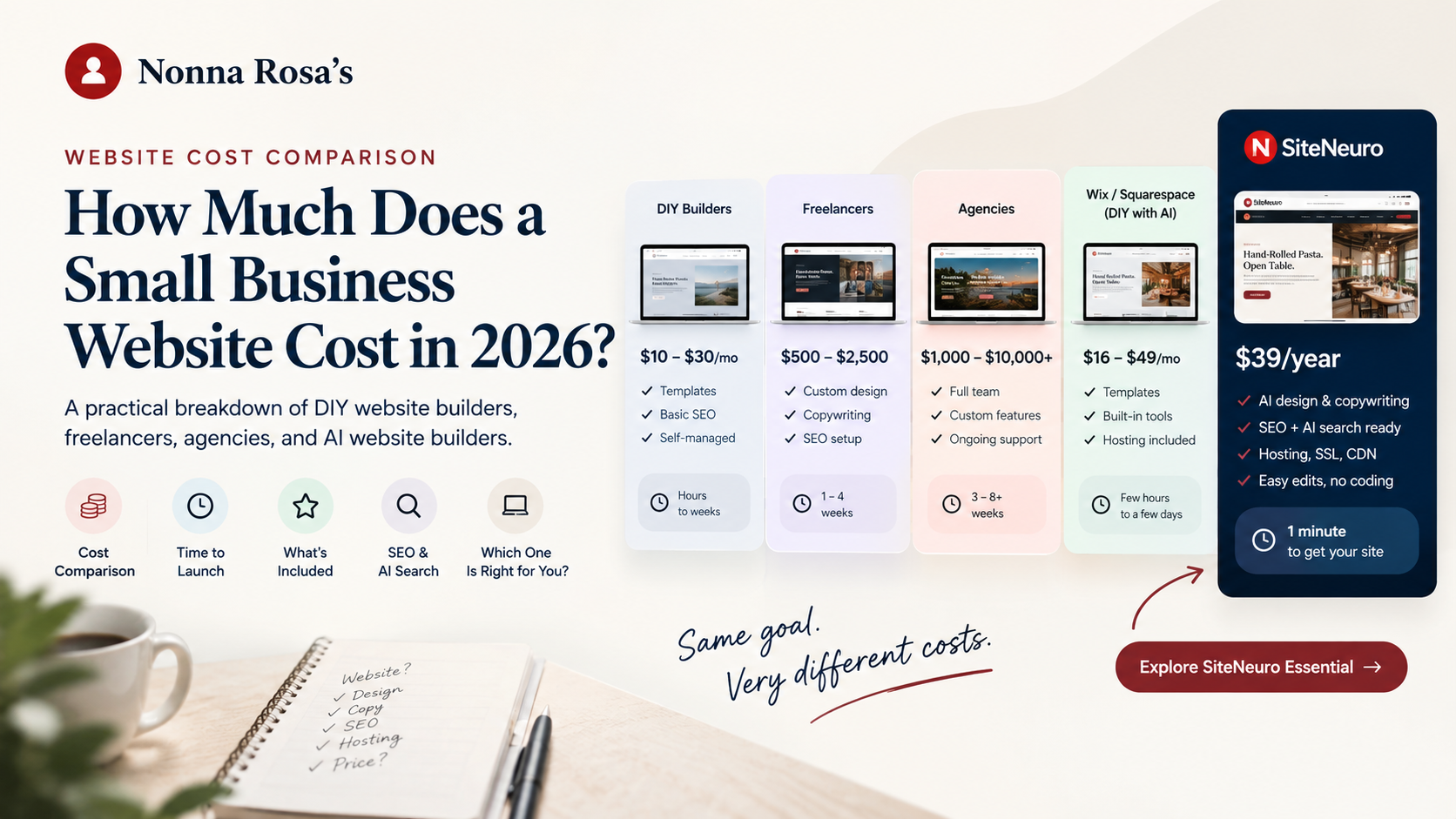
A practical breakdown of DIY website builders, freelancers, agencies, and AI website builders
For a small business, a website can cost almost nothing — or several thousand dollars.
The confusing part is that these prices are often compared as if they are buying the same thing.
They are not.
A DIY website builder, a freelancer, a web design agency and an AI website builder can all produce a website, but the amount of work, expertise, customization and ongoing support behind that website can be very different.
So what does a small business website actually cost in 2026?
And more importantly: what are you paying for?
The real cost of a small business website
The price of a website is rarely just the cost of putting pages online.
A professional small business website usually involves some combination of:
Website design and layout Copywriting Mobile optimization Domain and hosting Search engine optimization (SEO) Images and visual assets Contact forms or booking tools Technical setup Revisions Ongoing updates and maintenance
The more of this work someone else does for you, the more you generally pay.
That is why two websites that look relatively similar can have dramatically different prices — and why the build can take an afternoon or three months, depending on the same choice.
Four common ways to build a business website
1. DIY website builders: lower cash cost, higher time cost
Platforms such as Wix and Squarespace have made it much easier for a business owner to create a website without hiring a developer.
You can choose a template or use AI-assisted creation, customize the pages, connect a domain and manage the site yourself.
Wix, for example, currently includes hosting, custom-domain support and AI creation tools across its paid plans, while its platform also provides templates, drag-and-drop editing and built-in marketing tools. Pricing varies by location and billing period. ([wix.com][1])
The obvious advantage is control.
The hidden cost is your time.
Someone still needs to decide:
What should the homepage say?
Which services should be highlighted?
Which photos should be used?
How should the pages be structured?
What should the calls to action say?
How should the site be optimized for Google?
For someone who enjoys building websites, this may be perfectly reasonable.
For a busy business owner, the hours can add up quickly.
---
2. Freelancers: you are paying for expertise and time
A freelancer can take most of the work off your plate.
Curious what yours would look like?
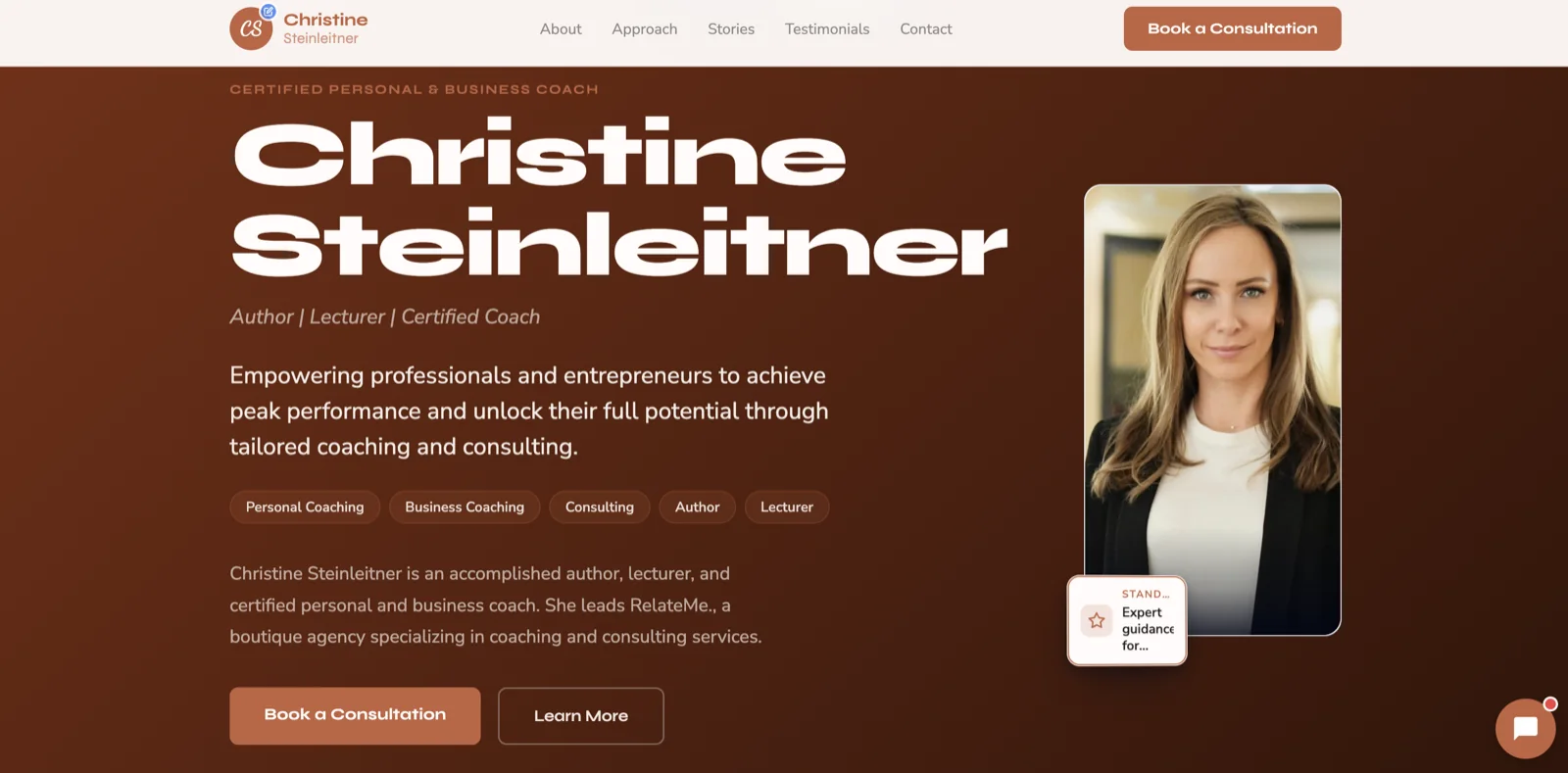
Local business or professional — Neuro builds your site from your own data in about 60 seconds.
Build my demo in 60 seconds →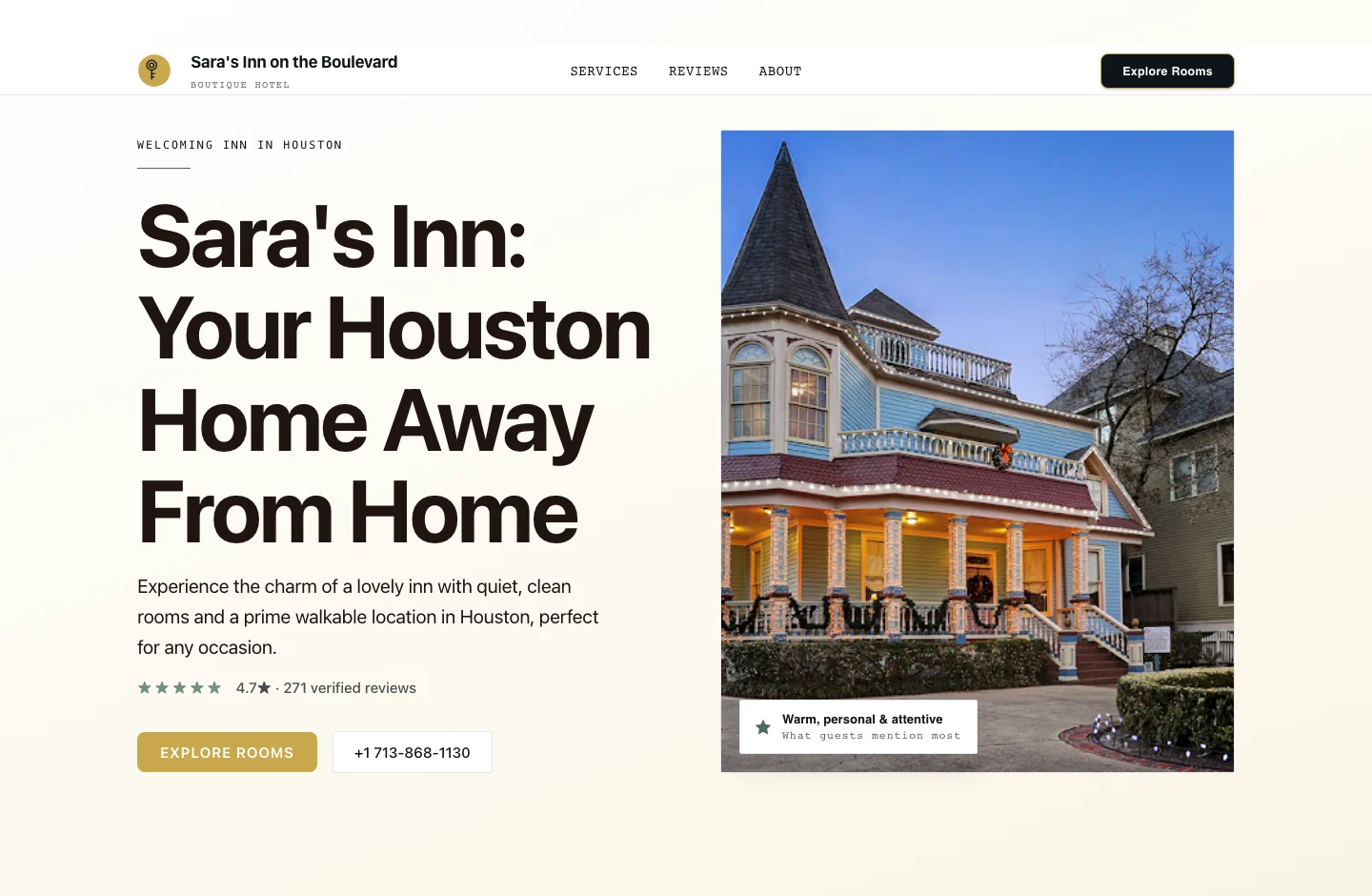

Instead of learning a website builder, you can explain your business and have someone handle the design, content, development and launch.
This can produce a much more tailored result.
But you're also buying someone's time.
A freelancer may need to spend time on discovery, research, copywriting, design, development, mobile optimization, SEO, revisions and deployment.
A simple website might require relatively little work.
A highly customized website can become a much larger project.
This is why quotes for a “small business website” can vary so widely.
The important question isn't simply:
“How much does a website cost?”
It is:
“How much work is included in that price?”
---
3. Agencies: a website becomes a larger project
With an agency, you may have several specialists involved: a designer, developer, copywriter, SEO professional, project manager and others.
That can make sense when a company needs sophisticated functionality, extensive branding, custom integrations or an ongoing digital marketing program.
It can also make sense when the website is a major part of a larger marketing strategy.
But not every local business needs a large web project.
A restaurant, dentist, consultant, contractor, salon or small professional practice may primarily need a site that clearly communicates:
Who are you?
What do you offer?
Where are you located?
Why should I trust you?
How do I contact or book you?
For those businesses, the challenge is often not complexity.
It is getting the fundamentals right.
---
4. AI website builders: changing the economics
This is where the market is changing quickly.
AI website builders can automate parts of the work that previously required manual design, copywriting and development.
Instead of starting with a blank page, you can give an AI system information about the business and have it generate the initial website.
The important distinction is that AI-generated does not automatically mean good.
The quality still depends on the information being used, the design system, the copy, the structure and the ability to produce something appropriate for the business.
The real advantage of AI is speed.
If a system can automate work that previously took hours or days, the economics of website development can change significantly.
Google's own Search guidance also emphasizes that content should be useful, reliable and created for people rather than primarily for search engines. It recommends using the language people actually search for while providing substantial value and a satisfying answer to their questions.
That distinction matters.
The goal isn't simply to generate a website quickly.
It is to generate a useful website quickly.
---
Regardless of how you build it, a professional small business website should answer the most important customer questions quickly.
Clear positioning
A visitor should understand what the business does within seconds.
Services or products
People should not have to hunt for what you actually offer.
Location
For local businesses, location and service area can be especially important.
Trust
Reviews, ratings, credentials, experience, case studies, recognizable clients or other proof can reduce uncertainty.
Strong calls to action
Call, book, request a quote, visit, order or contact — the next step should be obvious.
Mobile experience
A large portion of local searches happen on phones, so the site needs to work well on a small screen.
Search-friendly structure
Clear headings, descriptive content, crawlable pages, structured data and a sitemap can help search engines understand the business and its pages.
A website doesn't guarantee rankings.
But a poorly structured website can certainly make it harder for search engines — and increasingly AI systems — to understand what a business actually does.
---
There is no single correct price.
A useful way to think about the market is:
DIY: lower financial cost, higher owner involvement.
Website builders: recurring software cost, with more control and flexibility.
Freelancers: higher upfront cost in exchange for expertise and less hands-on work.
Agencies: higher project cost, often justified by greater customization, strategy or complexity.
AI website builders: potentially lower cost and dramatically faster production by automating parts of the design, content and development process.
The right choice depends on what the business actually needs.
A company launching a complex ecommerce operation is solving a very different problem from a local coffee shop that simply needs a professional online presence.
---
This is the problem SiteNeuro Essential is designed around.
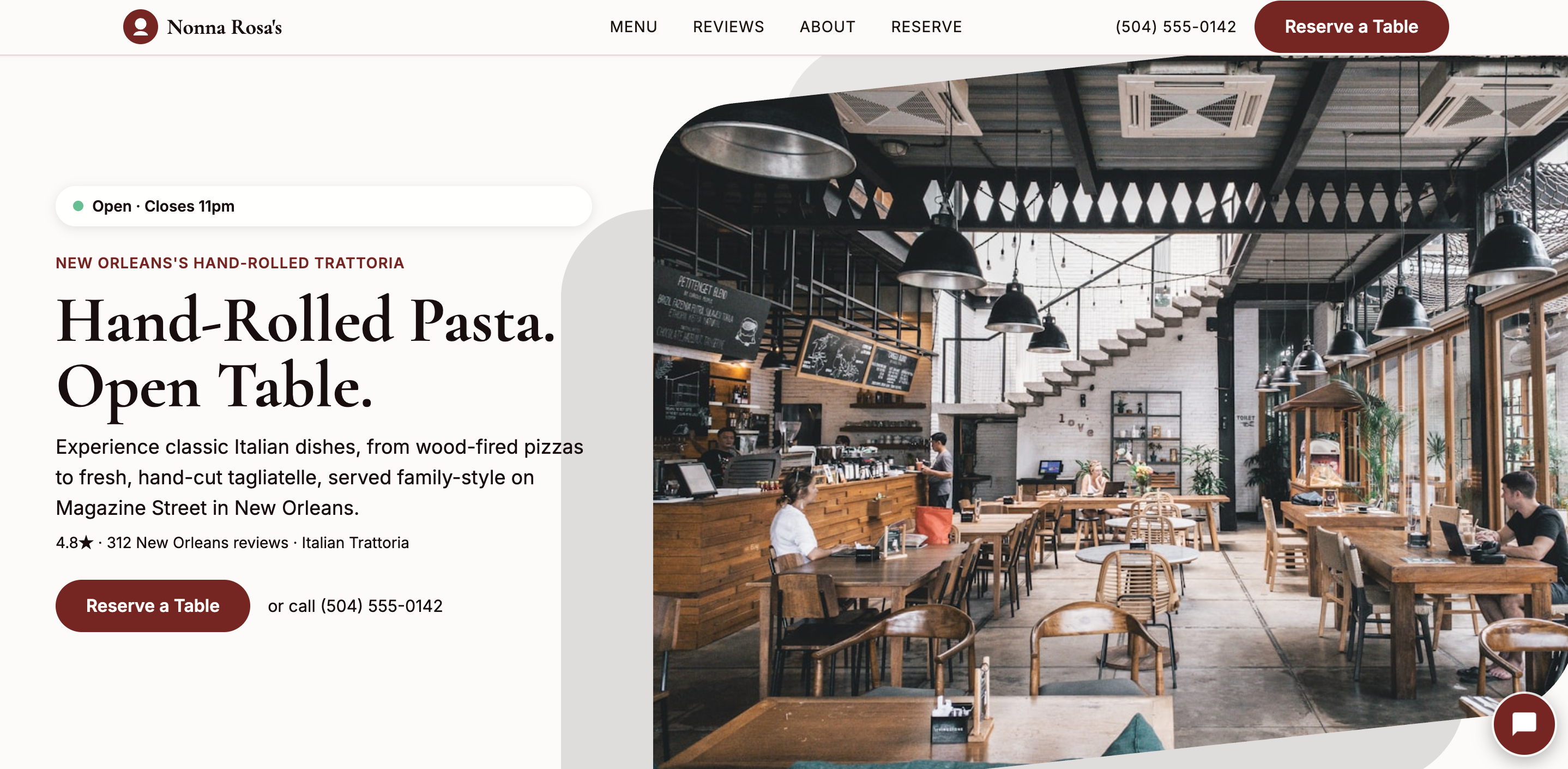
Instead of asking a business owner to build everything themselves, or turning a simple website into a multi-week custom project, Essential uses AI to build the initial site from information the business already has.
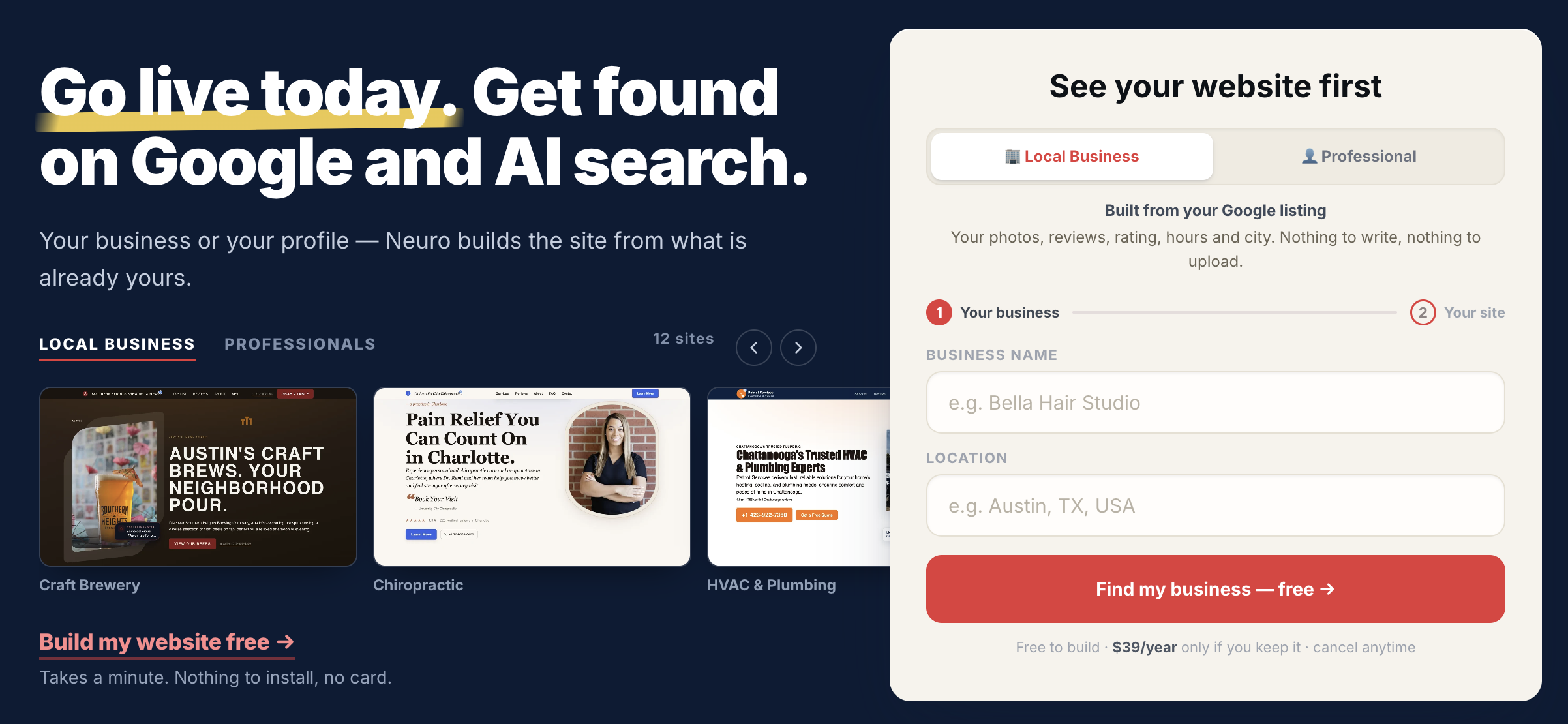
For a local business, that can start with a Google Maps listing.
For a professional, it can start with a LinkedIn profile.
Neuro uses that information to create the site's copy, design and structure, then provides hosting, SSL, CDN, basic editing and a search-friendly technical foundation.
The website can be generated in about a minute.
The Essential plan is currently $39 per year.
Essential is solving the problem many small businesses face:
How can a small business or professional get a credible, professional website online without spending weeks building it or turning it into a large development project?
---
This is becoming another consideration when choosing a website platform.
Search is no longer only about traditional blue links.
People increasingly interact with search engines and AI assistants using conversational questions.
That makes clear business information increasingly important: what you do, where you operate, what services you provide, who you serve and answers to common questions.
SiteNeuro Essential includes structured data, a sitemap and clean markup designed to make business information easier for search engines and AI systems to understand.
That does not guarantee a ranking or inclusion in an AI answer.
It simply gives the underlying website a clearer technical and semantic foundation.
That distinction is worth keeping in mind when evaluating any AI website builder.
---
The bigger question in 2026 may not be:
“How much does it cost to put a website online?”
It may be:
“How much time, expertise and ongoing work do I want to put into creating and maintaining it?”
That is where the different approaches separate.
A DIY website may save money but require significant owner involvement.
A freelancer or agency may save time but cost considerably more.
An AI website builder can reduce the amount of manual work required by automating parts of the process.
For many small businesses, that creates a new middle ground between do it yourself and hire a web development project.
And that is ultimately what has changed.
The question is no longer simply whether you can afford a website.
It is whether you need to spend weeks building one.
---
See what your website could look like
Start with your existing business information and see what SiteNeuro creates before deciding anything.
Build your free website demo with SiteNeuro Essential →
Your website can be more than a website
Essential is designed for the website itself.
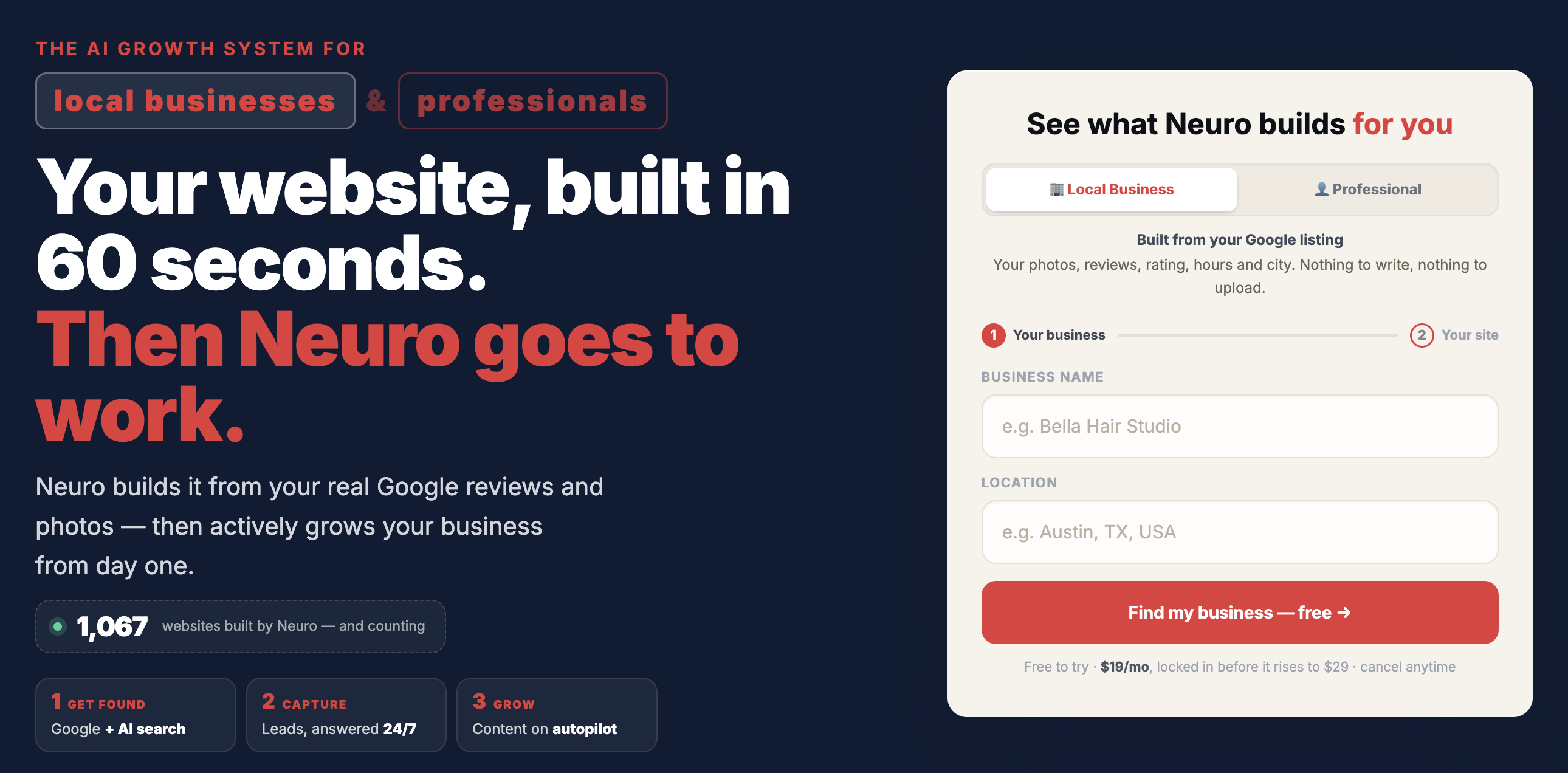
For businesses that want Neuro to go further — handling leads, answering customers, creating content and helping with ongoing growth — SiteNeuro's broader platform builds on the same website.
Explore SiteNeuro's AI growth system →
Frequently asked questions
Will I save money building my website myself instead of hiring someone?
Why do two websites that look similar end up costing so differently?
Is an AI-generated website automatically good?
What's the main difference between a DIY builder and an AI website builder?
Do I need a custom agency website or just a simple one?
Will a professional website guarantee I show up in Google or AI search results?
See what Neuro would build for you
Build your demo from your own data in about 60 seconds — then watch your AI team take it live and grow it.
Build my demo in 60 seconds → Explore the showcaseJust need the website itself — no ongoing marketing? See Essential — $39/year →