Local Market Snapshot
The Best Website for Chiropractors in Charlotte, NC — What We Found
What's the best website for chiropractors in Charlotte, NC right now?
Honestly, most of them have real room to grow.
We pulled up 20 real chiropractic practice websites serving the Charlotte area and scored each one on content, mobile-friendliness, booking paths, trust signals, and basic technical SEO. The average score: 57 out of 100.
That's not a failing grade. But it's not a website doing its job, either.
Here's what we found, and what separates a 57 from a site that's actually winning new patients.
What a 57/100 website score actually means
A website score isn't a vibe check. It's a measure of whether the site does the things that actually move a visitor toward booking an appointment.
A score in the high 50s usually means the basics are half-built. The practice is real. The site loads. But somewhere between "found us on Google" and "booked an appointment," the site is leaking people it should be keeping.
Think of it this way: a score in the 80s or 90s means a stranger with back pain can land on the page, understand what you treat, trust that you're legitimate, and book — all without picking up the phone. A score in the 50s means that same stranger has to work for it. They have to hunt for services. They have to guess whether you're any good. They have to call, because there's no other way to get an appointment started.
Every extra step is a chance for that person to give up and click the next practice on the search results page instead.
Five things a new patient looks for — and doesn't find
Design polish wasn't the point of the exercise. What we were actually checking for: the specific things that get someone in pain to trust a practice enough to book. The same handful of gaps kept turning up, over and over, across the 20 sites.
No appointment-booking system. Most of these sites were phone-only. No online scheduler, no booking widget — just a number to call during office hours. That's a real barrier. A lot of people researching a chiropractor are doing it at night, or on a lunch break, or mid-flare-up when calling and waiting on hold is the last thing they want to do.
Missing or broken heading structure. Several sites had no real H1 tag, or a weak one that didn't say what the practice actually treats. Headings aren't just decoration — they're how both Google and a skimming visitor figure out what a page is about in the first two seconds.
Missing reviews and testimonials. This one matters more for a chiropractor than almost any other local business. Patients are trusting you with their spine. Yet most of the sites we looked at had no visible reviews, no testimonial widget, nothing beyond a logo or a badge. Trust isn't optional here — it's the whole sale.
Thin content. Several sites came in under 850 words total. That's not enough to explain what conditions you treat, who your providers are, what insurance you accept, or anything else a new patient — or a search engine trying to understand your relevance — actually needs to read.
At least one site had zero mobile responsiveness — no viewport meta tag at all, meaning it renders like a shrunken desktop page on a phone. Most local searches happen on a phone. A site that isn't built for that screen loses the patient before they ever read a word.
None of these are rare, expensive problems. They're the kind of thing a practice stops noticing once the site's been sitting untouched for a couple of years.
Closing the gap: what to fix first
Flip each of those gaps around, and you get a pretty clear checklist:
Your growth partner
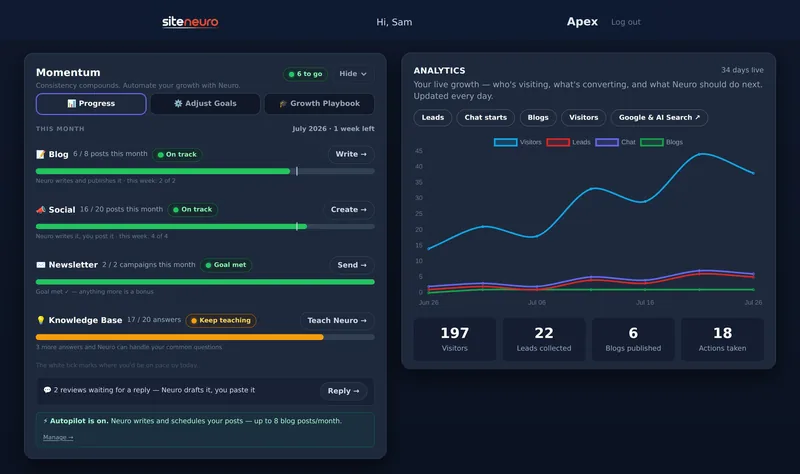
Neuro built IMPACT Chiropractic's website. Then kept it working.
- Built from your Google or LinkedIn
- Answers visitors, captures leads
- Drafts blog, social and newsletter
- Nothing goes out until you approve it

- A real booking path. An online scheduler or a simple, obvious "Book an Appointment" button on every screen — not just a phone number buried in the footer.
- Clear heading structure. A headline that names what you treat — back pain, sciatica, sports injuries — not just your practice name and a stock photo.
- Real reviews, visible on the page. Actual sentences from actual patients, not just a star rating icon.
- Enough content to actually inform someone. Services explained in real detail, provider credentials, insurance accepted — the things a new patient is quietly trying to verify before they call.
- A site that works on mobile, fast. No missing viewport tag, no pinch-to-zoom, no waiting around for a bloated homepage to load on 4G.
- Local specificity. Charlotte neighborhoods, real service areas, real hours — the details that tell both Google and a human "this is a real, local practice."
Get those six right and you're not competing with the average anymore. You're ahead of most of the market.
For the fuller playbook on turning that checklist into actual new patients — pain-specific SEO, review collection, the works — see how chiropractors get more patients online. And if any of this sounds familiar for your own business, why customers can't find you online is worth a read too — the pattern above isn't unique to chiropractors.
What this looks like when it's done right
It helps to see an example instead of just a checklist.
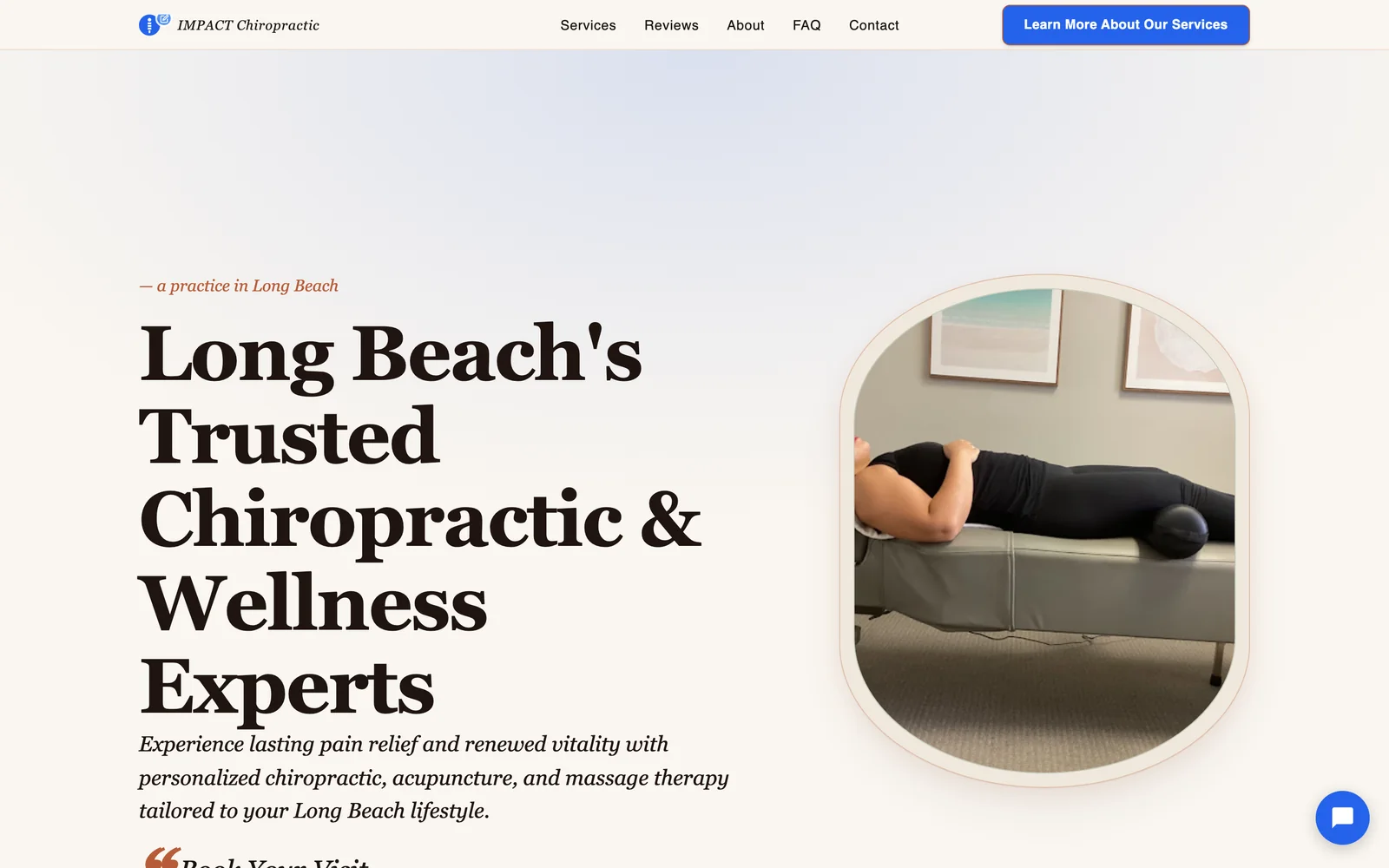
IMPACT Chiropractic is a real practice with a real website Neuro built — worth a look for what "done right" actually looks like in practice: services stated clearly, real reviews on the page, and a booking path that doesn't require a phone call. Worth noting: IMPACT Chiropractic isn't a Charlotte practice. We're showing it here as an honest example of the checklist above in action, not as a local comparison.
See the live IMPACT Chiropractic site →
The bottom line
Twenty real Charlotte chiropractic sites, averaging 57 out of 100 — with the same handful of gaps showing up again and again: no booking path, thin content, missing reviews, weak mobile support.
None of that is hard to fix. It just has to actually get fixed.
Close those gaps, and you're not average anymore. You're the practice that made booking easy — which, for a patient in pain, is usually the whole decision.
Frequently asked questions
What does a "website score" for a chiropractor actually measure?
Is 57 out of 100 a bad score for a local business website?
Why does mobile responsiveness matter so much for a chiropractic website?
Do chiropractors really need online booking, or is a phone number enough?
How much website content does a chiropractic practice actually need?
Can Neuro build a chiropractic website like the IMPACT Chiropractic example?
Ready to put this to work?
Pick how much help you want. Both start with a free look at your site.
Essential $39/year
Just the website, done properly.
- Built from your Google or LinkedIn
- Set up for Google and AI search
- Hosting and security included
- Unlimited edits, no extra cost
Apex Concierge $119/mo
Your website, plus a growth team every week.
- Your site in your inbox within 2 hours
- 30-minute setup call with a specialist
- Answers visitors, captures leads
- Drafts blog, social and newsletter
See a real chiropractic example: IMPACT Chiropractic