Growth Guides
The 2026 Guide to SEO & AI Search — 10 Ways to Get Found on Google and Cited by ChatGPT

Search changed more in the last two years than in the previous twenty.
People still Google you. But now they also ask ChatGPT, Perplexity, and Google's AI who to hire.
And here's the thing: the businesses those AIs recommend aren't lucky. They're readable.
This is the 2026 guide to both games — SEO (ranking on Google) and AI search, or AEO (being the answer AI engines cite). Ten moves, in the order that pays.
In 2026 you don't just rank for customers. You get recommended to them.
First: what's the difference between SEO and AEO?
SEO (search engine optimization) is the classic game: make your site easy for Google to find, read, and rank.
AEO (answer engine optimization) is the new one: make your business easy for AI to understand and cite — so when someone asks "who's the best plumber near me?", the answer is you.
The good news? They overlap. A clean, well-structured site feeds both.
Let's get into the 10 ways.
1. Nail your title tag and meta description
Your title tag is your headline in Google. Your meta description is the ad copy under it.
Together they decide whether someone clicks you — before they ever see your site.
Keep the title ~10–65 characters with your business and city. Keep the description 50–160 characters, and make it a reason to click.
2. One clear headline (H1)
Every page should have exactly one main headline.
One H1 tells Google — and AI — exactly what the page is about. Three competing headlines tell them nothing.
3. Be mobile-first
Most local searches happen on a phone.
Google ranks mobile-friendly sites higher, full stop. If your site squints on a phone screen, you're invisible where it matters most.
4. Give search engines a map — and permission
Two boring files do heavy lifting: a sitemap (the map of every page to index) and robots.txt (permission to index them).
Miss either and Google crawls you slowly — or not at all.
5. Add structured data for rich results
Structured data (schema markup) is a label on your site that machines read directly.
It's how Google shows your stars, hours, and prices right in the results — and it's the foundation AI engines build answers from.
Here's the thing: most small-business sites still don't have it. That's your edge.
6. One canonical URL + share-ready previews
A canonical URL stops Google splitting your ranking across duplicate versions of your page.
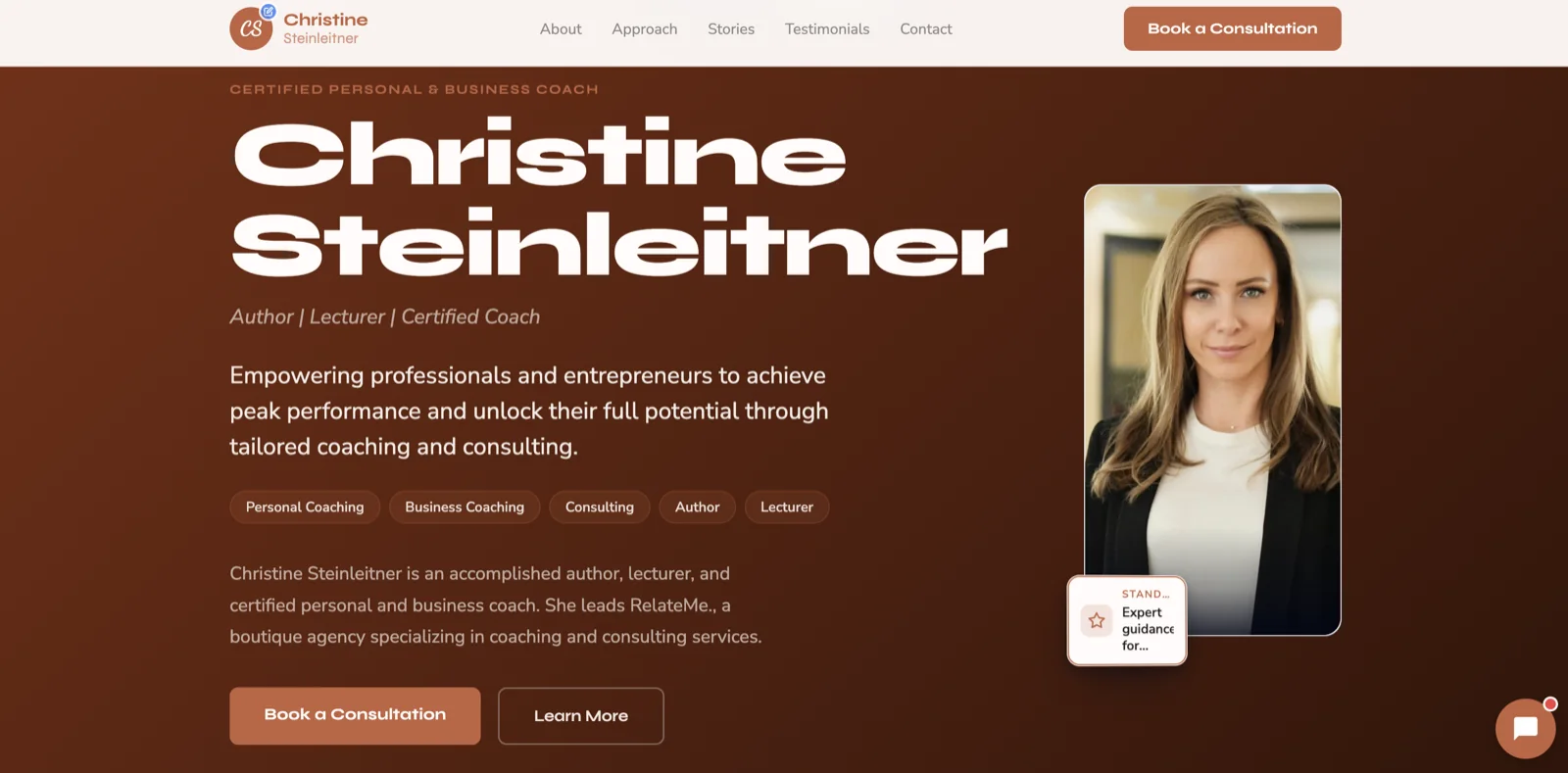
Curious what yours would look like?
Local business or professional — Neuro builds your site from your own data in about 60 seconds.
Build my demo in 60 seconds →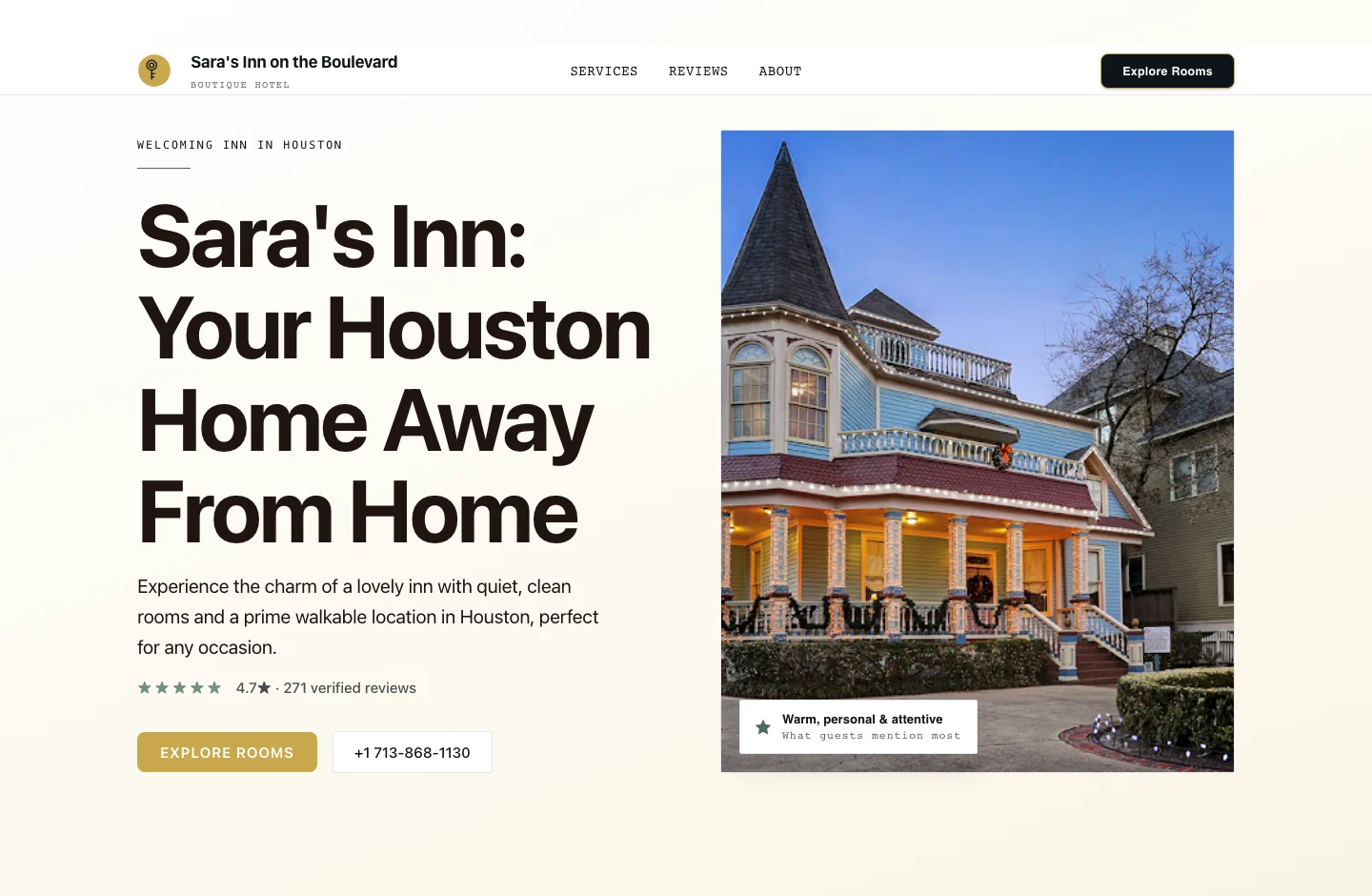

Open Graph tags make your link show a rich image and title when it's shared in texts, socials, and chats.
Small tags. Outsized trust.
7. Publish fresh content that targets real searches
Google rewards active businesses. So do customers.
But don't write randomly — write for searches people actually make:
- "How much does [your service] cost in [your city]?"
- "Best [your service] in [your city]"
- "[Problem you solve] — what to do"
One useful post a month beats ten posts of filler. Every post is another door into your site.
8. Build links to your site
Links from other sites are still one of Google's strongest trust signals.
The quick wins — no agency required:
- Add your website to your Google Business Profile.
- List your business on Yelp, Bing Places, and local directories.
- Ask suppliers, partners, and happy customers to link to you.
9. Make yourself AI-answerable
When someone asks an AI "how do I reach them?" or "what do they charge?", the AI needs facts it can quote.
Give it some:
- A clickable phone number and address on your site.
- A real FAQ section — clear questions, clear answers. AI answers are built from exactly this.
If your site can't answer questions, AI will quote someone whose site can.
10. Become the entity AI engines cite
This is the frontier — and almost none of your competitors are here yet.
Entity data (Organization, LocalBusiness, or Person schema) tells ChatGPT, Perplexity, and Google AI exactly who you are: your name, your ratings, your services, your area.
Businesses with clean entity data get recommended. Businesses without it get skipped.
The next customer may never see a list of ten blue links. They'll see one answer. Be it.
How SiteNeuro handles this for you
Every SiteNeuro site ships with the fundamentals baked in — clean titles, one H1, mobile-first, sitemap, HTTPS, indexing — and your owner dashboard shows a live SEO Health score across all three levels:
- Foundations — Get Found: Google and AI can find, read, and answer questions about you.
- Neural — Get Growing: rich results, share previews, fresh keyword-targeted posts Neuro writes for you.
- Apex — Get Unstoppable: full AI-search optimization — the entity data and citations that make you the answer.
You run your business. Neuro runs this list.
FAQ
What is AEO in simple terms?
AEO (answer engine optimization) means structuring your business information so AI tools like ChatGPT, Perplexity, and Google AI can understand it and recommend you when people ask for what you do.
Do I still need SEO if AI search is taking over?
Yes. AI engines learn from the same web Google crawls — good SEO is the foundation AEO is built on. You need both, and they reinforce each other.
How long does SEO take to work?
Foundational fixes (titles, structured data, indexing) can show movement in weeks. Content and links compound over months. AI citations can appear as soon as your entity data is readable.
What's the single highest-impact thing I can do today?
Put your website on your Google Business Profile and make sure your site has structured data. Those two feed both Google rankings and AI answers.
See what Neuro would build for you
Build your demo from your own data in about 60 seconds — then watch your AI team take it live and grow it.
Build my demo in 60 seconds → Explore the showcase