Comparisons
How Long Does It Take to Build a Small Business Website in 2026?
The website can be fast. Getting the right website can take much longer.
You need a website for your small business.
You search for a few options.
Maybe Wix or Squarespace. Maybe a freelancer. Maybe a web design agency. Maybe one of the newer AI website builders.
Then you see the same promise everywhere:
“Build your website in minutes.”
But there is a catch.
Creating a website can be fast.
Creating a website that actually looks professional, explains what you do, builds trust, works on mobile, gives customers a clear next step, and has a solid foundation for Google and AI search can take much longer.
So, how long does it take to build a small business website in 2026?
The honest answer is:
Anywhere from about a minute to several weeks.
The difference comes down to who is doing the work, how much customization you need, and how much of the thinking has already been done for you.
---
The 4 ways to build a small business website
There are four common approaches today:
- Build it yourself
- Hire a freelancer
- Hire a web design agency
- Use an AI website builder
They can all produce a website.
They are not remotely the same process.
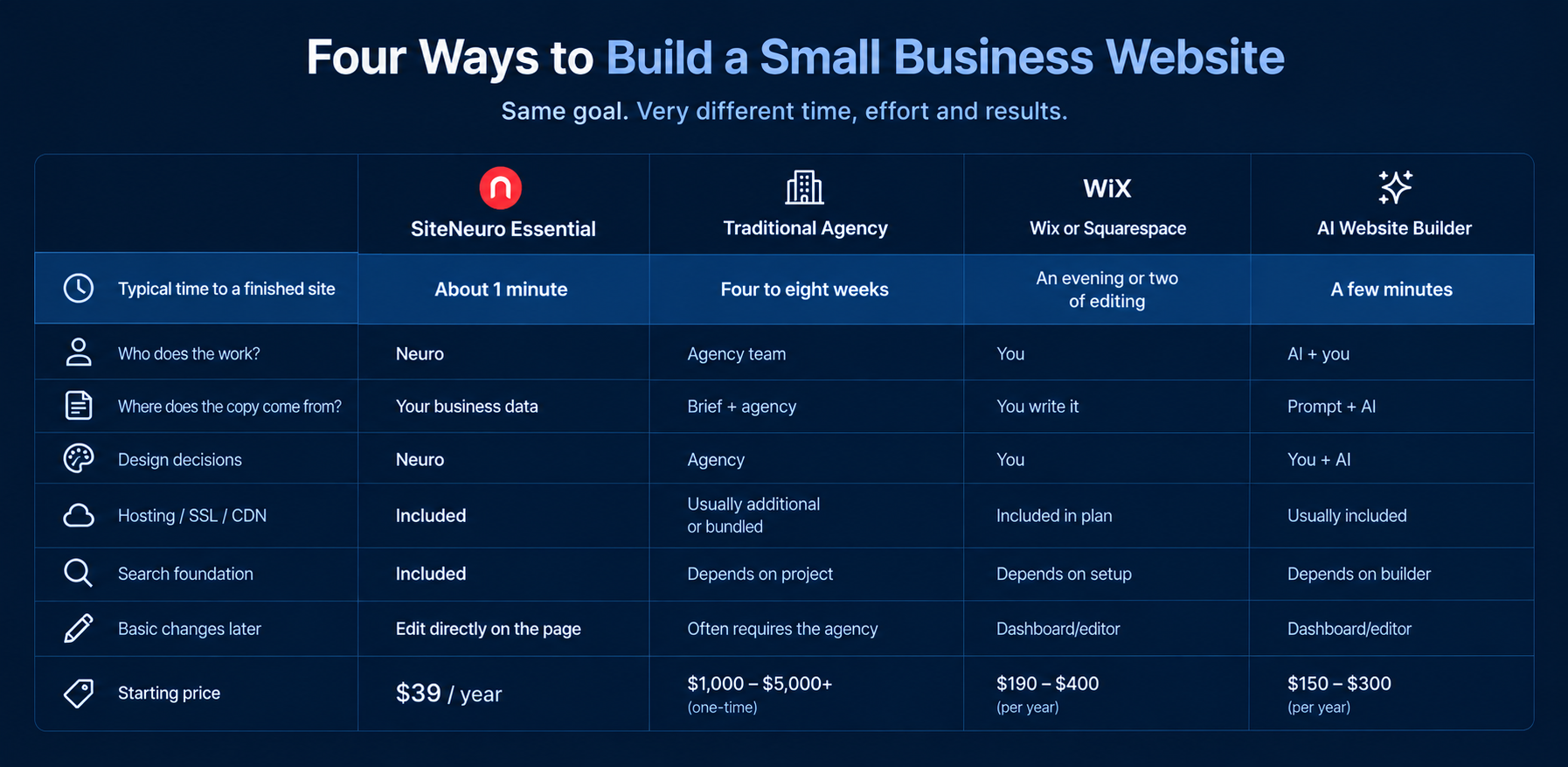
Here's how the timelines typically compare
| Traditional Agency | Wix or Squarespace | AI Website Builder | SiteNeuro Essential | |
|---|---|---|---|---|
| Typical time to a finished site | 4–8 weeks | An evening or two | A few minutes | About 1 minute |
| Who does the work? | Agency team | You | AI + you | Neuro |
| Where does the copy come from? | Brief + agency | You write it | Prompt + AI | Your business data |
| Design decisions | Agency | You | AI + you | Neuro |
| Hosting / SSL / CDN | Usually additional or bundled | Included in plan | Usually included | Included |
| Search foundation | Depends on project | Depends on setup | Depends on builder | Included |
| Basic changes later | Often requires the agency | Dashboard/editor | Dashboard/editor | Edit directly on the page |
These are practical comparison ranges rather than universal guarantees. Project scope, revisions, content readiness and customization can change the timeline considerably.
And there is an important point hiding inside that table:
The amount of time you spend can be very different from the amount of time the software is running.
That's where most website comparisons miss the point.
---
A traditional agency website can be excellent.
It can also take four to eight weeks — or considerably longer for a larger project.
Why?
Because the agency is not simply “making a website.”
There may be:
discovery calls business research sitemap planning copywriting design concepts revisions development mobile optimization SEO technical setup approvals launch
And every step can introduce another round of communication.
That's not necessarily a bad thing.
A company needing custom functionality, advanced ecommerce, integrations, complex branding or a larger digital marketing strategy may need that process.
But a local restaurant, dentist, salon, contractor, gym, accountant or consultant may not need a six-week website project.
They may simply need a site that answers five questions:
Who are you?
What do you offer?
Where are you?
Why should I trust you?
What should I do next?
---
Wix and Squarespace have made website creation dramatically easier.
Both provide templates, visual editing, hosting and AI-assisted tools, so you don't need to start with a developer.
The website editor may be available immediately.
That doesn't mean your website is finished.
You still have to decide:
What should the homepage say?
Which services belong above the fold?
Which photos should you use?
What should the headline be?
How should the navigation work?
What should the call-to-action say?
How should the website be structured for search?
Does it actually look good on a phone?
That's the hidden cost of a DIY website:
You save money by spending your own time.
For someone who enjoys designing websites, that can be perfectly reasonable.
For a business owner who already works 50 hours a week?
Those “few hours” can become an entire weekend.
Then another weekend.
Then another round of changes because the homepage still doesn't feel right.
---
A freelancer moves much of the work off your plate.
You explain your business.
They research it.
They write.
They design.
They develop.
They send you a version.
You request changes.
They make changes.
You approve it.
Then it goes live.
The advantage is obvious:
You don't have to become a web designer.
But you're still depending on another person's availability and workflow.
A simple small business website might move quickly.
A custom website with multiple pages, original copy, photography, SEO work and several revision rounds can take considerably longer.
You're paying for expertise, but you're also waiting for someone's time.
---
This is where website development in 2026 gets interesting.
AI can now automate parts of the work that previously required a human to do manually:
Research. Copy. Structure. Design. Images. Basic SEO setup.
Durable, for example, currently advertises that its free product can get a business online in 30 seconds.
SiteNeuro Essential takes the same idea further by starting with information a business already has.
For a local business, that can be a Google Maps listing.
For a professional, it can be a LinkedIn profile.
Neuro uses that information to build the site's copy, structure and design, rather than asking the owner to start with a blank page. The finished site is generated in about a minute.
But here's the important distinction:
Fast doesn't automatically mean good.
An AI can create a website in seconds.
Curious what yours would look like?
Local business or professional — Neuro builds your site from your own data in about 60 seconds.
Build my demo in 60 seconds →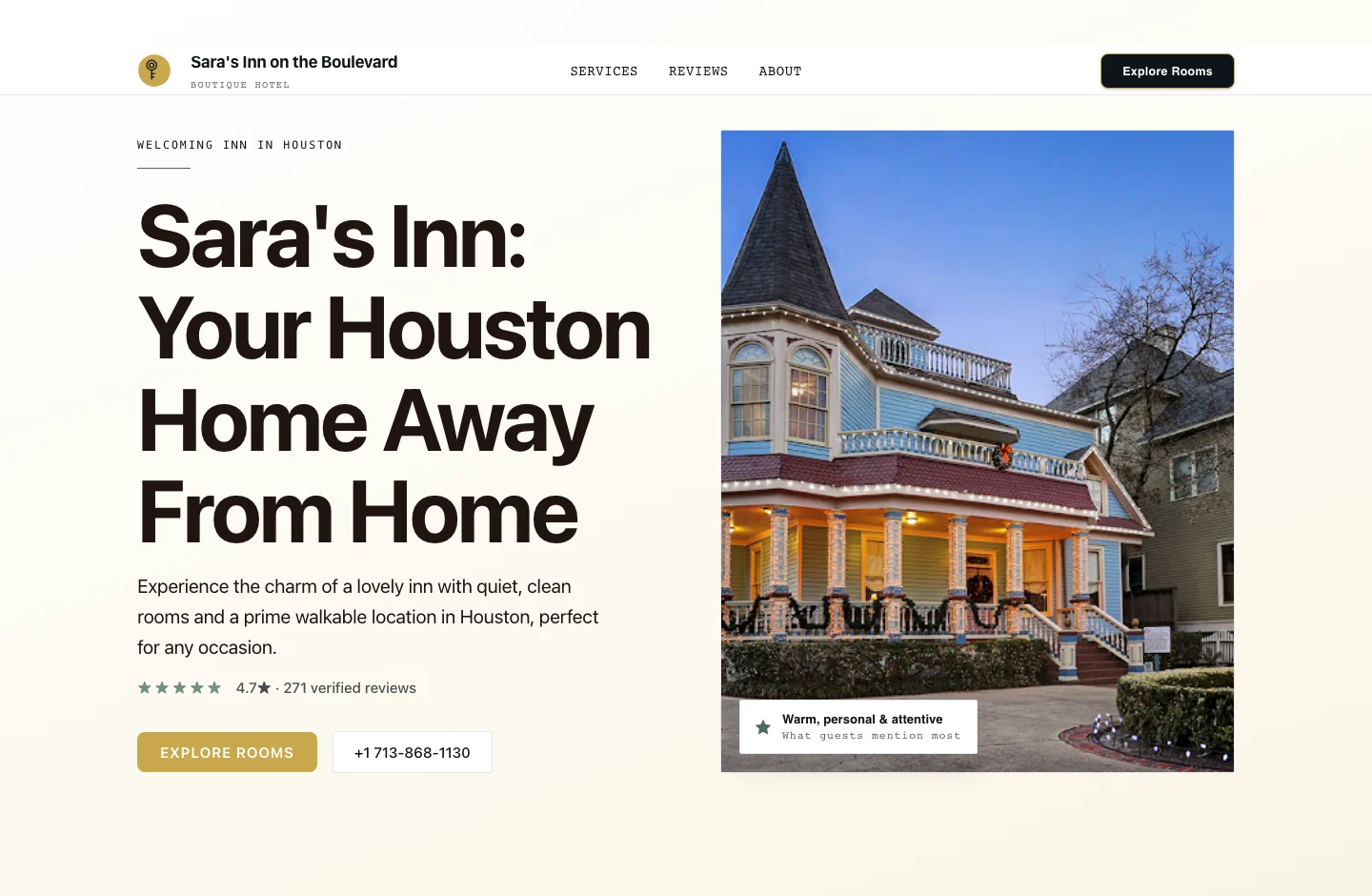
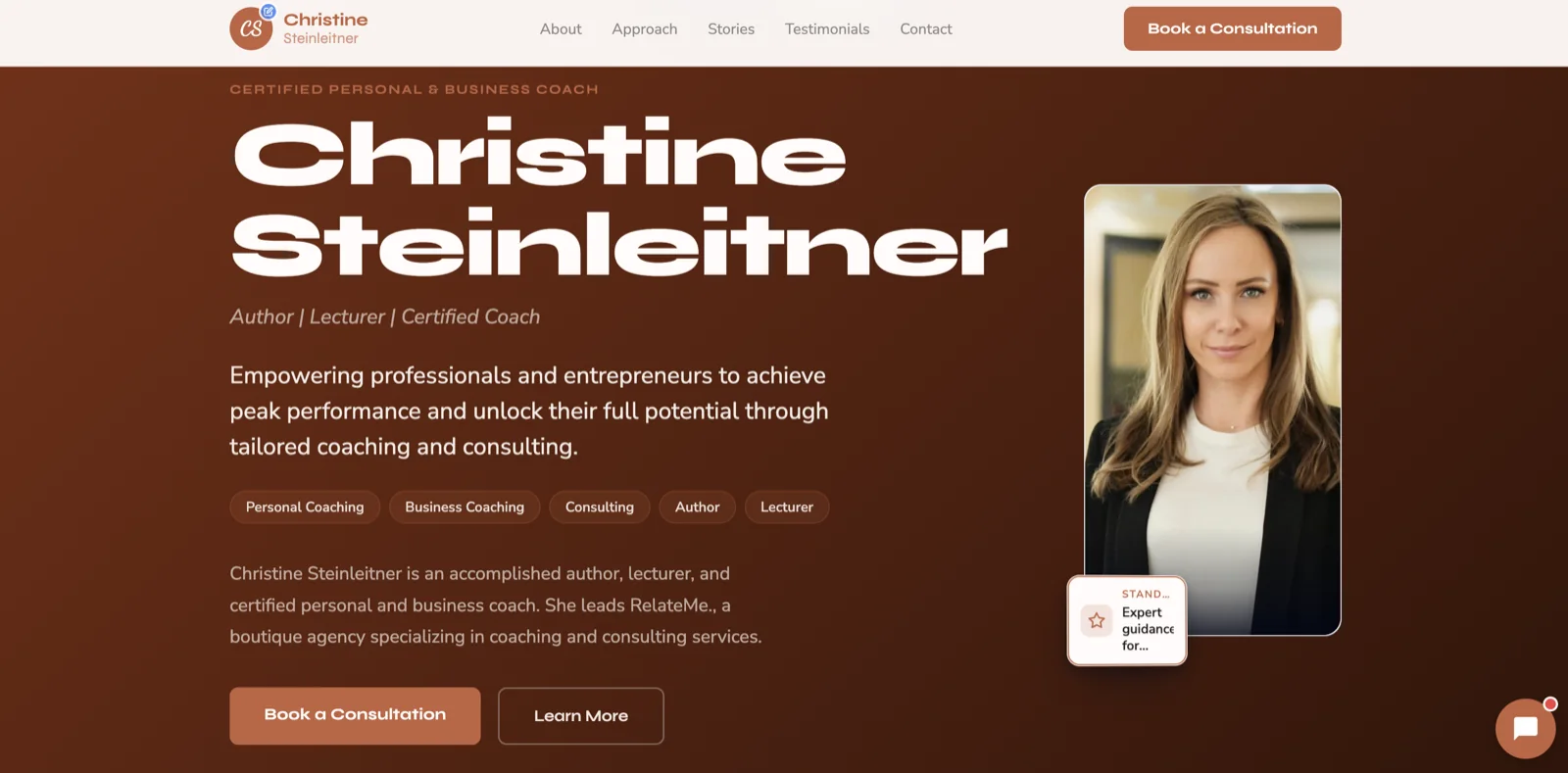

It can also create a generic website in seconds.
The quality still depends on the information being used, the design system, the copy, the structure and whether the result actually fits the business.
That's why the goal should not be:
“How quickly can AI make a website?”
The better question is:
“How quickly can AI make a useful website for this business?”
---
This is the part most website timelines leave out.
The actual website code is rarely the biggest problem anymore.
The real work is making good decisions.
1. Understanding the business
What do you sell?
Who is it for?
What makes you different?
Where do you operate?
What do customers actually care about?
2. Writing the copy
Your website needs more than:
“Welcome to our business.”
Customers want answers.
They want to know what you do, whether you're credible, where you are and how to get started.
3. Choosing the right design
A template can give you a starting point.
But someone still has to decide:
What belongs on the page?
What's important enough to emphasize?
Which image tells the story best?
What should a visitor notice first?
4. Making the site useful on mobile
Your desktop version can look fantastic.
Then someone opens it on a phone and discovers that the buttons are tiny, the headline wraps awkwardly and the contact information is buried.
A small business website needs to work where customers actually use it.
5. Making it understandable to search engines
A website isn't automatically an SEO strategy.
Google recommends clear, useful content, descriptive titles and URLs, logical site organization and crawlable links to help search engines understand your content.
The same principle applies to AI search:
Clear business information is useful because both humans and machines need to understand what the business actually does.
And there is an important caveat:
No website can guarantee Google rankings or AI citations.
A good technical foundation simply gives search systems a clearer website to understand.
---
It is:
How much work are you willing to do yourself?
This is the most useful way to think about website-building time. It runs alongside the other question every owner asks — see how much a small business website actually costs.
DIY
Lower cash cost.
Higher owner involvement.
Freelancer
Less work for you.
More dependence on another person's time.
Agency
Highest level of customization and expertise.
Usually the longest process and highest project cost.
AI website builder
Much faster production.
But the quality depends heavily on what the AI knows and how well the system turns that information into decisions.
This creates an interesting new middle ground:
You don't necessarily have to choose between spending your weekend building a website and hiring a multi-week web project.
---
If you already have a business, you probably already have most of the information a website needs.
Your business name.
Your location.
Your services.
Your photos.
Your reviews.
Your rating.
Your story.
Why start from a blank page?
SiteNeuro Essential takes your existing business information and turns it into a professional website.
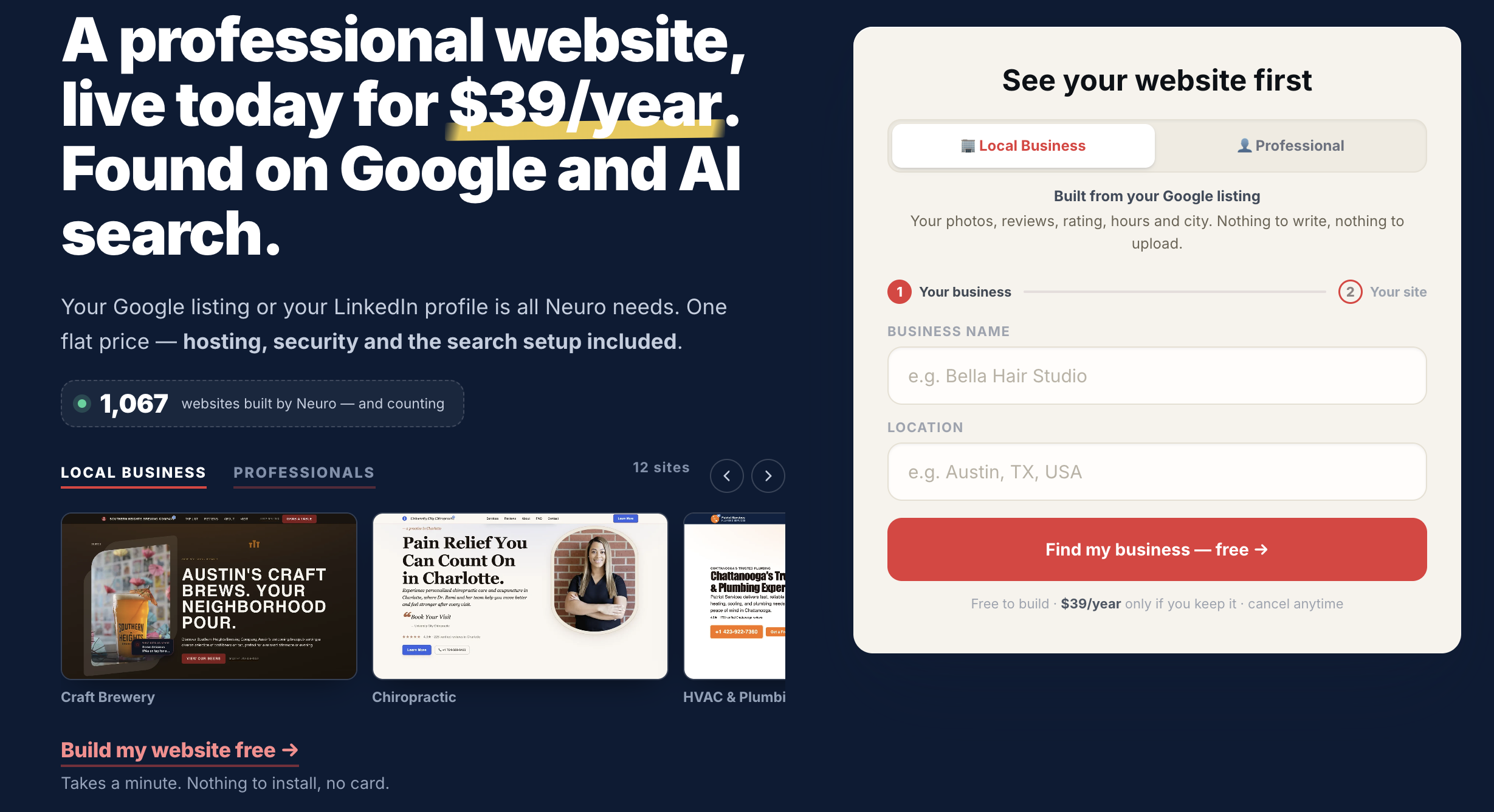
About 1 minute to generate.
$39/year.
Hosting, SSL, CDN and the basic search foundation are included. You can see the website before deciding whether to use it.
---
Speed is useful.
But don't confuse fast with finished.
Before publishing, make sure your website has these basics:
* Clear headline: Can someone understand what you do in seconds?
* Services: Are your main products or services obvious?
* Location: Can local customers tell where you operate?
* Trust: Are reviews, credentials, experience or other proof visible?
* Strong CTA: Is it obvious how to call, book, order or request a quote?
* Mobile experience: Does it work properly on a phone?
* Search foundation: Are pages, headings, links and business information structured clearly?
* Accurate information: Are your phone number, hours, address, prices and links correct?
Google's guidance emphasizes that useful, well-organized, people-first content matters more than simply producing pages for search engines. ([Google for Developers][5])
That's the standard worth aiming for.
---
Here's the simplest answer:
A basic DIY website
Can be created in hours or days, but much of the work is still yours.
A freelancer website
Can take days to several weeks, depending on the freelancer and scope.
An agency website
Often takes several weeks, especially with research, custom design and revisions.
An AI website builder
Can generate the initial website in minutes.
SiteNeuro Essential
Neuro can generate the site in about one minute, using information the business already has.
But generating the website is only the beginning.
You still need to ask:
Does it represent the business properly?
Does it answer customer questions?
Does it build trust?
Can people contact or book easily?
Can Google understand it?
That's what separates a website that was created quickly from a website that is actually ready to represent your business.
---
For decades, building a small business website meant choosing between two uncomfortable options:
Learn to do it yourself.
Or:
Hire someone to do it for you.
AI is changing that.
The technology can now handle more of the repetitive work — giving small businesses another option between a DIY weekend project and a traditional agency engagement.
And that changes the question.
It's no longer simply:
“How long does it take to build a website?”
It's:
“How much of the work should I still have to do?”
For some businesses, a custom agency project is exactly right.
For others, a DIY builder is perfectly fine.
But when all you need is a professional small business website, there's little reason to spend weeks creating one.
The website should get out of the way and let you get back to running the business.
See what SiteNeuro builds from your business information — free →
Frequently asked questions
Will my website actually be finished if I use a DIY builder like Wix or Squarespace?
How much longer does hiring a freelancer take compared to building it myself?
What's the real difference between a website that's created quickly and one that's actually ready to use?
Can an AI website builder actually produce a professional website, or just a generic one?
Do I need to choose between spending my weekend on a DIY website or hiring an expensive multi-week agency project?
Will a website with a solid technical foundation actually improve my Google rankings?
See what Neuro would build for you
Build your demo from your own data in about 60 seconds — then watch your AI team take it live and grow it.
Build my demo in 60 seconds → Explore the showcaseJust need the website itself — no ongoing marketing? See Essential — $39/year →