Comparisons
How AI Website Builders Actually Work: Your Prompt, a Questionnaire, or Your Real Business
How do AI website builders work? Every AI website builder turns an input into a website.
Wix starts from a description you type, Durable from three answers about your business, and SiteNeuro from your real Google listing: your reviews, photos, city and niche.
The input decides how much of the site is about you, and how much work is left for you afterwards.
Every website builder says "AI" now.
So the label tells you almost nothing.
Here's a better question to ask before you sign up for any of them:
What does the AI actually build your site from?
Because an AI can only write about what it's given.
Give it a sentence, and you get a site about a sentence.
Give it your real business, and you get a site about your real business.
Here's how the three main approaches work, step by step. The Wix and Durable details below come from their own websites, checked in October 2026.
The three steps every AI builder follows
Under the hood, every AI website builder does the same three things:
- Collect an input about your business.
- Generate the pages, copy and images from that input.
- Hand you the result, plus whatever work is left.
Steps 2 and 3 look similar from tool to tool.
Step 1 is where they really differ.
Same job, three different starting points
Every AI builder collects an input, generates a site, then hands you the rest.
Wix
Durable
SiteNeuro
The input decides how much of the site is about you, and how much work is left for you.
Approach 1: you describe it (Wix)
Wix's AI website builder starts with a conversation.
You describe what you want in plain words. Something like "a cozy Italian restaurant in New Orleans with a family feel."
From that, the AI drafts a full site structure: pages, layout, copy and visuals.
Then it's your turn.
You refine the draft by chatting with Wix's AI assistant, Aria, or in the drag-and-drop editor, where you adjust fonts, colors and styling. Wix says every change is auto-responsive, so the mobile layout follows along.
The strength: freedom. If you enjoy designing, there's very little you can't change.
The catch: the AI only knows what you typed.
Your rating. Your best review. The dish people cross town for.
If you don't write them in, they're not on the page.
Approach 2: you answer questions (Durable)
Durable starts with a short questionnaire.
You answer three questions: your industry, your business name and your goals.
The AI then generates the copy, the images and the design.
The strength: speed, with almost no effort.
And for a brand-new business with no reviews or photos yet, a few answers is all there is to give. Durable is a natural fit there.
The catch: three answers describe your category, not your business.
Two bakeries in the same city give almost the same answers. So they get almost the same words.
And the images are AI-generated, not photos of your place.
Approach 3: it reads your real business (SiteNeuro)
SiteNeuro starts from what already exists about your business online.
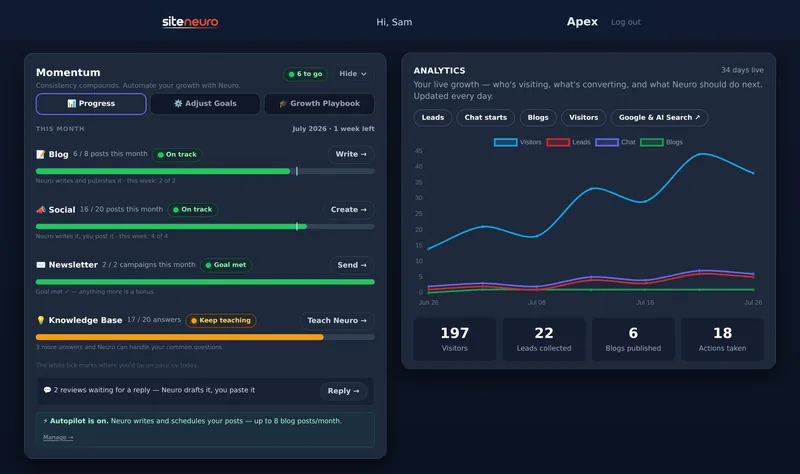
Your growth partner
A website is the start. Neuro keeps it working.
- Built from your Google or LinkedIn
- Answers visitors, captures leads
- Drafts blog, social and newsletter
- Nothing goes out until you approve it
Rated Excellent on TrustpilotGlobal review platform · 300M+ reviews
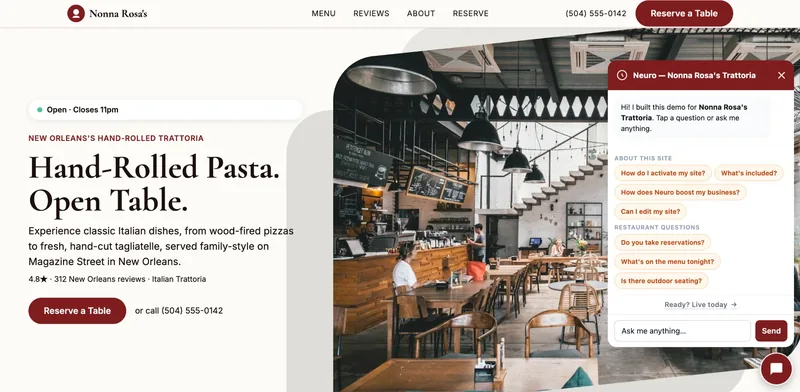
For a local business, that's your Google listing:
- Your Google reviews, with your rating and review count
- Your real photos
- Your city and your niche
- Your customers' own words, the phrases that keep coming up in reviews
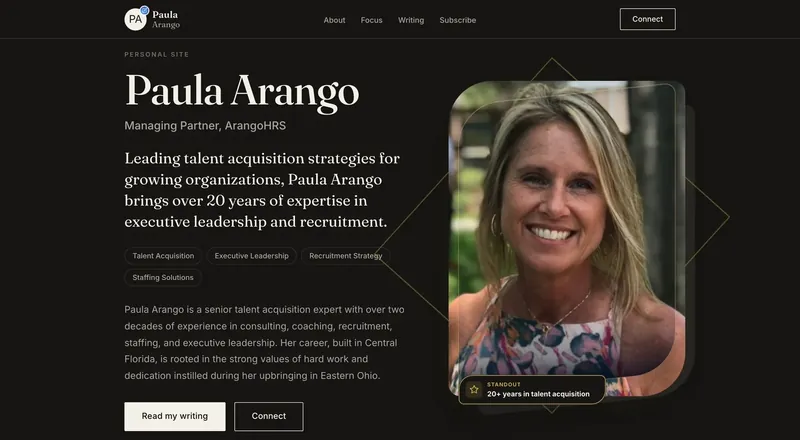
For consultants and other professionals, it can start from a LinkedIn profile instead.
There's no prompt to write and no editor to learn. The site is ready to use in about a minute.
The strength: the copy is about you, because it's built from evidence about you.
The catch: it needs something to read.
A business with no Google listing, no reviews and no photos gives it very little to work with. And if you want to design every detail yourself, Wix gives you more control.
Side by side: what each one builds from
| Wix | Durable | SiteNeuro | |
|---|---|---|---|
| What you give it | A description you type | 3 answers: industry, business name, goals | Your Google listing (or LinkedIn profile) |
| Who supplies the facts | You, in your own words | You, briefly | Your listing and your customers' reviews |
| Where the images come from | Visuals the AI drafts, plus anything you upload | AI-generated | Your real photos |
| What you do next | Refine it in the editor or with Aria | Review it and edit | Review it; nothing to design |
| Best for | People who enjoy designing | Brand-new businesses with nothing online yet | Businesses with reviews and photos already on Google |
| Weaker at | Knowing your business without being told | Setting you apart from competitors | Full design freedom, and businesses with no listing yet |
Want prices too? They're in the SiteNeuro vs Durable comparison and the SiteNeuro vs Squarespace comparison.
The one-sentence test
Here's an easy way to see what the input changes.
Take one restaurant. Write one sentence about it, two ways.
The one-sentence test
One restaurant, one sentence, written from two different inputs.
Built from a category
"We are passionate about quality service."
Input: "Italian restaurant"
Built from the real business
"Rated 4.8★ by 312 New Orleans diners, who keep coming back for the pasta hand-rolled every morning."
Input: rating, review count, city and what reviews keep mentioning
Sample business: Nonna Rosa's Trattoria, New Orleans. The red words are facts only that business can claim.
The first sentence could sit on any restaurant's website in the world.
The second could only be about one.
That's what the input changes. Not the design. The words.
And the words are what persuade a visitor to call, book or walk in.
A generic sentence could be about anyone. A specific one could only be about you.
What happens after launch?
Here's the part most comparisons skip.
A website isn't finished when it goes live. That's when visitors start arriving with questions.
All three builders now offer some help after launch:
- Wix has an AI front desk agent that handles messages from site visitors, with replies you can review.
- Durable includes AI-powered forms and chatbots, plus tools for blogging.
- SiteNeuro includes Neuro, which answers visitors around the clock, captures leads and drafts blog posts that help the business get found on Google and in AI search.
So the real question isn't whether there's an assistant.
It's what the assistant knows.
An assistant that starts from your real reviews and details can answer like someone who knows your business. One that starts from a description only knows what you remembered to type.
That's also why your details matter beyond the website. AI search tools like ChatGPT and Google's AI answers lean on the same facts. There's more on that in AEO vs SEO.
Which approach fits you?
Pick by what you already have, and by how you like to work:
- You enjoy designing and want full control → a describe-and-edit builder like Wix.
- You're brand new, with no reviews or photos yet → a questionnaire builder like Durable gets you online fast.
- You already have a Google listing with reviews and photos → a builder that reads your real business, like SiteNeuro, puts that proof to work from day one.
There's no wrong tool here.
There's only a wrong fit.
And if you're still deciding whether a website is worth it next to your Google profile, start with Google Business Profile vs website.
How do AI website builders work?
They collect an input about your business, generate pages, copy and images from it, then hand you the result to review or edit. The input is what differs most: a typed description, a short questionnaire, or existing data such as a Google listing.
Are AI website builders good for small businesses?
For most small businesses, yes. They cut a build from weeks to minutes and cost far less than hiring a freelancer. The quality of the result depends mostly on how much real information about the business the AI gets.
Do I still need to edit a site an AI builder made?
Usually a little. Check every fact, especially hours, prices and services, because an AI can't know what it isn't told. Builders that start from a description expect more editing; builders that start from real data mostly need a review.
Can an AI website builder use my Google reviews?
Some can. SiteNeuro builds the site from your Google listing, including your reviews, rating and photos, and keeps a live review feed synced daily. With other builders you usually add reviews yourself or through an app.
What if my business has no reviews yet?
Start with a builder that works from a description or a questionnaire, and ask happy customers for Google reviews as you go. Once you have them, real reviews are the most persuasive thing a website can show.
Ready to put this to work?
Pick how much help you want. Both start with a free look at your site.
Apex Concierge $119/mo
Your website, plus a growth team every week.
- Your site in your inbox within 2 hours
- 30-minute setup call with a specialist
- Answers visitors, captures leads
- Drafts blog, social and newsletter
Essential $39/year
Just the website, done properly.
- Built from your Google or LinkedIn
- Set up for Google and AI search
- Hosting and security included
- Unlimited edits, no extra cost
Rated Excellent on TrustpilotGlobal review platform · 300M+ reviews