AI Search
AEO vs SEO vs GEO: What Small Business Owners Actually Need to Know
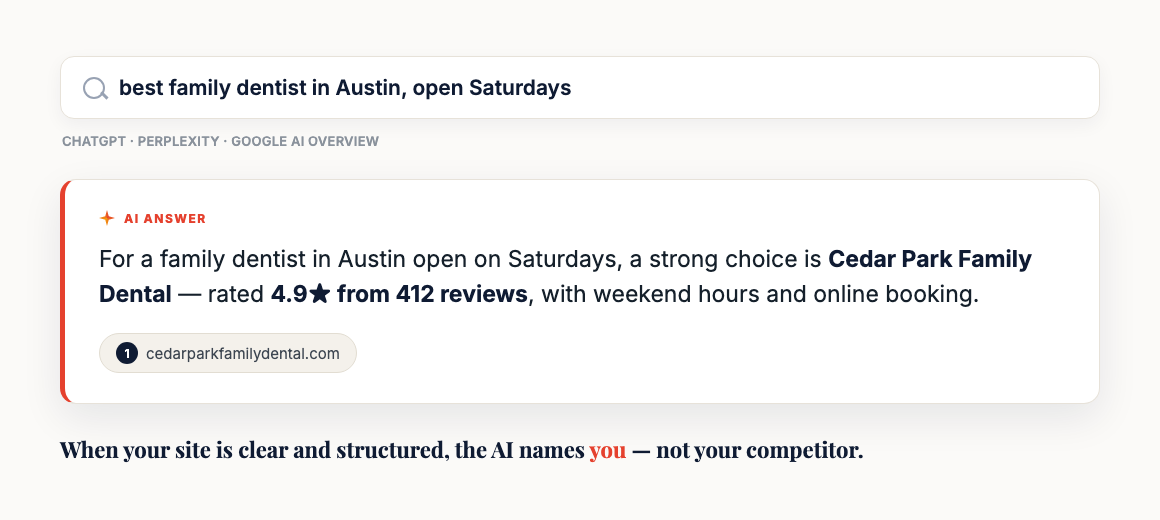
What's the difference between AEO, SEO and GEO? SEO (search engine optimization) helps you rank in Google's list of links. AEO (answer engine optimization) helps you become the answer when someone asks a question, whether in Google's AI Overviews, a voice assistant or a chatbot. GEO (generative engine optimization) is the same idea aimed at AI tools like ChatGPT, Gemini and Perplexity. For a small business, they mostly overlap: clear facts, real reviews and a website that answers customers' questions help all three.
You finally got your head around SEO.
Then someone said "AEO."
Then someone else said "GEO."
And a marketing agency emailed you about all three, for a monthly fee.
Here's the good news: you don't need three strategies.
These are three names for one shift in how customers find businesses. And the basics that work for one mostly work for all of them.
Here's what each one means, where they differ, and what to actually do.
The 3 terms in one sentence each
- SEO, search engine optimization: making your website rank in Google's list of blue links.
- AEO, answer engine optimization: making your business the answer when someone asks a question, in Google's AI Overviews, featured snippets or voice assistants.
- GEO, generative engine optimization: making AI tools like ChatGPT, Gemini and Perplexity mention and recommend your business when they write an answer.
SEO gets you on the list. AEO and GEO get you named in the answer.
Why this suddenly matters
The way people search is changing.
Someone who used to type "plumber tampa" and scroll through ten links now asks:
"Who's a reliable plumber in Tampa who can come today?"
And instead of a list, they often get an answer: two or three businesses, a short reason for each, and a link.
If you're not in that answer, you're not in the running.
Marketing tools are starting to measure this. HubSpot, for example, added an "AEO visibility score" to its marketing software in fall 2026 to track how visible a business is in AI-generated answers.
AEO vs SEO vs GEO: side by side
| SEO | AEO | GEO | |
|---|---|---|---|
| Goal | Rank high in search results | Be the direct answer to a question | Be mentioned in AI-written answers |
| Where it shows | Google's list of links | AI Overviews, featured snippets, voice answers | ChatGPT, Gemini, Perplexity, Copilot |
| What wins | Relevant pages, links, a technically sound site | Clear, direct answers to specific questions | Consistent facts, reviews and mentions across the web |
| How you measure it | Rankings and clicks (Google Search Console) | Appearing in answer boxes and AI Overviews | Testing what AI tools say about you; AI-visibility tools |
| Time to see results | Weeks to months | Weeks to months | Unpredictable; depends on what AI tools read |
Where they overlap (most of it)
All three reward the same foundations:
Your growth partner
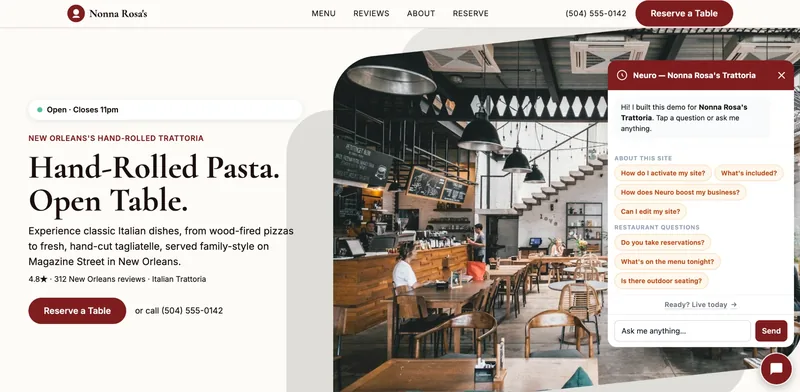
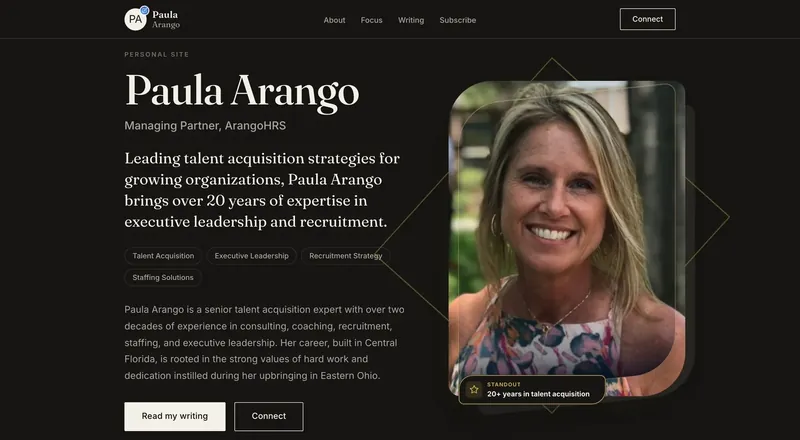
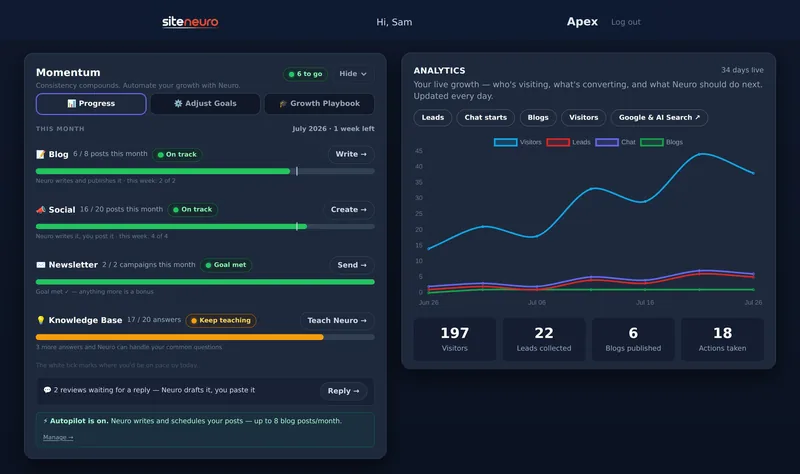
A website is the start. Neuro keeps it working.
- Built from your Google or LinkedIn
- Answers visitors, captures leads
- Drafts blog, social and newsletter
- Nothing goes out until you approve it
- Clear facts. What you do, where, your hours, your prices or price ranges.
- Consistency. The same name, address and phone number on your website, Google profile and directories.
- Proof. Real reviews, with replies.
- Answers. Pages that answer the questions customers actually ask.
- Trust signals. Mentions and links from other sites, especially local ones.
Do these well and you're doing SEO, AEO and GEO at the same time.
Where they differ
SEO cares most about your website
Google still ranks pages. Titles, page speed, mobile layout and links from other websites matter most here.
AEO cares about how you answer
Answer engines look for short, direct answers they can lift. A FAQ section where each answer starts with the answer, not a sales pitch, is ideal.
Weak: "We pride ourselves on offering a wide range of exceptional services."
Strong: "Yes, we offer emergency plumbing in Tampa 24/7. A call-out costs $95 before work begins."
GEO cares about what the whole internet says
AI tools like ChatGPT build answers from many sources: your website, your Google profile, review sites, directories and articles. If those sources disagree or say little, the AI either skips you or gets you wrong.
8 things to do this month
None of these need an agency.
- Complete your Google Business Profile. Categories, services, hours, photos and description. It feeds Google's AI answers directly.
- Put plain facts on your website. Services, area, hours, phone, in text (not only in images).
- Add a FAQ section with 10 real customer questions, each answered in the first sentence.
- Ask for reviews every week and reply to all of them.
- Match your details everywhere: website, Google, Bing Places, Apple Business Connect, Yelp, Facebook.
- Get mentioned locally: your chamber of commerce, local partners, sponsorships, local news.
- Check how AI describes you. Ask ChatGPT and Gemini: "Who's a good [your service] in [your town]?" and "What do you know about [your business name]?" Note what's missing or wrong.
- Fix what's missing on your website and profile, then check again in a month.
There's a deeper walkthrough in how to get ChatGPT to recommend your business and the broader 2026 guide to SEO and AI search.
What to ignore
- "Guaranteed AI rankings." Nobody controls what AI tools say.
- Separate agencies for SEO, AEO and GEO. For a local business, the foundations are the same.
- Tricks aimed at AI, like hidden text or keyword stuffing. They tend to hurt more than help.
The businesses AI recommends are usually the ones that are easiest to understand.
Where your website fits
All three depend on one thing a lot of small businesses don't have: a clear website that states plainly what they do, where, and why people trust them.
That's the gap SiteNeuro was built to close. It builds a site from a business's Google listing and real reviews, structured for both Google and AI assistants to read, starting at $39 a year on Essential. Many other builders can do the job too, as long as the facts on the page are clear.
Straight answers
What is the difference between AEO and SEO?
What is GEO in marketing?
Do small businesses need AEO?
Is SEO dead because of AI?
How do I know if AI tools recommend my business?
Ready to put this to work?
Pick how much help you want. Both start with a free look at your site.
Apex Concierge $119/mo
Your website, plus a growth team every week.
- Your site in your inbox within 2 hours
- 30-minute setup call with a specialist
- Answers visitors, captures leads
- Drafts blog, social and newsletter
Essential $39/year
Just the website, done properly.
- Built from your Google or LinkedIn
- Set up for Google and AI search
- Hosting and security included
- Unlimited edits, no extra cost