Getting Found
Google Business Profile vs a Website: You Need Both
Google Business Profile vs a website: which one do you actually need?
Both.
Not "both, eventually." Both, because they do two different jobs — and neither one can do the other's job.
Here's the short version.
Google Business Profile (GBP) gets you found first. It's the map pin, the star rating, the "open now" badge a nearby customer sees in two seconds.
Your website is what earns the click. It's the deeper story, the proof, the booking flow — the reason someone picks you over the three other pins on that same map.
Skip GBP, and you're invisible in the exact moment someone nearby is looking. Skip the website, and you're found — but forgettable.
Let's go through what each one is genuinely good at, where each one runs out of road, and how to think about priority if you're starting from zero.
What Google Business Profile is genuinely good at
Give credit where it's due first.
GBP is one of the best deals in local marketing, full stop.
It's free. No hosting, no design fees, no monthly bill.
It's fast. You can have a live listing — name, hours, photos, category — in under an hour.
It's where "near me" searches live. Type "plumber near me" or "dentist open now," and Google shows the map pack before it shows a single organic website result. GBP is your ticket into that box.
It carries your reviews front and center. Star rating, review count, and recent comments — all visible before a customer clicks anything.
It answers logistics instantly. Hours, phone number, directions, "open now" — the stuff people check on their phone while standing outside, or deciding whether to call.
For a huge number of local searches — "near me," "open now," "hours today" — GBP is genuinely the first and sometimes the only thing a customer looks at.
If you've done zero marketing so far, GBP is not a consolation prize. It's a real asset. Anyone telling you it "doesn't matter because you need a real website" is oversimplifying it.
Where Google Business Profile runs out of road
But GBP has real, structural limits — not flaws you can fix by filling out more fields.
You don't control the layout. Google decides what's shown, in what order, and how big your competitor's listing looks next to yours. You can't redesign it, brand it, or restructure it.
You can't tell your story. A short business description and a handful of photos is not the same as explaining what makes you different, showing your process, or building the kind of trust a longer page can build.
Detailed services and pricing don't fit. GBP has a basic services list and limited posts — it's not built for a full menu, a service breakdown, package pricing, or a real booking flow with your own logic.
No real booking or intake. Some categories get a "book" button through a partner integration. Most don't. You can't build a custom intake form, collect the details you actually need, or route different services to different next steps.
You're building on land you don't own. Google can change the layout, ranking factors, or category policies at any time — and has, repeatedly. A profile can get suspended over a dispute you didn't cause, and appealing it runs on Google's timeline, not yours.
It doesn't give AI assistants much to work with. When someone asks ChatGPT or Perplexity a detailed question — "which dentist near me does same-day crowns" — those assistants pull from full pages with real content, not from a profile's handful of structured fields.
None of that makes GBP a bad tool. It makes it the wrong tool for anything beyond "get found and get the basics across."
We cover the specific setup steps — categories, photos, posting cadence, review requests — in our GBP walkthrough; this post is about the bigger comparison, not the how-to.
What a website adds that GBP can't
A website is the one property in this whole equation that you fully control.
Your growth partner
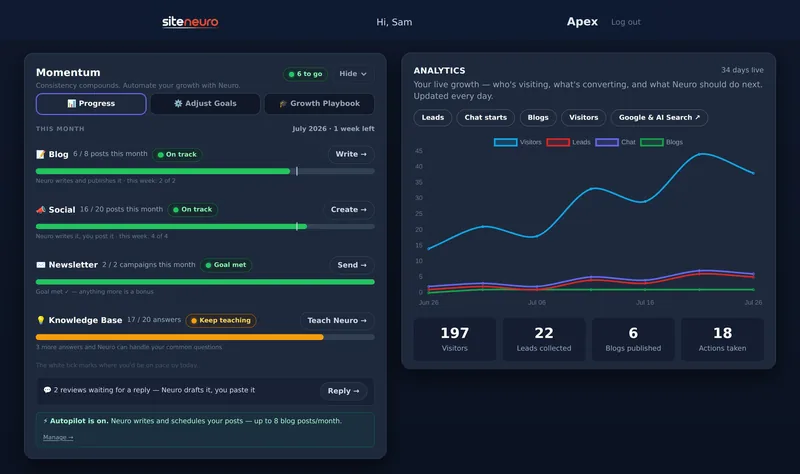
A website is the start. Neuro keeps it working.
- Built from your Google or LinkedIn
- Answers visitors, captures leads
- Drafts blog, social and newsletter
- Nothing goes out until you approve it
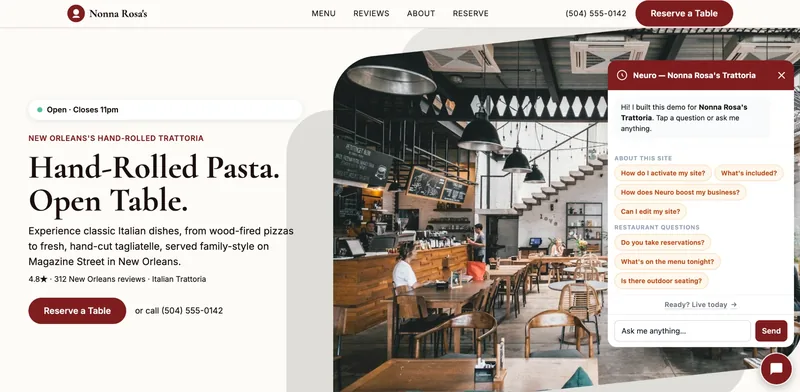
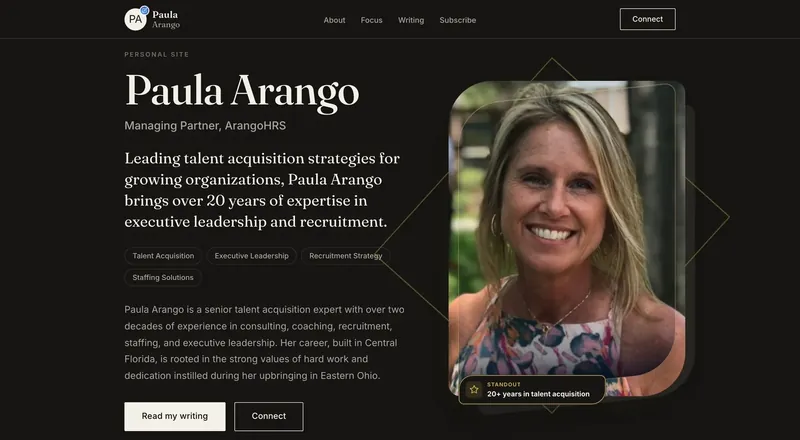
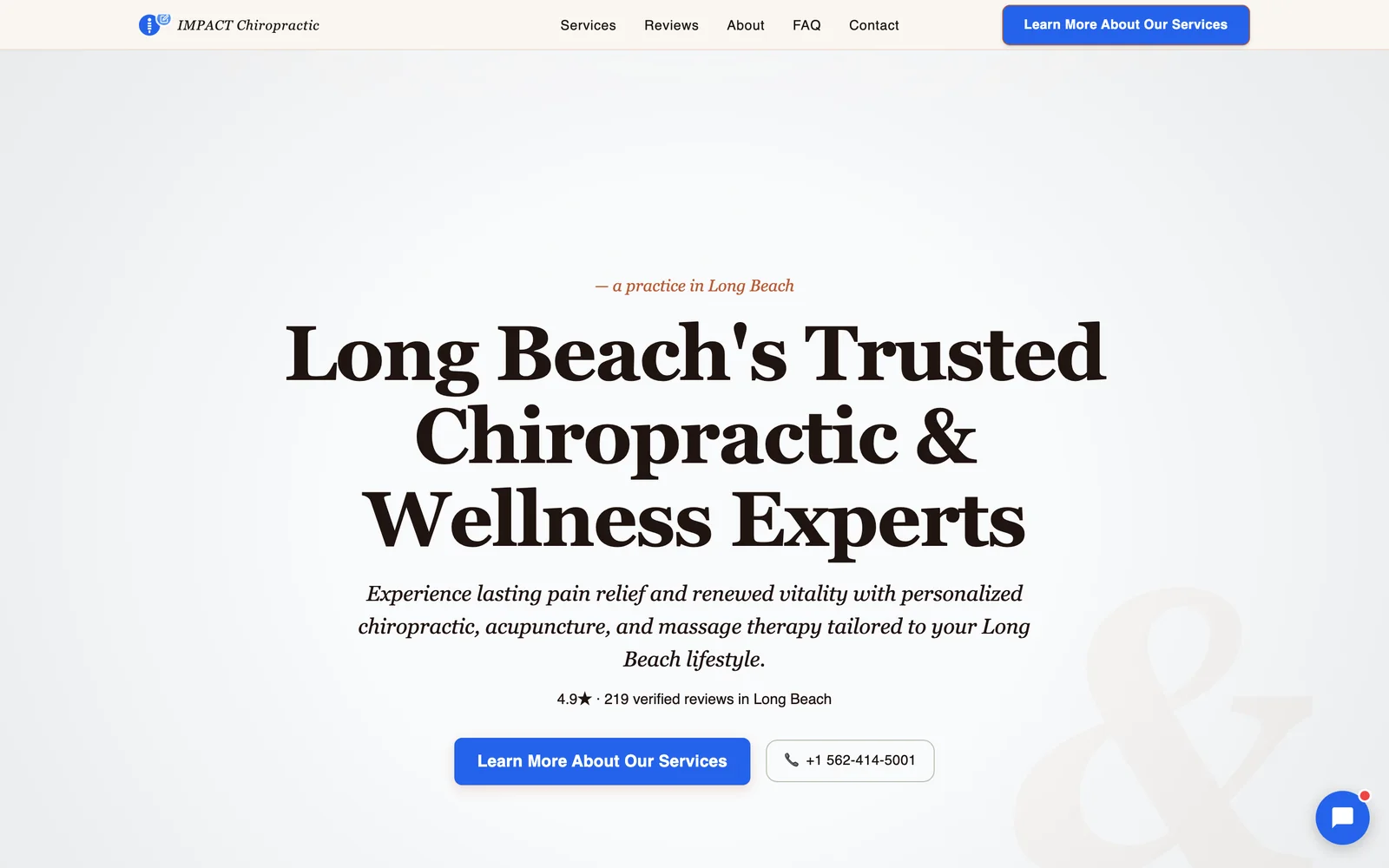
You control the layout, the story, and the brand. Every section, every photo, every word is yours to decide — no template Google imposes on you.
You can go deep. Full service pages, real pricing, before/after galleries, FAQs specific to your business, a real "why us" — the kind of content that turns a browser into a believer.
You can build a real booking or contact flow. Custom forms, service-specific intake, calendar booking, quote requests — whatever your business actually needs, not whatever Google's template allows.
It's the anchor for referrals. When a happy customer tells a friend "check them out," that friend usually searches your name and lands on your site. Same when a review site, a directory, or a local partner links to you — they link to your website.
It's the source AI assistants actually cite from. A well-built website with real service pages, a clear location and specialty, and genuine content is what an AI assistant can pull structured detail from when it's building an answer. That's often called AEO — Answer Engine Optimization — and it depends on having real pages to cite in the first place.
It's not subject to a platform's policy shifts. You can move hosts, change your design, or restructure content on your own timeline. No one can suspend it over a category dispute.
The tradeoff: a website doesn't automatically show up in the map pack the way GBP does. Ranking a website in organic search — let alone in the map pack — takes real, ongoing SEO work: content, structure, backlinks, page speed, all of it. A website with no traffic isn't earning anything either.
That's the honest limit on this side. A website is a foundation, not an automatic spotlight.
How they reinforce each other
Once you have both, they don't compete — they hand off to each other.
Here's the loop in practice:
- A customer searches "roofer near me." GBP shows your pin, your rating, and your hours.
- They tap your listing to check you're legit and nearby.
- From there, they tap through to your website to actually decide.
- Your website's "Add website" link on GBP is literally the bridge between the two.
- Meanwhile, your GBP listing quietly signals to Google that a real, active business sits behind that website — reinforcing your local relevance for both.
Think of it as GBP gets you shortlisted. Your website gets you chosen.
There's a second, quieter loop too. A website that mentions your service area and links out builds the kind of citation and consistency signals that help your GBP rank higher in the map pack. And a GBP profile with a consistent name, address, and phone number that matches your website builds trust signals the other way.
Run only one, and you cut that loop in half. You either show up and get skipped, or you have a great pitch nobody sees.
For a fuller picture of why customers slip through the cracks even when a business is doing some of this, see why customers can't find you online — it walks through the five separate jobs "getting found" actually breaks down into.
If you have neither, which do you build first?
Start with Google Business Profile.
Two reasons: it's free, and it's fast. You can be live — with hours, photos, and a category — the same day, while a website takes real time to plan and build.
GBP also starts collecting the thing that compounds the most: reviews. The earlier you start asking happy customers for reviews, the earlier your star rating and review count start doing real work in the map pack.
But don't stop there. Treat GBP as day one, not the finish line.
The moment you're set up on GBP, start on the website — because every day without one is a day GBP sends interested people to a dead end: no link, no deeper story, nothing to click through to.
If you already have a decent website but no GBP (rarer, but it happens — a rebrand, a new location, a business that moved online-first), flip the order: claim and fill out your GBP profile now. You're losing "near me" traffic every day you're not on that map.
The honest target is both, live, within the same month — not one now and the other "eventually."
For businesses in specific fields, the priorities shift slightly. A law firm or a chiropractic practice, for instance, leans harder on the website side because trust and detailed service explanation matter more before someone calls — see how law firms get more clients or how chiropractors get more patients for what that looks like in practice. Either way, GBP stays the fast, free first step.
If you want to see what a real small-business website looks like once it's built out — services, reviews, booking, the works — browse a few live examples.
Frequently asked questions
Do I need a website if I already have a Google Business Profile?
Do I need a website if I already rank well organically without one, just through GBP?
Which one ranks higher in Google search results, GBP or a website?
How long does it take to set up a Google Business Profile?
Can I just link my Google Business Profile to a page instead of building a full website?
What happens if my Google Business Profile gets suspended?
Ready to put this to work?
Pick how much help you want. Both start with a free look at your site.
Essential $39/year
Just the website, done properly.
- Built from your Google or LinkedIn
- Set up for Google and AI search
- Hosting and security included
- Unlimited edits, no extra cost
Apex Concierge $119/mo
Your website, plus a growth team every week.
- Your site in your inbox within 2 hours
- 30-minute setup call with a specialist
- Answers visitors, captures leads
- Drafts blog, social and newsletter