Getting Found
The Best Plumber in Town Doesn't Exist — Why Great Local Businesses Are Invisible Online
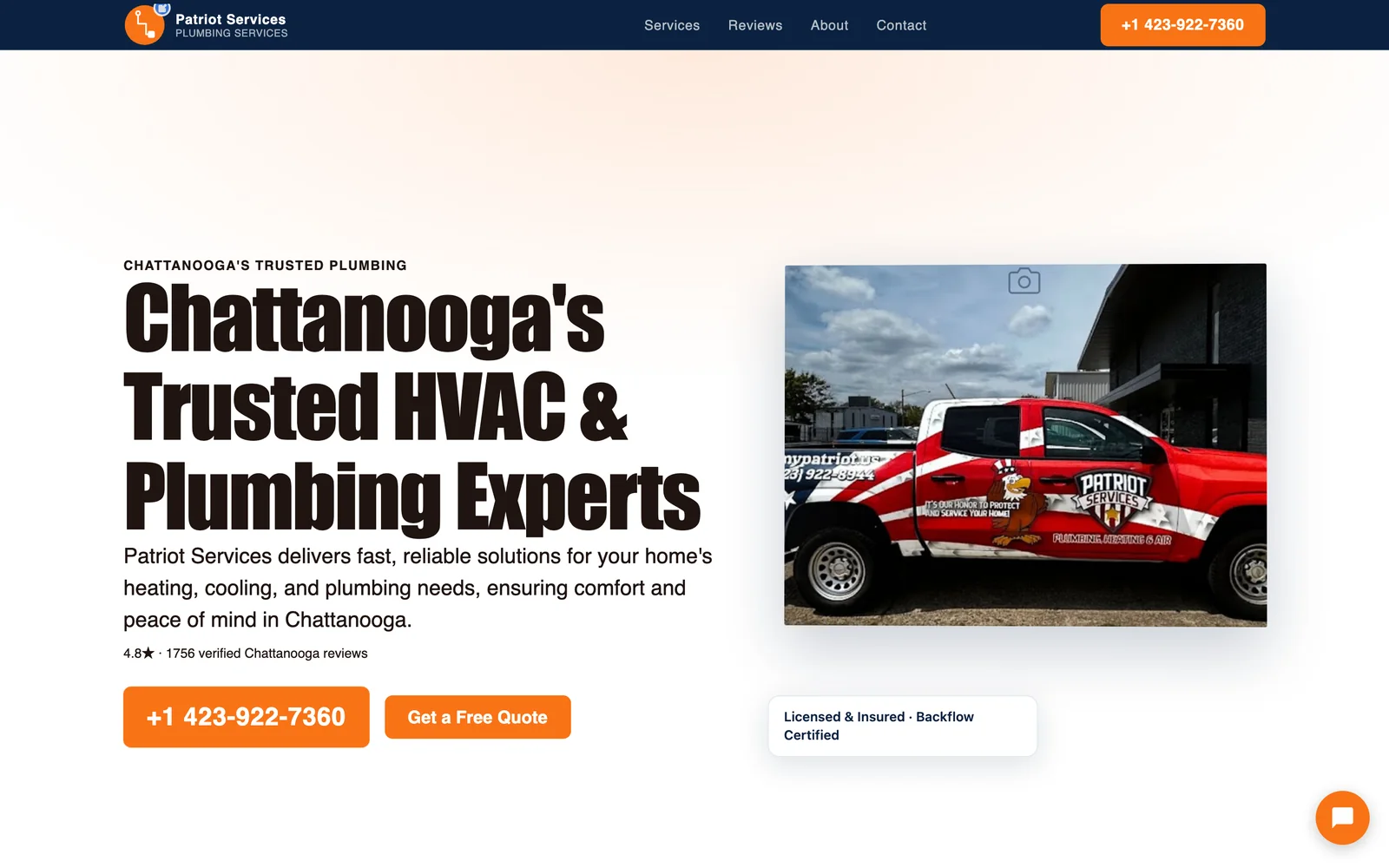
If your business is not showing up online, it's almost never because your work isn't good.
It's because the way customers find businesses changed — three times — and nobody told you.
Let me show you what that looks like in real life.
It's 11pm. A pipe bursts in someone's kitchen two miles from your shop.
They grab their phone and search "emergency plumber near me open now."
Then they ask ChatGPT the same thing, just to be sure.
And the best plumber in town — 4.9 stars, 120 reviews, twenty years of clean work — doesn't appear in either answer.
He's asleep.
And so is his marketing.
How does a 4.9-star business end up invisible?
Here's the uncomfortable mechanics of it.
That plumber has no website.
So when Google decides what to show at 11pm, he has nothing to rank.
When ChatGPT decides who to recommend, he has nothing to cite.
And when a past customer says "call my plumber, he's the best," there's nowhere to send anyone — just a name to half-remember.
His reputation is real. It's just unreadable.
To a human, he's the best plumber in town.
To the internet — and to AI — he doesn't exist.
You never see the customer who never found you
This is why the problem survives for years.
When a customer walks out of your shop unhappy, you know. You feel it.
But the customer who searched, found nothing, and called the next name on the list?
Silence.
No missed call. No complaint. No trace.
Just a job that quietly went to a competitor who made it easy — and a business owner who genuinely believes "we get enough work" because the losses are invisible.
And it's not just the no-website businesses.
Plenty of local businesses are found — and then lose the customer in about eight seconds. A site from 2011 that doesn't fit a phone screen. No answer to "do you do weekend calls?" No way to book.
Found, then fumbled.
Either way, the result is the same: your best customers are choosing someone else, and you never find out.
We wrote about the deeper shift behind this in why customers can't find you online — but here's the short version.
The 5 gaps keeping local businesses stuck in the 2000s
Being "online" in 2005 meant a phone number and maybe a map pin.
Being online in 2026 means five things. Miss one, and you leak customers.
1. A home you own. A Google Maps pin is not a home — it's a listing you rent, formatted exactly like your competitor's. A Facebook page is a feed someone else's algorithm controls. Without a site of your own, your business has no front door.
2. Being findable. Every question your customers type — "do they do weekend calls," "how much is a water heater install" — is answered by someone's page. If it isn't yours, Google sends them to whoever bothered to answer.
3. Reviews with somewhere to land. You earned those 120 reviews. But reviews on a Maps listing convert like a trophy in a closet. They need a destination — a page where the 4.9 stars sit next to a Call now button.
4. Content that compounds. The 2005 playbook was "set it and forget it." Today, a business that never publishes anything slowly fades — while the competitor posting answers, photos, and updates keeps getting picked, by people and by algorithms.
5. Being citable by AI. This is the new one, and it's the biggest. Customers now ask ChatGPT, Perplexity, and Google's AI for recommendations — and the AI answers with businesses it can actually read. Structured pages, real reviews, clear services. No website means no citation. (Here's exactly how AI assistants pick who to recommend.)
Notice something about that list?
Not one gap is about the quality of your work.
"But word of mouth is enough for me"
Let's be honest — because this objection is half right.
Curious what yours would look like?
Local business or professional — Neuro builds your site from your own data in about 60 seconds.
Build my demo in 60 seconds →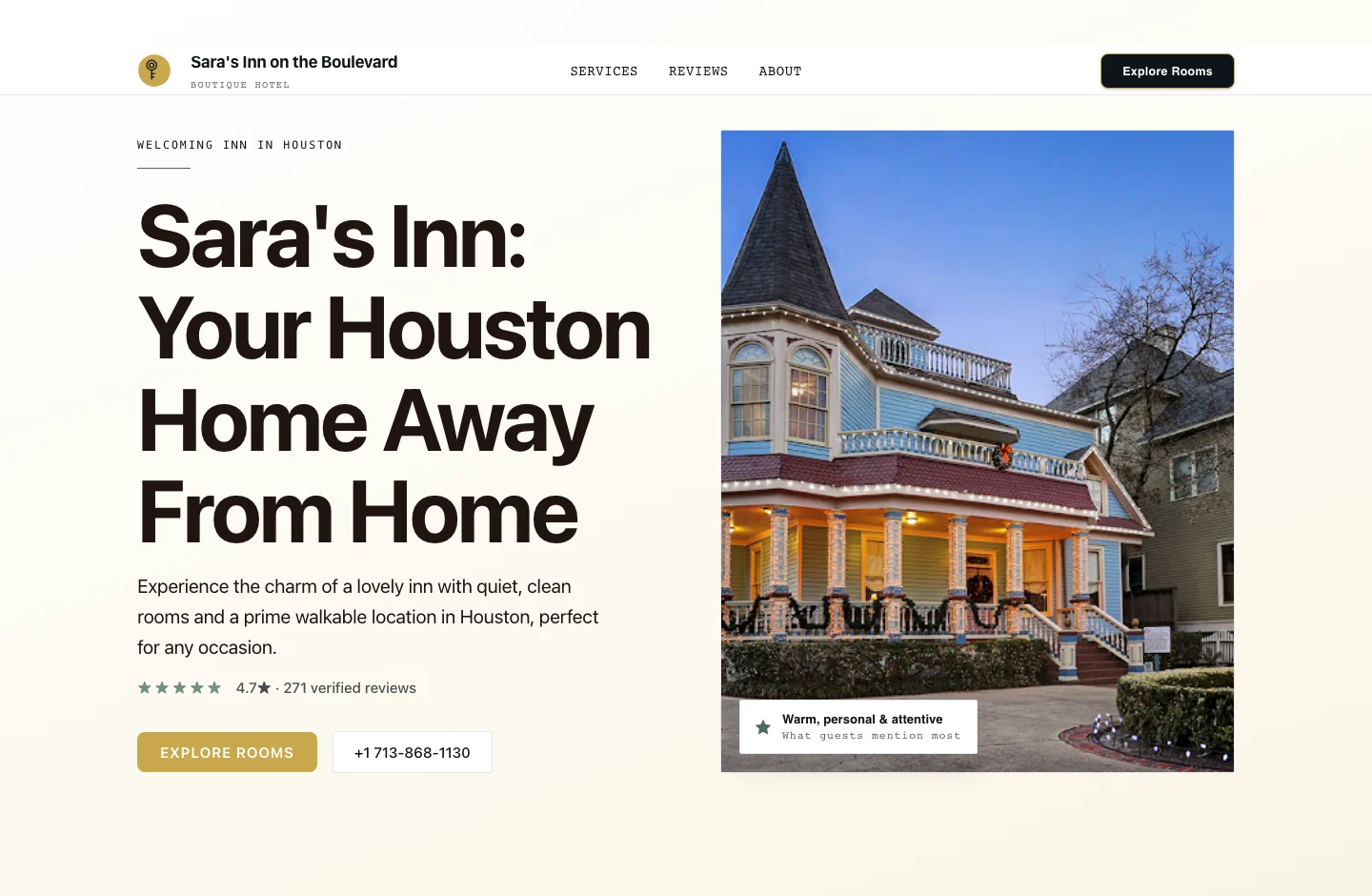
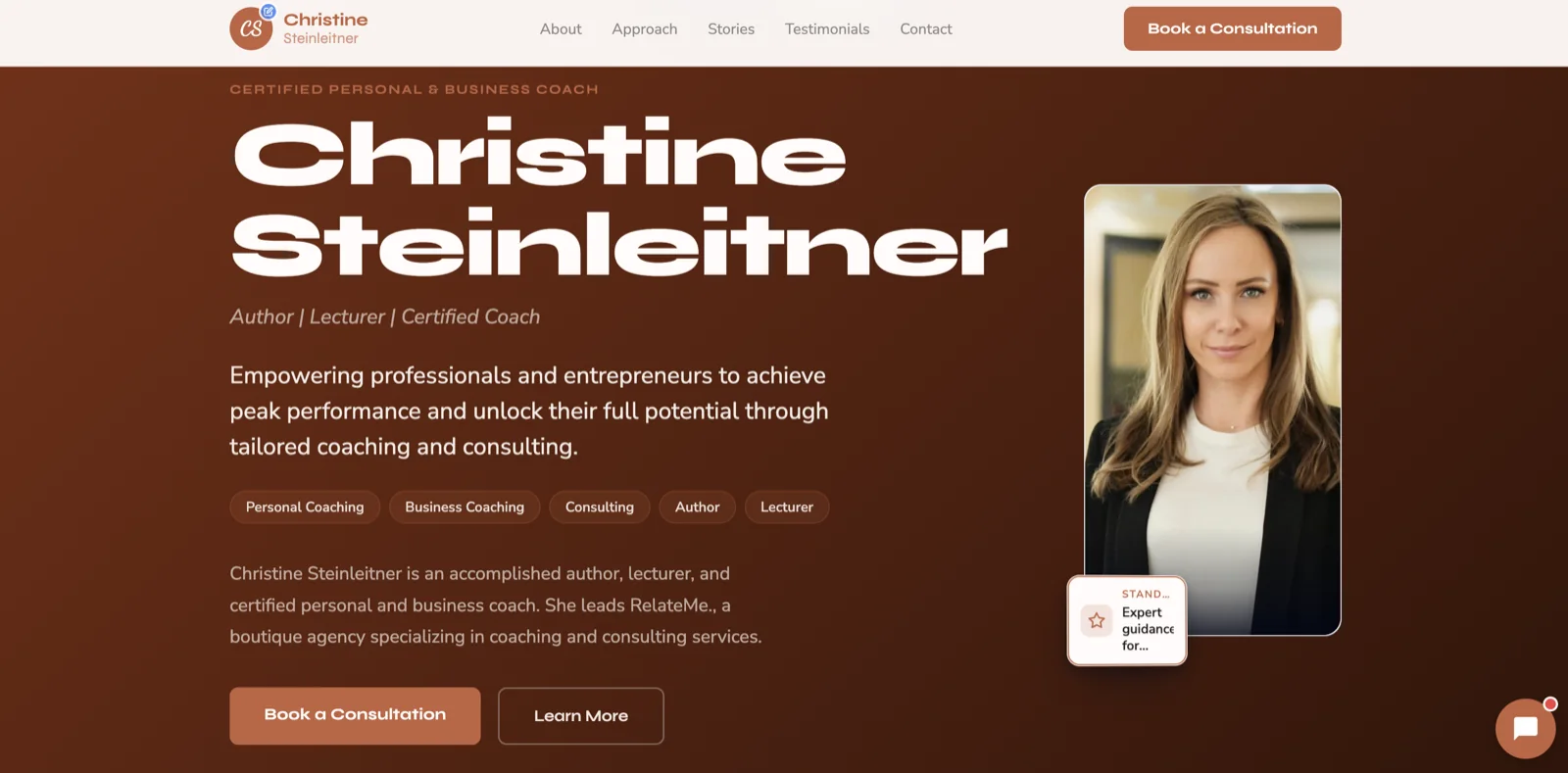

Word of mouth is the best marketing there is. If referrals keep your calendar full, that's real, and no website replaces it.
But here's what changed.
Word of mouth now has a second step.
Your happy customer gives your name to a friend. The friend doesn't call — not yet. First, they search you.
If they find a clean site, your reviews, your photos, a big obvious call button — the referral lands.
If they find nothing? A decent number of those warm, pre-sold, ready-to-pay referrals quietly cool off and call the plumber who did show up.
A website doesn't replace word of mouth. It stops word of mouth from leaking.
So why do so many great businesses still not have one?
You already know the reasons — they might be your reasons:
- No time. You run the business all day. The website is a someday project.
- Cost. Freelancers quote thousands. Agencies quote more, monthly.
- Tech fear. Builders promise "easy" and deliver forty hours of font-picking. (We broke down what websites really cost — including the hours.)
In 2005, those were good reasons. The tools really were that bad.
In the AI age, they're solved problems.
What catching up actually requires
Forget tools for a second. Here's the checklist a local business needs to stop being invisible:
- A real website, on a mobile screen first — because that's where local customers are
- Your real reputation on it — name, city, rating, reviews, photos — not stock-photo filler
- Answers to the questions customers actually ask, available at 11pm
- A way to call or book that's one thumb-tap away
- Structure that Google and AI assistants can read and cite
- Fresh content over time, so the whole thing doesn't fossilize
In the 2005 playbook, that list is a $5,000 project plus a part-time job.
Here's the thing though.
Everything on that list already exists as data you've earned. Your name, your rating, your reviews, your photos, your services — it's all sitting in your Google listing, working at about 10% capacity.
Someone just has to turn it into a home.
How Neuro closes all five gaps in about a minute
This is exactly what we built Neuro to do.
Neuro is an AI team that takes the reputation you already earned and builds your website from it — your real name, city, rating, reviews, and photos. Not a template with your logo dropped in.
- A home you own — built in about 60 seconds, live today, with a free siteneuro.com address. One-time $19, no monthly website fee.
- Findable — structured for Google search from the first minute, with the pages and answers customers search for.
- Reviews with a destination — your stars and real customer quotes, sitting right next to the call button.
- Content that compounds — Neuro drafts posts and updates so the site keeps working after launch.
- Citable by AI — clean structure and real data that answer engines can actually read and recommend.
And then there's the part the 2005 playbook could never do.
Neuro answers your customers 24/7.
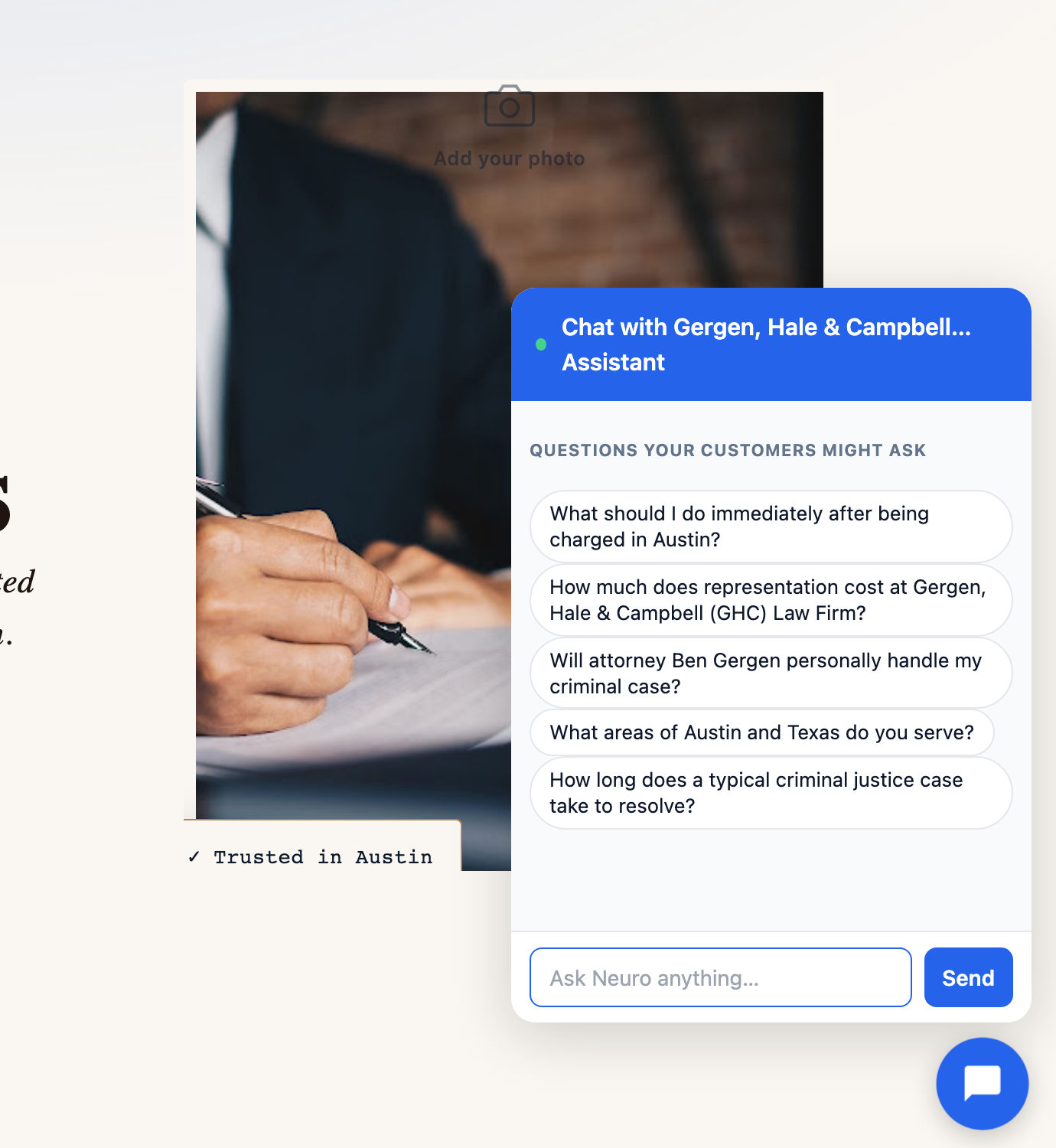
While you're on a job — or asleep — Neuro answers "do you handle burst pipes?", takes the booking request with a name and number, and hands it to you in the morning.
Back to the plumber
So picture the same night, replayed.
11pm. Burst pipe. The homeowner searches "emergency plumber near me."
This time, the best plumber in town shows up — because now there's something to find:

His 4.9 stars at the top of the page. Real photos of real jobs. His services, spelled out. A Call now button exactly where a panicked thumb lands. And Neuro, awake, answering "yes, we handle emergencies — want to leave your number?"
Same plumber. Same skills. Same reviews.
The only thing that changed is that the internet can finally see him.
That's the whole gap between being stuck in the 2000s and competing in the AI age — and it closes in about a minute.
If you'd rather build it yourself, a website builder is a fine choice — here's an honest comparison of Neuro vs Wix and the AI builders to help you pick.
See what the internet has been missing
You don't have to imagine your business with all five gaps closed.
Type in your business name and city, and watch Neuro build your site from the reputation you already earned — in about a minute.
The customers searching at 11pm are already out there.
Make sure they can finally find you.
Frequently asked questions
Why is my business not showing up online?
Do I need a website if I already have a Google Business Profile?
Is word of mouth enough for a local business?
How do AI assistants like ChatGPT choose which local businesses to recommend?
What's the fastest way for a local business to get online?
See what Neuro would build for you
Build your demo from your own data in about 60 seconds — then watch your AI team take it live and grow it.
Build my demo in 60 seconds → Explore the showcase