Getting Found
Why Reviews Aren't Enough Without a Website to Send People To
Do reviews help without a website? Some. But not nearly as much as you think.
A great rating earns someone's trust. It doesn't answer what you offer, what it costs, or how to book you.
Those questions live on a website. Not on a review page.
So if you're proud of your reviews — and you should be, they're earned — but you don't have a website behind them, you're leaking customers you already won over. You just don't see it happening.
Here's why, and what to do about it.
A review answers one question. Your customer has four more.
Someone finds your listing. They read your reviews. They think: okay, this place is legit.
That's the review doing its job. It answered "can I trust this business?"
But trust was never the last question. It's the first one.
Right behind it come the ones a star rating can't touch:
- What do you actually offer? A review says "great service." It doesn't say what's in the service.
- What does it cost? Nobody puts a price list in a Google review.
- Are you open right now? Reviews don't have hours.
- How do I actually book this? A five-star review has no "book now" button.
A convinced customer who can't answer those four questions doesn't sit and wait for you to answer them. They open a new tab and search again.
And the next result they click might have worse reviews than yours — but a website that answers all four questions in ten seconds.
Guess who gets the call.
A review page was never built to hold your story
Here's the part worth sitting with: this isn't a bug in your review page. It's the design.
A Google Business Profile, a Yelp listing, a Facebook page — they're built to hold reviews. That's the whole job. One field for a star rating, one box for a comment.
They were never built to hold:
- Your full list of services, with what each one includes
- Real pricing, or at least a starting range
- Photos of your actual work, not a stock photo
- A clear next step — book, call, request a quote
- The story of why you do this and what makes your business different
A listing page can hold a five-star average. It cannot hold you.
That's why customers can't find you online even when they're standing right in front of your reviews — the page they landed on was never designed to close anything. It was designed to be found, not to convert.
A review earns interest. A website earns the booking.
Think of it as two separate jobs, because it is two separate jobs.
Curious what yours would look like?
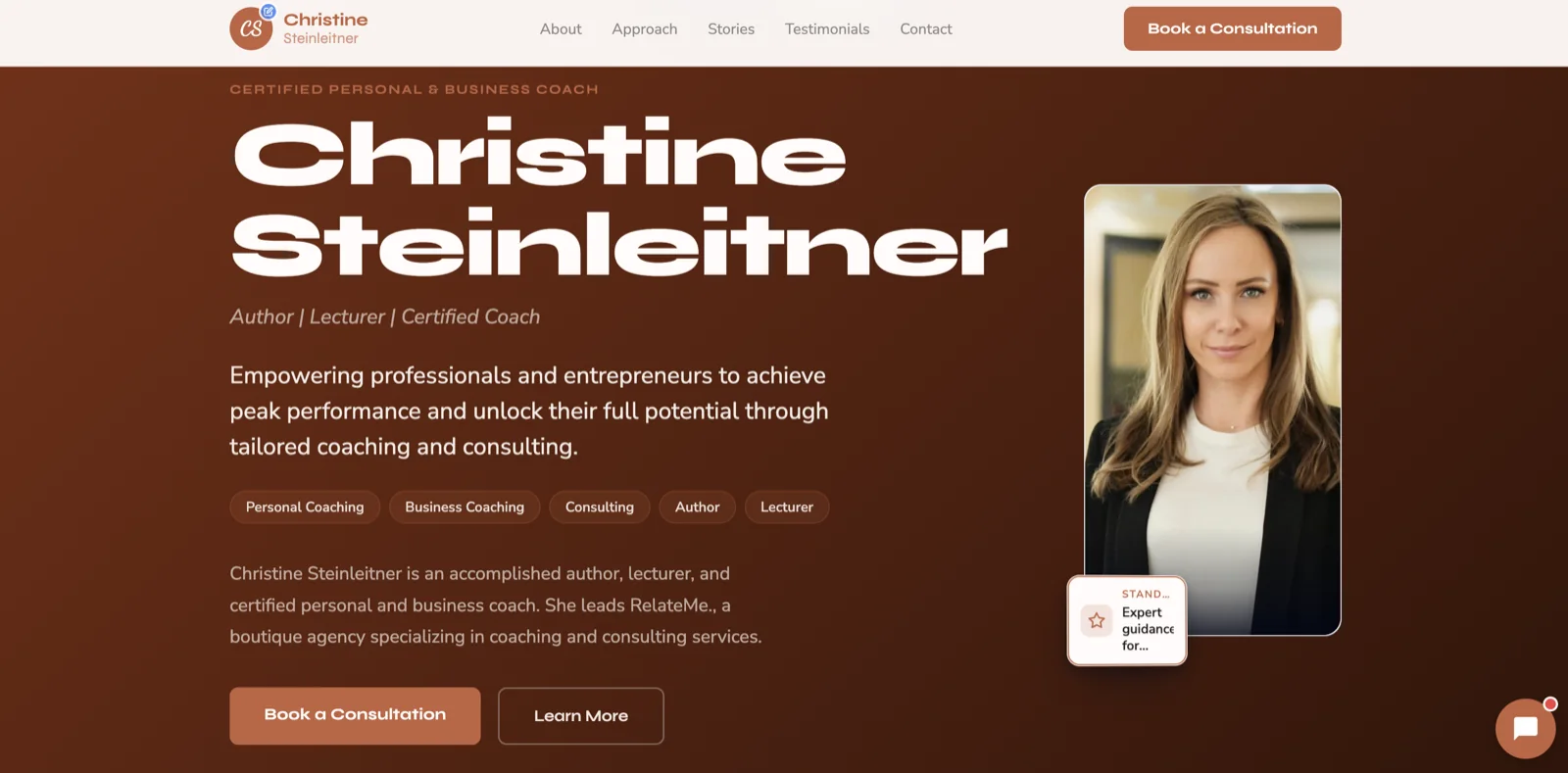
Local business or professional — Neuro builds your site from your own data in about 60 seconds.
Build my demo in 60 seconds →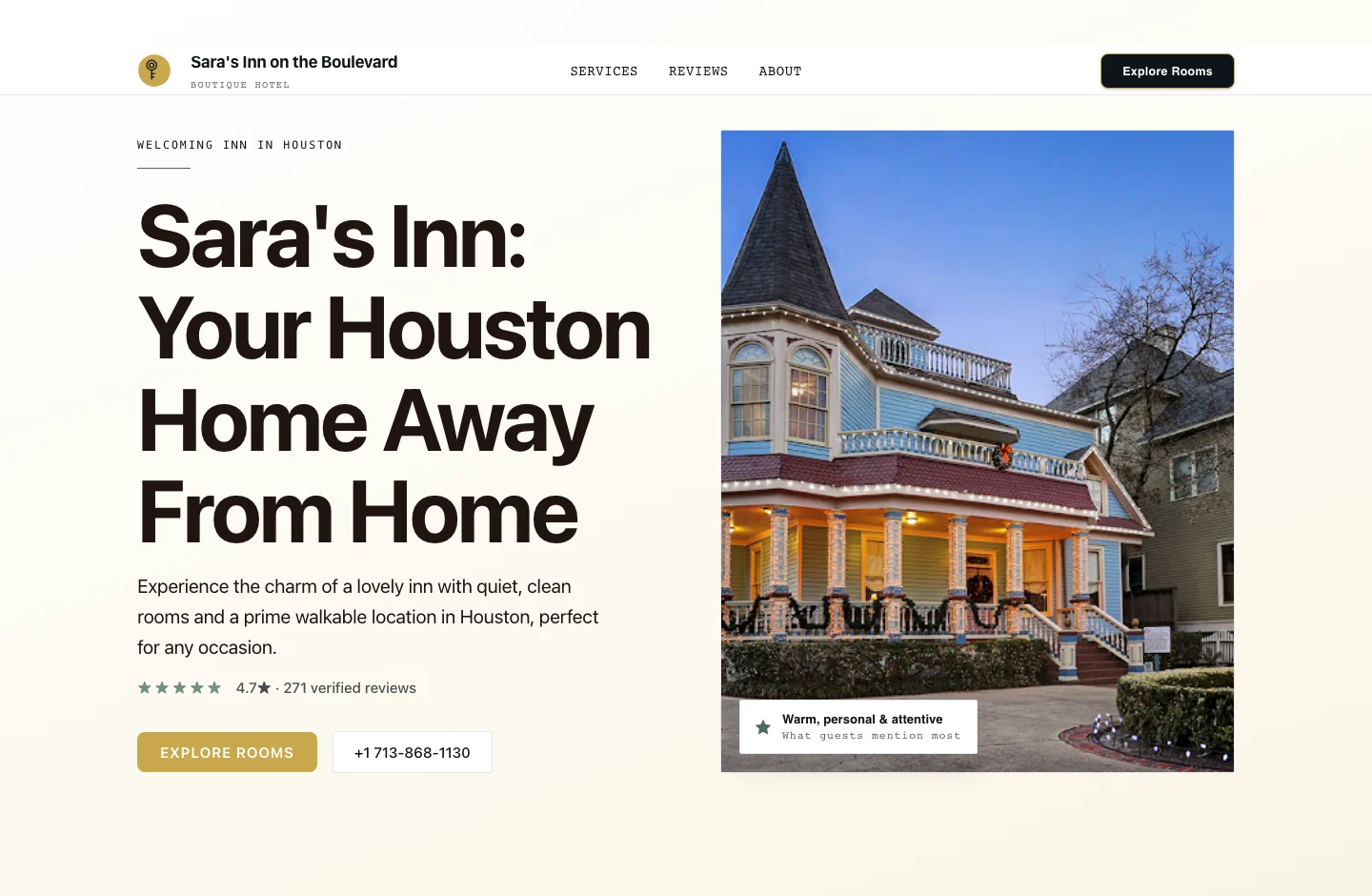

The review's job is to earn interest. It gets someone to think "maybe." It gets them to click through instead of scrolling past.
The website's job is to turn that "maybe" into a booking. It's where "maybe" meets your services, your pricing, your calendar, and a button that says "schedule now."
A review can't do the website's job. A website can't do the review's job either — nobody trusts a business with zero reviews just because the site looks nice.
You need both, doing the job each one is actually good at. A review that isn't backed by a website is trust with nowhere to go. A website with no reviews is a pitch nobody believes yet.
A review earns someone's interest. A website is what turns that interest into a customer.
Your reviews are a trophy sitting in a closet
Here's the honest version of what's happening if you have great reviews and no website.
You did the hard part. You earned real trust from real customers, one job at a time.
And then you put that trust in a closet.
A 4.9-star rating on a listing you don't control, that nobody can browse your services from, that has no way to actually book you — that's a trophy on a shelf nobody visits. It proves you're good. It doesn't do anything with the proof.
A website is what takes that trophy out of the closet and puts it to work. Same reviews. Same trust you already earned. Now sitting next to your services, your pricing, and a button that turns a browser into a booked customer.
You already did the hardest part — earning the trust. Not having a website to put it on means you're leaving the easiest part undone.
Where this shows up worst: high-trust, high-stakes decisions
This gap costs the most in businesses where trust matters a lot — and so does the decision itself.
Take a dental practice. A patient in pain reads great reviews about a dentist and feels reassured. But reviews don't say which insurance you accept, whether you handle emergencies same-day, or how to actually book. Without a website answering that, the patient calls whoever answers first — reviews or not. It's one reason how dentists get more patients from their website starts with the site, not the star rating.
Same story in real estate. A great review tells a buyer an agent is trustworthy. It says nothing about that agent's current listings, their read on the local market, or how to reach them directly instead of through a portal. That's the whole argument behind how real estate agents get more leads online — recognition and trust need somewhere to land, or they evaporate the moment the buyer moves to the next Zillow tab.
Any business where the decision is big — health, money, home, or anything recurring — leans on trust the hardest. Which means it also has the most to lose when that trust has nowhere to convert.
Reviews plus a website compound. Reviews alone plateau.
Run this forward a year.
A business with reviews and no website: the reviews slowly pile up. The rating inches from 4.6 to 4.8. And the number of customers who actually convert stays roughly flat, because there was never a page doing the converting.
A business with reviews and a website: every new review becomes proof displayed next to your services and your booking button. Every website visitor who converts becomes a customer who might leave the next review. The trust and the conversion path feed each other.
That's the compounding effect. Reviews build the trust. The website turns the trust into revenue. Skip either half, and the other half caps out on its own.
If you want to see what that pairing looks like built out for real businesses, browse a few examples in the showcase.
Frequently asked questions
Do reviews help without a website?
Can I just use my Google Business Profile instead of a website?
Why do I still lose customers even though my reviews are great?
What should a website actually do that reviews can't?
Is it worth getting a website if I already have a lot of reviews?
Do reviews or a website matter more for local SEO?
See what Neuro would build for you
Build your demo from your own data in about 60 seconds — then watch your AI team take it live and grow it.
Build my demo in 60 seconds → Explore the showcase