Founders
Everything You Say Online Has a 48-Hour Half-Life — Why Founders Need a Home They Own
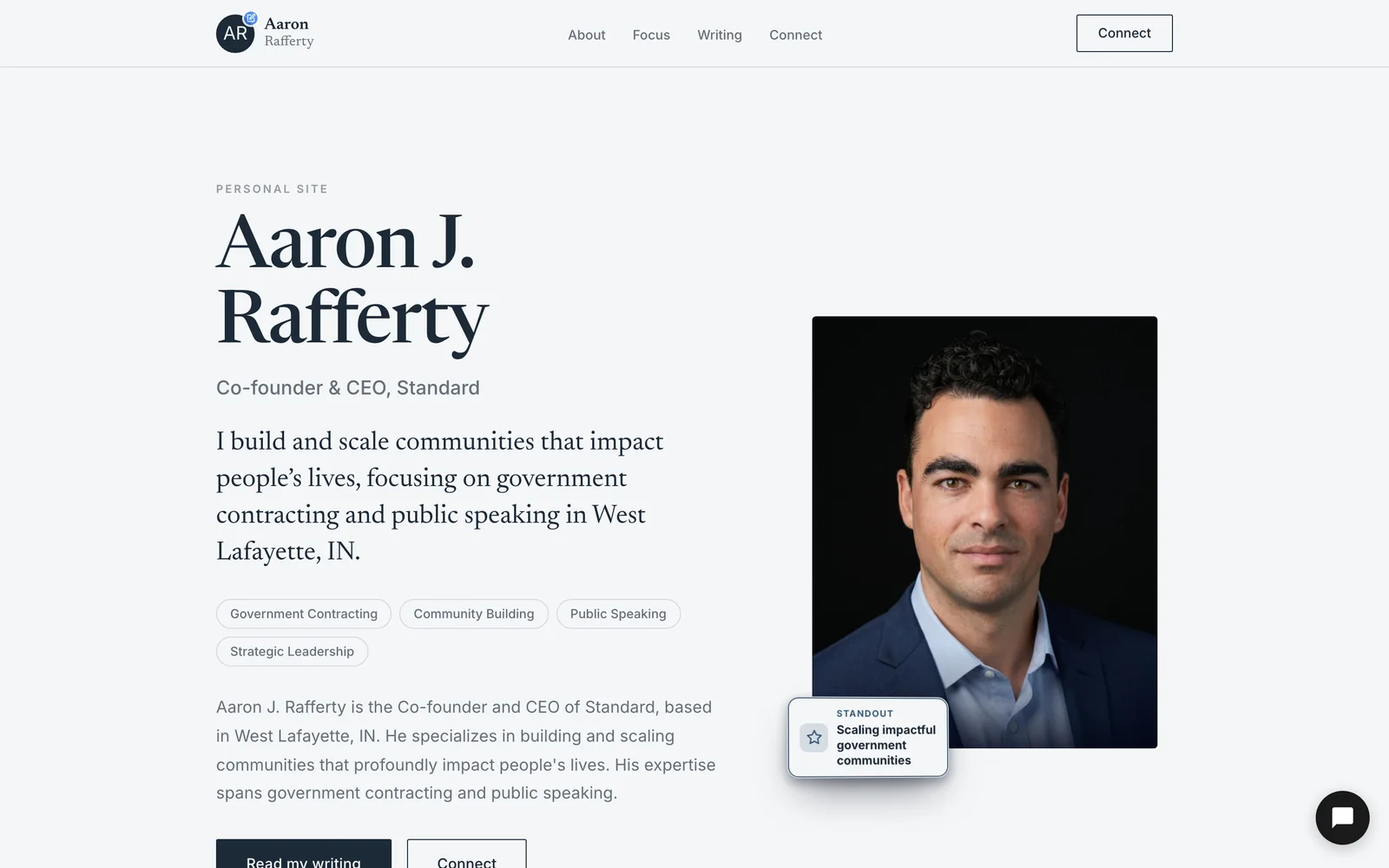
Most founders don't think they need a personal website.
You've raised money, shipped products, hired teams. The work speaks for itself.
So a personal website for founders sounds like a vanity project — something for people who need to be seen.
Here's the case for why it isn't. And it has nothing to do with self-promotion.
Someone who matters is going to search your name tonight.
An investor before a first call. A journalist before a quote. A senior candidate before saying yes. A potential co-founder, quietly, before they reach out.
And here's what they'll find: a LinkedIn profile in the exact same font as 900 million others, a few posts the feed buried two days after you wrote them, and whatever page-one Google decided to assemble about you.
Not one word of it written by you.
The thing you tell your companies — and don't do yourself
You know this playbook cold. You've probably given the talk.
Own your brand. Own your channel. Own your audience. Don't build your house on rented land.
It's the first thing you tell any company you start or advise.
And then, personally?
You rent all three.
Your brand is a template profile. Your channel is an algorithm that decides who sees you. Your audience isn't yours — it's the platform's, loaned to you until the reach changes.
The one entity you'd never let operate this way is you.
You never see who bounced
Here's why this is so easy to ignore.
Nobody tells you.
The investor who searched your name, found thin scraps, and quietly deprioritized the intro — you never hear it. The journalist who couldn't confirm what you actually do, so they called someone else. The candidate who wanted to believe, checked, and cooled.
There's no bounce notification for a reputation.
Just rooms you were almost in, and never knew about.
You have a real record. It's just scattered, unverifiable, and mostly written by other people.
The 5 gaps keeping founders stuck in the 2000s
Being a known founder in 2005 meant a bio and a business card.
In 2026 it means five things — and a rented profile gives you almost none of them.
1. A home you own. LinkedIn is a room you decorate but don't hold the lease on. One policy change, one algorithm shift, and your reach is gone. A personal site is the only address on the internet that's actually yours.
2. A story you control. Search your name. Whatever comes up — an old panel bio, a five-year-old interview, a company page — that is your story right now, assembled by strangers and ranked by a machine. A home you own is where you get to say what you actually do, in your words.
3. Ideas that compound. You've said sharp things — on podcasts, in posts, on stage. Where do they live now? A post has a 48-hour half-life, then it's gone. Nothing accrues. On a home you own, your thinking becomes a body of work that keeps being found, read, and quoted long after you publish it.
4. Proof that has somewhere to point. The people who vouch for you — where do they send someone? "Look him up" isn't a link. Your record needs a destination, or the endorsement evaporates on the way to you.
5. Being legible to AI. The new one, and the one founders underrate most. When someone asks ChatGPT or Perplexity "who is [your name]?", the answer is stitched from fragments — often outdated, sometimes wrong. AI describes you from what it can read. A structured home you own is how you become accurately answerable. (Here's how AI assistants decide what to say about you.)
Notice what none of these is about.
None of them is about selling anything.
"I don't need to market myself"
Let's take this seriously, because it's the real objection — and it's right.
Curious what yours would look like?
Local business or professional — Neuro builds your site from your own data in about 60 seconds.
Build my demo in 60 seconds →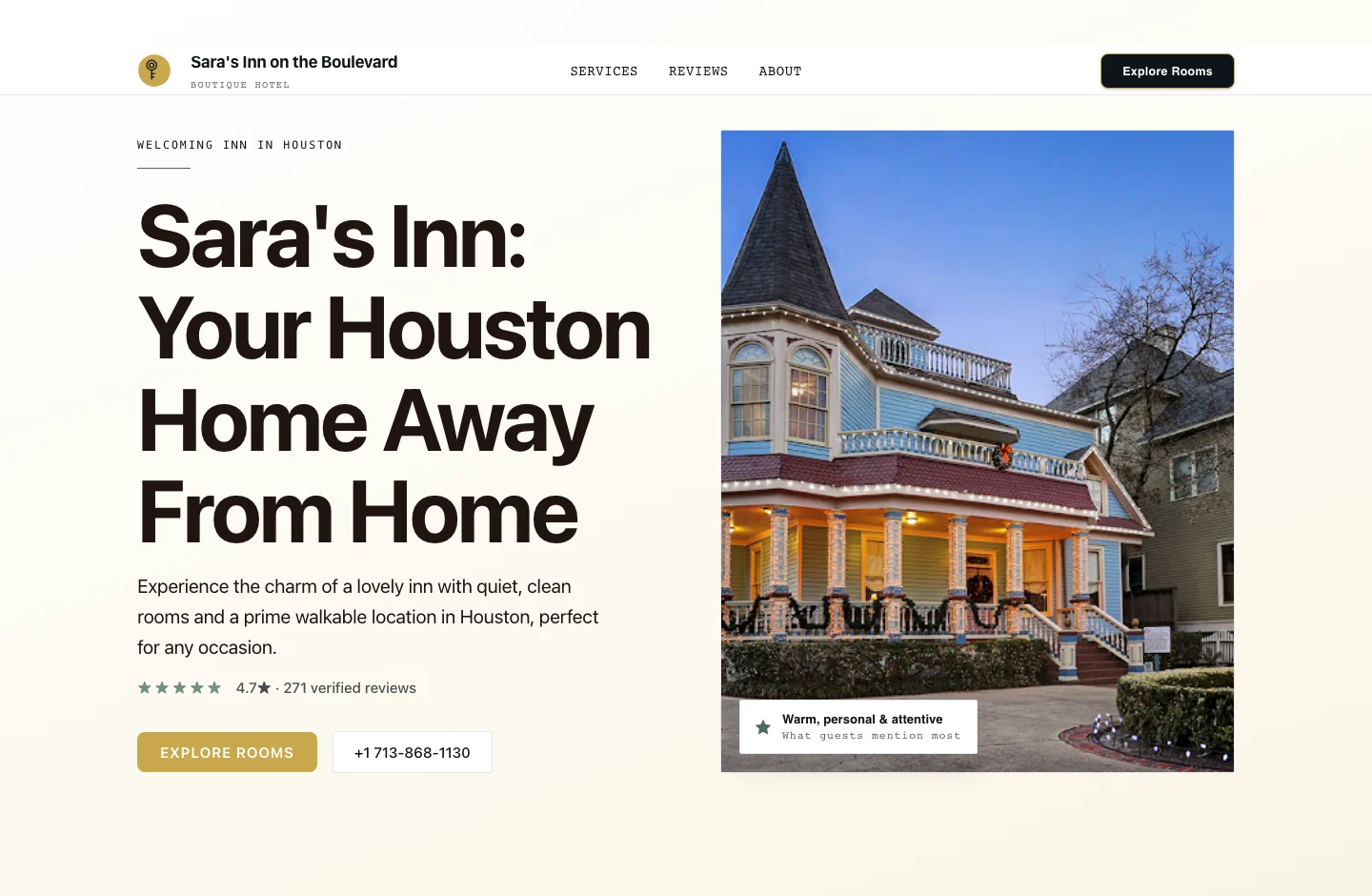
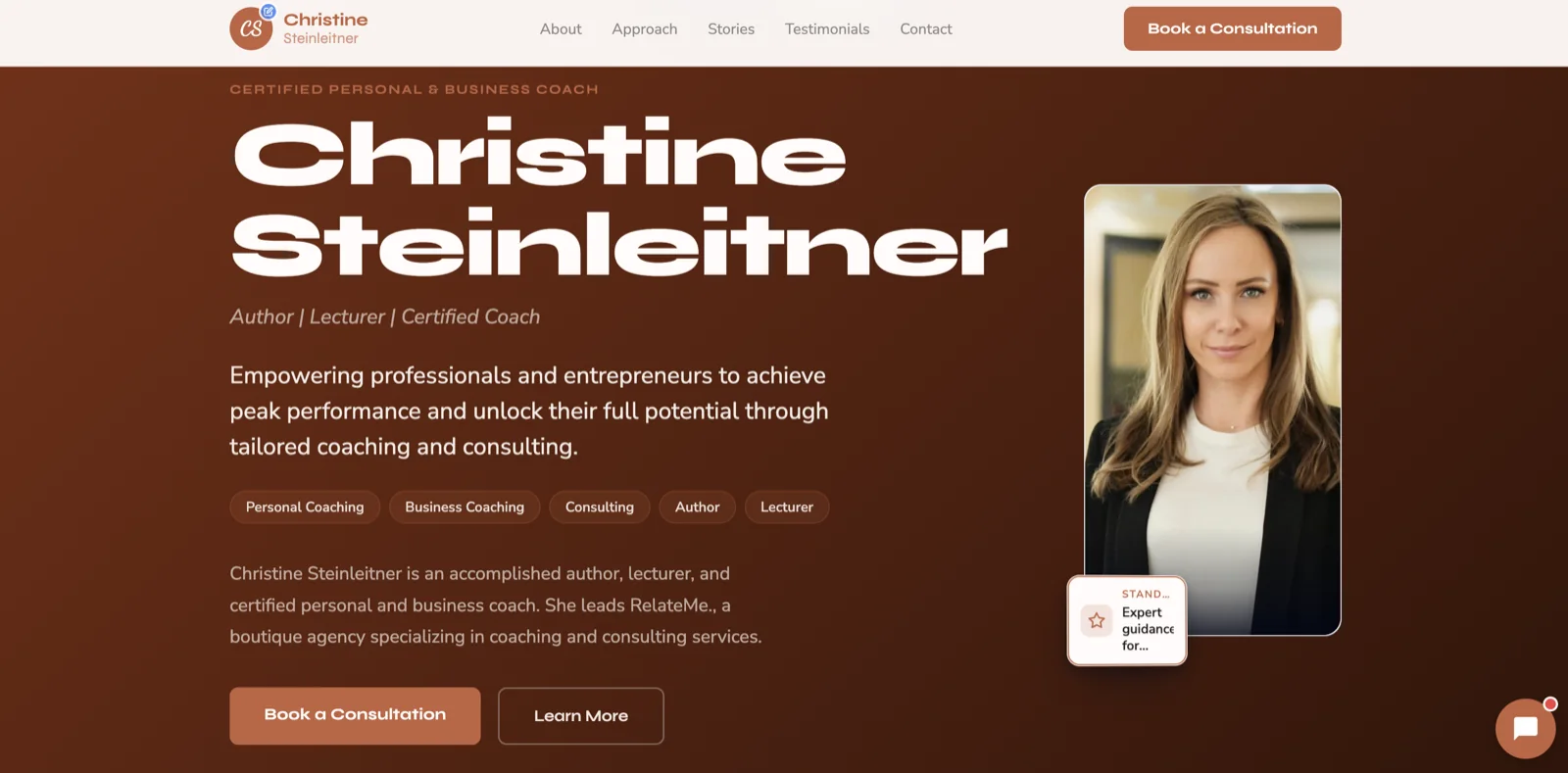

You don't. You're not looking for clients. You're not building a funnel. The whole "personal brand" industry, with its hustle and its hooks, is genuinely not for you.
So hear this clearly.
This isn't marketing. It's owning the record.
A home base isn't a sales page. It's the difference between having your story told for you and telling it yourself. Between your ideas evaporating and your ideas compounding. Between being described by a machine and being legible to one.
It's not louder. If anything, it's quieter — a calm, credible place that simply exists, so that when someone serious goes looking, the record is yours.
Keep posting on LinkedIn if it serves you. This isn't instead of the feed. It's the home the feed should point back to.
So why don't most founders have one?
The honest reasons:
- It feels self-indulgent. Building a site about yourself pattern-matches to ego. (It's the opposite of ego to make your record accurate.)
- No time. You're running the company. A personal site is a someday project that never comes.
- Everything available is wrong for you. Website builders are a weekend of fiddling. The "personal brand" tools are all sell, sell, sell — exactly the tone you're trying to avoid.
In 2005, those were fair. The only options really were vanity sites and sales pages.
In the AI age, there's a third thing.
What a founder's home base actually is
Not a landing page. Not a "hire me." Not a funnel.
A quiet, editorial home for who you are and what you think — that you own.
- Your record, stated plainly and accurately: what you've built, what you do now, what you focus on.
- Your thinking, in one place — field notes, essays, the sharp things you'd otherwise lose to the feed.
- A calm way to reach you, for the people who should — no pop-ups, no pressure.
- Underneath it, structure that Google and AI assistants can read, so the answer to "who is this?" is finally yours.
Most of it already exists — in your LinkedIn, your talks, your history. It has never been gathered into a home.
How Neuro builds it — without turning you into a billboard
This is what we built Neuro to do, and it has a specific setting for exactly this.
When you build, you choose what the site is for. Founders pick "a personal home base" — not "attract clients." That one choice changes everything: no sales language, no "Work With Me," no funnel. An editorial, restrained page that reads like you, not like a pitch.
Neuro builds it from your own history — your LinkedIn or a PDF of your CV — in about a minute, live the same day, on a domain you own.
Then it does two quiet, un-billboard things:
- It keeps your thinking alive. Neuro helps you turn talks, notes, and posts into field notes that live on your home — so your ideas compound instead of vanishing in the feed.
- It answers for you, accurately. When a visitor asks "what does she actually work on?", Neuro answers from your record — as a concierge that knows you, never a sales bot. It's the antidote to being described wrong by a machine.
Same you. Same record. The only change is that it's finally gathered, accurate, and yours.
Back to the search
So picture that search again — the investor, the journalist, the candidate, typing your name tonight.
This time, they find a home you own:
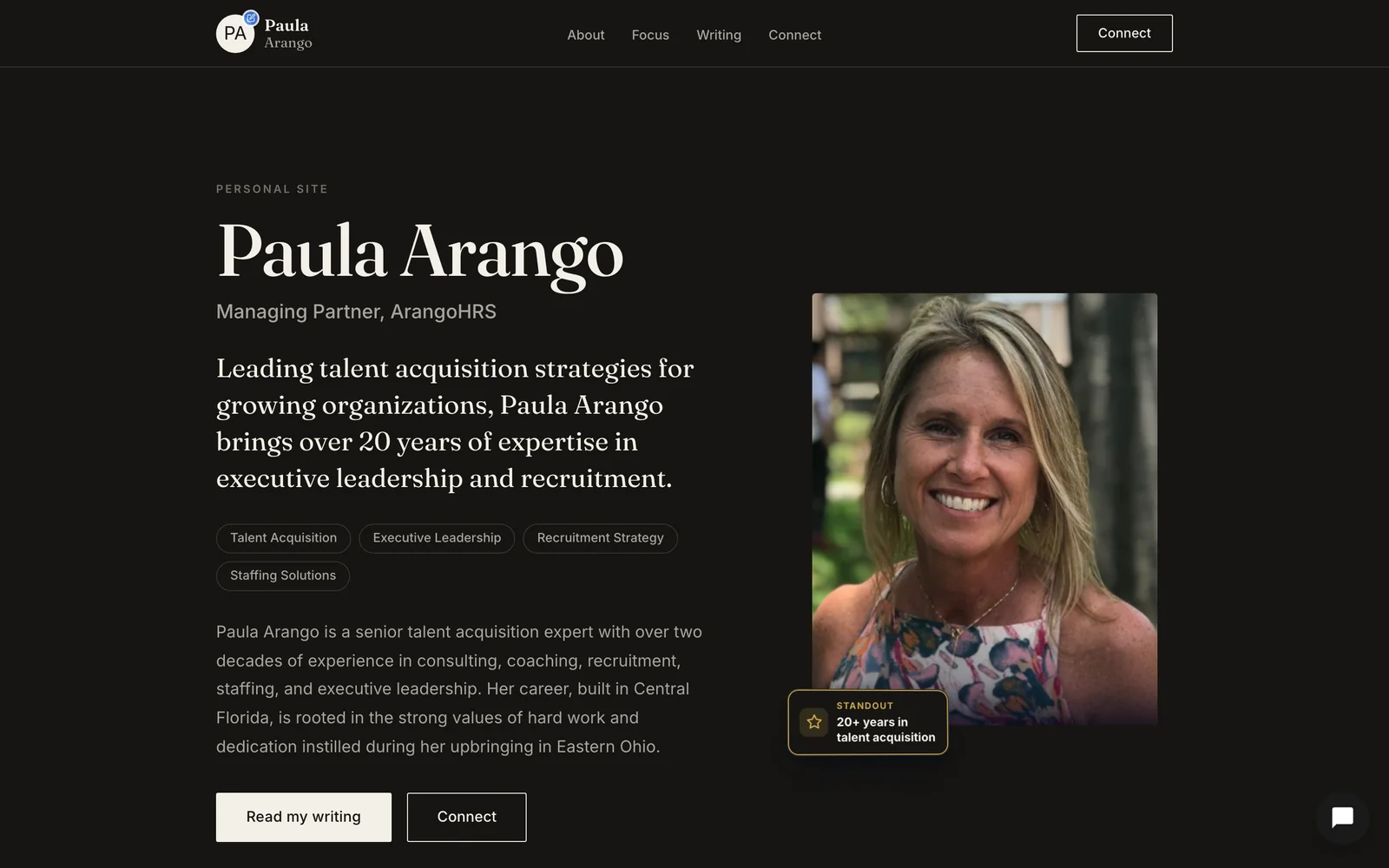
Your record, in your words. Your thinking, gathered in one place. A calm way to reach you. And when they ask an AI who you are, it answers from your page — accurately — instead of guessing from scraps.
Same founder. Same history.
The only thing that changed is that the record is finally yours.
If you'd rather assemble it by hand, a website builder is a fine choice — here's an honest comparison of Neuro vs Wix and the AI builders. And if you advise or lead others who'd benefit, the same idea applies to any professional whose reputation gets verified online.
Own the record
You don't have to imagine the version of this that's actually yours.
Build your home base from your own history — choose "a personal home base," and watch Neuro gather it into a quiet, editorial page you own, in about a minute.
Someone who matters will search your name.
Make sure the record they find is the one you wrote.
Frequently asked questions
Do founders really need a personal website, or is LinkedIn enough?
Personal website vs LinkedIn for executives — which matters more?
Isn't a personal website just self-promotion?
Will AI assistants describe me accurately without a personal site?
What should a founder's personal website include?
See what Neuro would build for you
Build your demo from your own data in about 60 seconds — then watch your AI team take it live and grow it.
Build my demo in 60 seconds → Explore the showcase