Professionals
LinkedIn vs. a Personal Website: Why Professionals Need Both in 2026
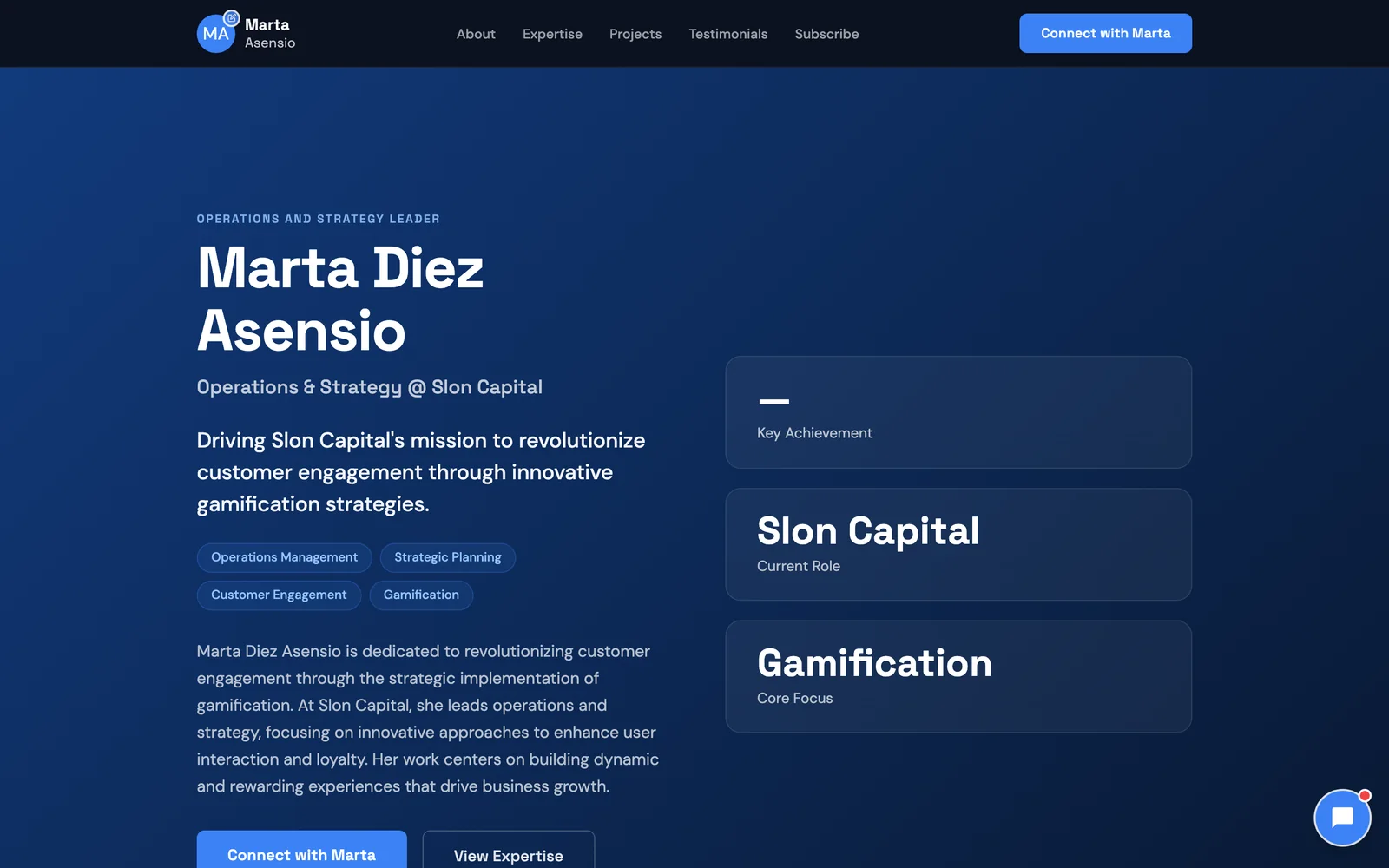
LinkedIn vs. a personal website: which one does a professional need? Both, because they do different jobs. LinkedIn is where people find you. A personal website is where they decide about you. And WhatsApp is where you close.
Most consultants, coaches and founders have the first and the last.
The middle is missing.
And you never see what that costs you.
Here's the thing.
Nobody tells you they checked you out and quietly moved on. There's no missed call and no rejection email. The work just goes to someone else, and you never hear about it.
This guide is the honest version of the "do I need a website?" question.
We'll cover what LinkedIn does brilliantly, the five moments it can't cover, and when you genuinely don't need a site.
"I have LinkedIn and WhatsApp. Why would I need a website?"
It's a fair question.
And for a lot of your work, those two are enough.
LinkedIn gets you seen. Your posts, your network, your recommendations: all of it builds attention.
WhatsApp gets you paid. Once someone is talking to you, you're good at turning that into work.
So what's the problem?
Everything that happens between "I've heard of you" and "Hi, can we talk?"
That's the moment a stranger decides whether you're worth messaging.
And neither LinkedIn nor WhatsApp was built for it.
What LinkedIn is great at (and where it stops)
Let's give LinkedIn its due.
- Reach. Your posts can land in front of people you'd never meet.
- Social proof. Mutual connections and recommendations do real work.
- Low effort. You already have a profile. It's free.
But LinkedIn is a feed and a résumé.
It's designed to keep people on LinkedIn, scrolling past you to the next post.
Your profile looks almost exactly like everyone else's: same layout, same blue, same "About" box.
And a lot of it is hidden from anyone who isn't logged in.
LinkedIn gets you noticed. It was never designed to get you chosen.
The 5 moments LinkedIn and WhatsApp can't cover
Each of these happens to independent professionals every week.
Each one is a place where a website quietly does the work.
1. When someone asks ChatGPT who to hire
More buyers now start with a question like "Who's a good fractional CFO in Austin?" typed into ChatGPT, Perplexity or Google's AI answers.
These tools recommend people they can read and understand.
LinkedIn limits what logged-out visitors and most automated crawlers can see. So your best material, the posts and recommendations, may be invisible to them.
A website is open, readable and yours. It can state plainly who you help, where, and with what result.
If the AI can't read you, it can't recommend you.
We go deeper on how AI assistants choose who to cite in our AI search guide.
2. When the client's CFO Googles you before signing
You've had a great first call.
Now someone on their side (the CFO, a partner, procurement) types your name into Google before approving the budget.
What do they find?
A LinkedIn profile reads like a résumé. A clear website reads like a firm.
That difference matters most on the deals that matter most. It shapes whether you're seen as a freelancer to haggle with or a specialist to trust.
3. When a referral says "send me something"
Referrals are most professionals' best source of work.
But watch what happens next.
Your client says, "You should talk to Sam." The other person says, "Great, send me something."
What gets sent? A LinkedIn link. Maybe a phone number.
Neither one explains what you do, who you've helped, or how to book you.
A referral is only as strong as the link that follows it.
We told this story in full in The Referral You Never Heard About.
4. When a prospect has a question at 11pm
WhatsApp works beautifully when you're there to reply.
But prospects read your post at night, on weekends and from other time zones.
At that moment they have a question, like "Do you work with companies my size?" or "What does an engagement look like?"
With only WhatsApp, the answer is silence until you wake up.
A website answers the common questions all the time. Some sites, including the ones Neuro builds, add an assistant that answers in your words and takes the person's details so you can follow up.
5. When the platform changes the rules
You don't own your LinkedIn profile.
The algorithm decides who sees your posts. Features change. Accounts occasionally get restricted.
None of that is a reason to leave LinkedIn.
It's a reason to have one place online that's actually yours: your name, your domain, your rules.
We wrote about this in Why Founders Need a Home They Own.
LinkedIn vs. personal website: what each one is for
| Personal website | |||
|---|---|---|---|
| Main job | Get found, build attention | Make the case, get chosen | Close and deliver |
| Who controls it | You | You and Meta | |
| Readable by Google and AI | Partly | Fully, if set up well | No |
| Works while you sleep | Your posts do, a little | Yes | No |
| Looks like | Everyone else's profile | You | A chat |
So it isn't LinkedIn or a website.
Curious what yours would look like?
Local business or professional — Neuro builds your site from your own data in about 60 seconds.
Build my demo in 60 seconds →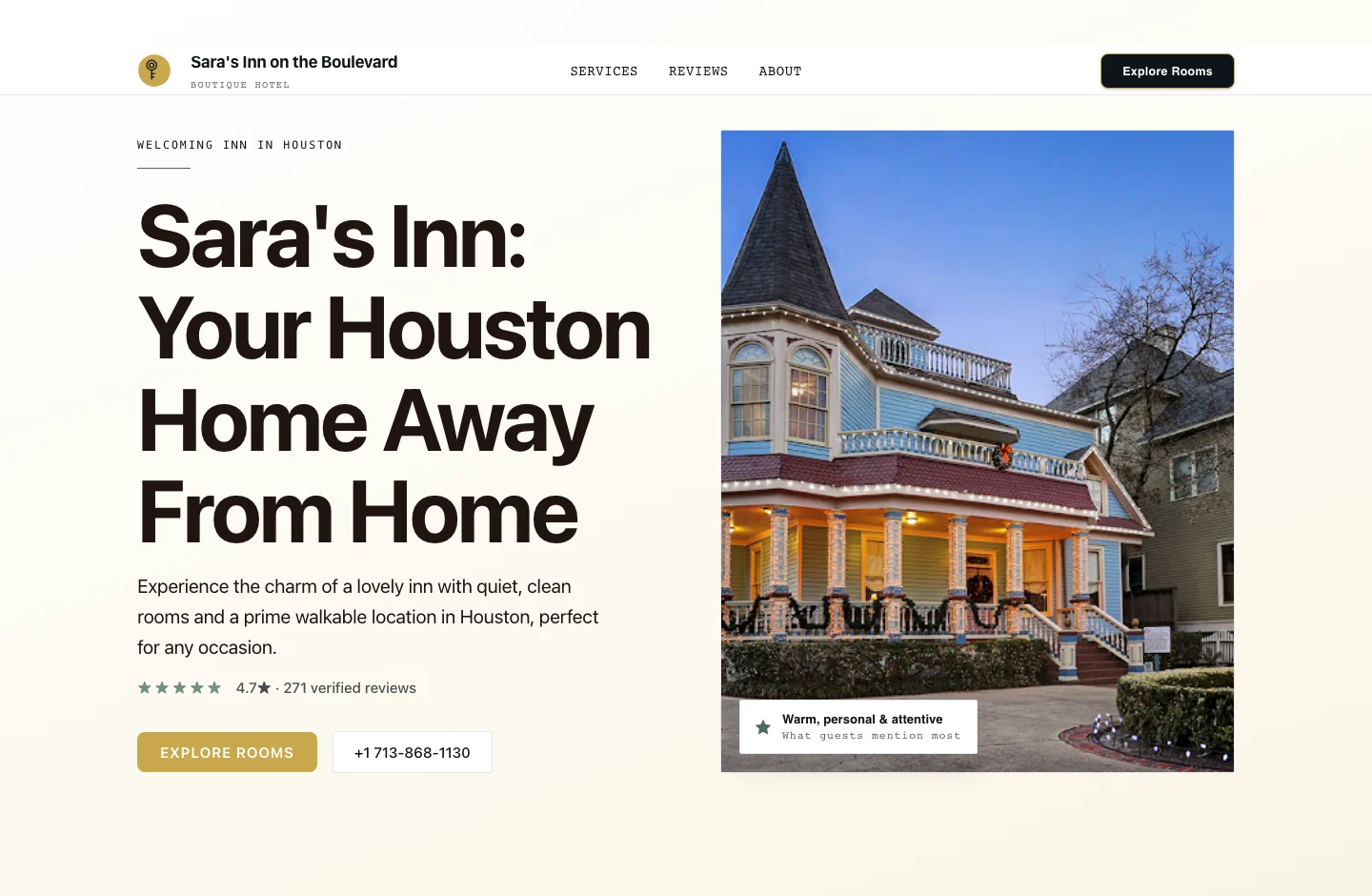
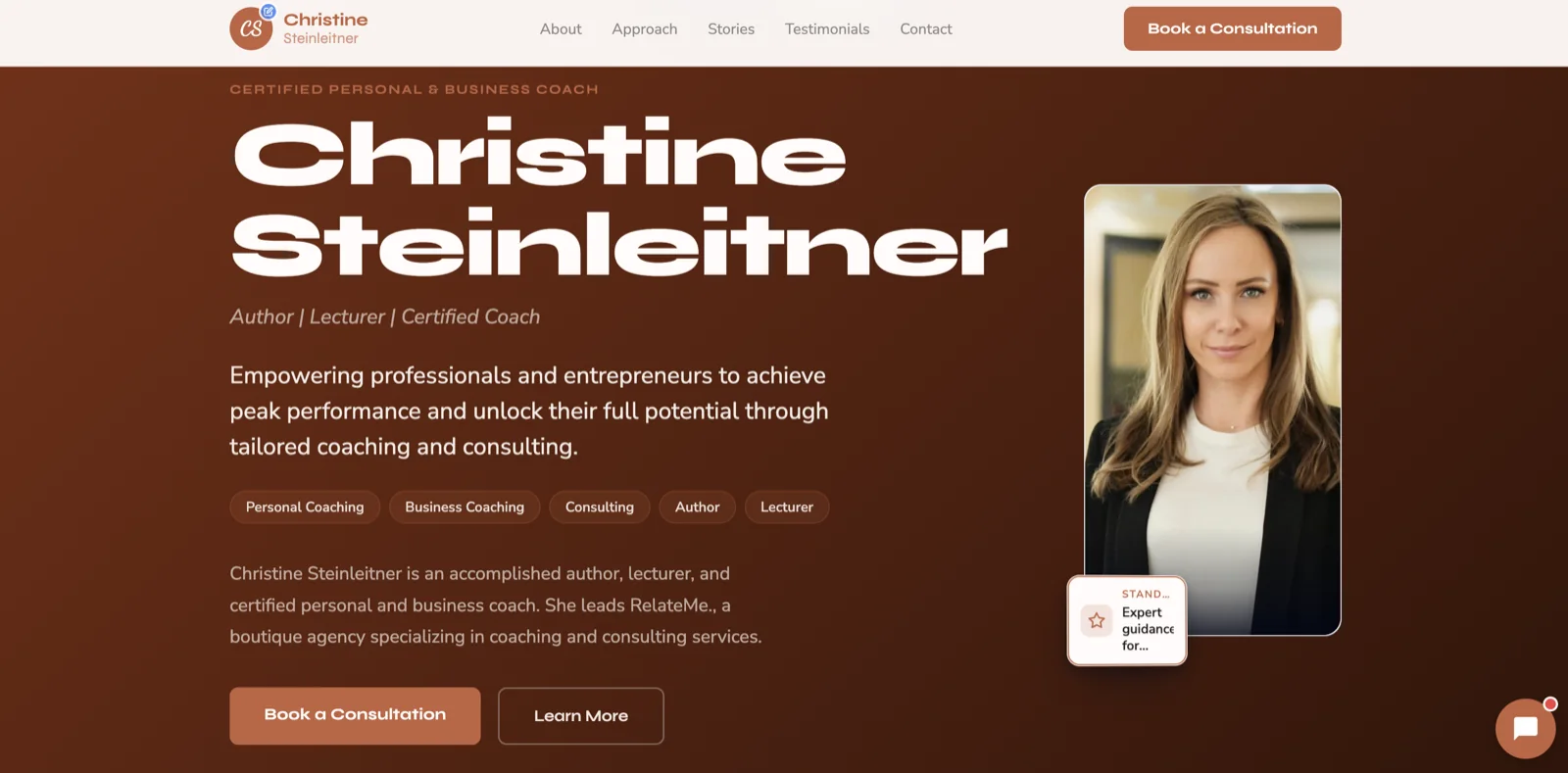

LinkedIn brings people in. Your website convinces them. WhatsApp closes.
When you genuinely don't need a website
Honesty matters here, so here's the other side.
You probably don't need one yet if:
- You're fully booked from a small, closed network and don't want new clients.
- You work inside one company and aren't selling your own services.
- Every client comes from one or two people who already know you well and never check you out.
If that's you, keep doing what works.
But if you want new clients, higher-value clients, or clients from referrals you haven't met, the gap above is costing you.
What a good professional website actually needs
It's much less than you'd think.
You don't need ten pages, a blog, or a designer.
You need one clear page that answers what a stranger is silently asking:
- Who do you help? One sentence, not a job title.
- What result do you get them? Specific beats impressive.
- Why trust you? Experience, credentials, a few named clients or testimonials.
- What does working with you look like? Services or engagement types.
- How do I start? One obvious button: book a call, or send a message.
Add your own domain (usually $10–15 a year from a registrar) and the basics Google and AI tools need to understand you, such as page titles, descriptions and structured data.
That's it.
The fastest way to get one
You have three honest options.
- Hire a designer. Best if you want something fully custom and have the budget and time.
- Use a builder like Wix or Squarespace. Good if you enjoy building and writing it yourself.
- Let AI build it from what you already have. Your LinkedIn profile already holds most of the content: your experience, skills, recommendations and story.
That last one is what Neuro does.
Paste your LinkedIn profile and Neuro writes and builds a full personal site from it in about a minute, ready for Google and AI search. You can see it free before you decide anything.
Your career is already online. It's just scattered across a feed. A website puts it in one place where a stranger can say yes.
Frequently asked questions
Is LinkedIn enough for a consultant or freelancer?
What's the difference between a LinkedIn profile and a personal website?
Do I need a website if I get all my clients from referrals?
Can ChatGPT find my LinkedIn profile?
How much does a personal website cost?
What should a consultant's website include?
See what Neuro would build for you
Build your demo from your own data in about 60 seconds — then watch your AI team take it live and grow it.
Build my demo in 60 seconds → Explore the showcaseJust need the website itself — no ongoing marketing? See Essential — $39/year →