Professionals
The Referral You Never Heard About — Why Great Professionals Still Lose Clients Online
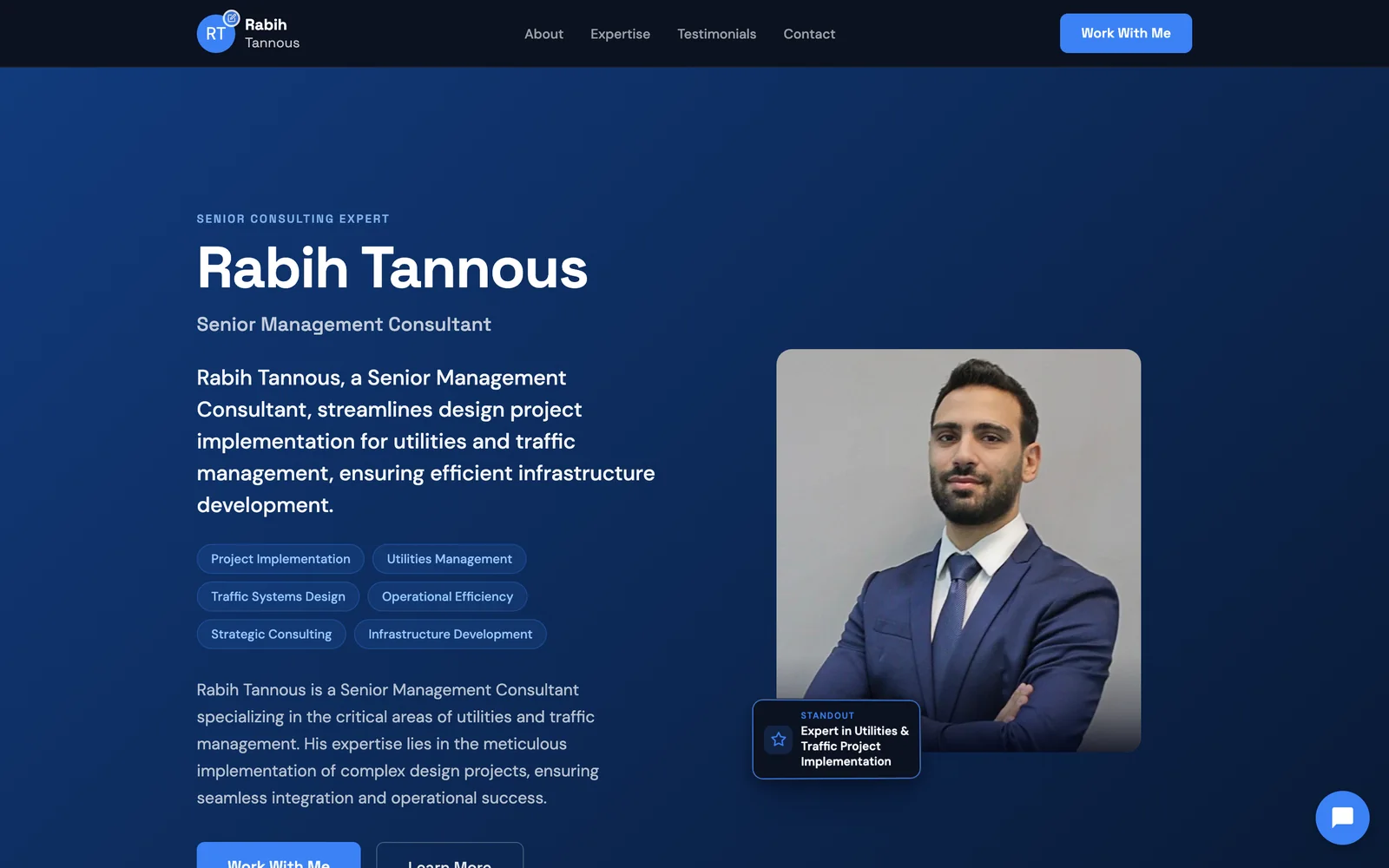
Do consultants need a website when they already have LinkedIn?
Yes — but not for the reason you'd guess.
Not to look impressive. To stop losing the clients you've already earned.
Let me show you how that loss actually happens — because you never see it.
A client of yours is at dinner. Someone across the table says, "I need exactly what you do — know anyone?"
Your client says your name. Warm, unprompted, the best lead there is.
The next morning, that person Googles you.
And here's what they find: a LinkedIn profile behind a login wall, a headshot from 2014, and a PDF from a conference you spoke at once.
Then — because they were given two names at that dinner — they Google the other one.
That person has a website. It answers every question. It has their story, their services, a way to book a call.
Guess who gets the email.
The referral you never heard about
You never find out any of this happened.
There's no missed call. No rejection. No "thanks but I went with someone else."
Just a warm, pre-sold referral who quietly chose the professional who was easier to check out.
This is the trap for great professionals: your reputation travels by word of mouth, but it gets verified online. And if there's nothing to verify — or what's there is thin, old, or locked behind a login — the referral cools before it ever reaches you.
Your expertise is real.
To the person deciding tonight, it's just unconfirmed.
It's not only consultants — ask the dental clinic
Now picture a dental practice.
A decade of happy patients. A wall of five-star reviews. And a website built in 2009 that nobody has touched since.
It doesn't fit a phone screen. It can't answer "do you take my insurance?" There's no way to book — just a phone number that rings an empty front desk after 6pm.
A new patient in pain at 10pm doesn't wait for morning.
They book the clinic whose site loads on their phone, answers the insurance question, and takes the appointment on the spot.
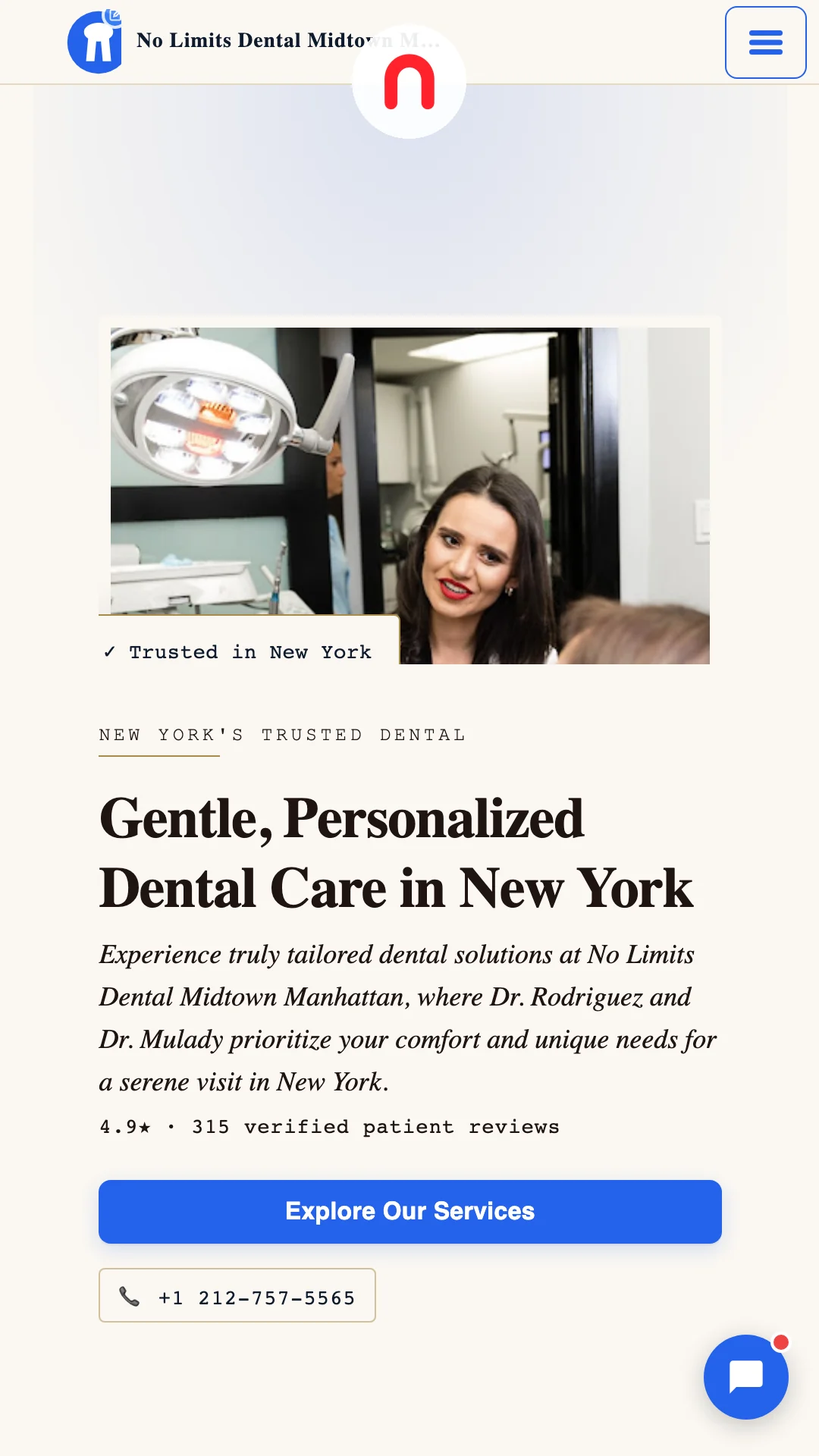
Same quality of care. Same reviews. The clinic that answered at 10pm just won a patient the better clinic never knew it was competing for.
Whether you're a solo consultant or a practice with a waiting room, the shape of the problem is identical. So let's name it precisely.
The 5 gaps keeping professionals stuck in the 2000s
Being a credible professional in 2005 meant a business card and a referral network.
In 2026 it means five things. Miss one, and clients quietly choose someone else.
1. A home you own. LinkedIn is rented land. The algorithm decides who sees you, the format makes you look identical to nine hundred million other profiles, and one policy change can bury your reach overnight. Your expertise deserves an address you control.
2. Being findable. When someone searches your name — or "business coach in Austin," "employment lawyer near me" — a page you own can answer. A locked profile can't, and a 2009 site answers the wrong decade's questions.
3. Referrals with somewhere to land. You earned the referral. But it now passes through a search bar before it reaches you. Without a real destination — your story, your proof, a way to book — a share of your warmest leads leak away before you ever hear their name.
4. Content that compounds. Post something brilliant on LinkedIn and it's gone in 48 hours. A professional who publishes on a home they own builds a library that keeps working — getting found, cited, and read long after the feed forgot it. (Here's why a personal site beats social for people who sell expertise.)
5. Being citable by AI. The new one, and the biggest. Prospects now ask ChatGPT and Perplexity "who's a good financial advisor in Denver?" — and AI answers with professionals it can actually read. A login-walled profile is invisible to it. A structured site gets cited. (Here's exactly how AI assistants pick who to recommend.)
Notice what's not on that list.
Not one gap is about how good you are at your job.
"But LinkedIn works fine for me"
Let's be fair — because this objection is half right.
LinkedIn is powerful. If it brings you conversations and clients, keep posting. Nothing here says delete it.
But here's the thing.
LinkedIn and a website do two different jobs.
The feed creates attention. The home converts it.
Your profile is where a stranger discovers you. Your site is where a serious prospect goes to decide. One is a stage you rent; the other is an office you own. The professionals who win use both — the feed to be seen, the home to be chosen.
So why do so many excellent professionals still skip the home?
You probably know the reasons — they might be yours:
- No time. Your calendar is clients, not web design.
- "LinkedIn is enough." Until the referral checks you somewhere LinkedIn can't reach.
- Tech fear. Website builders promise "easy" and deliver a weekend of wrestling with fonts. (We broke down what a professional site really costs — including the hours.)
In 2005, those were good reasons. The tools really were that painful.
In the AI age, they're solved problems.
What catching up actually requires
Forget tools for a second. Here's what a professional actually needs to stop losing clients online:
Curious what yours would look like?
Local business or professional — Neuro builds your site from your own data in about 60 seconds.
Build my demo in 60 seconds →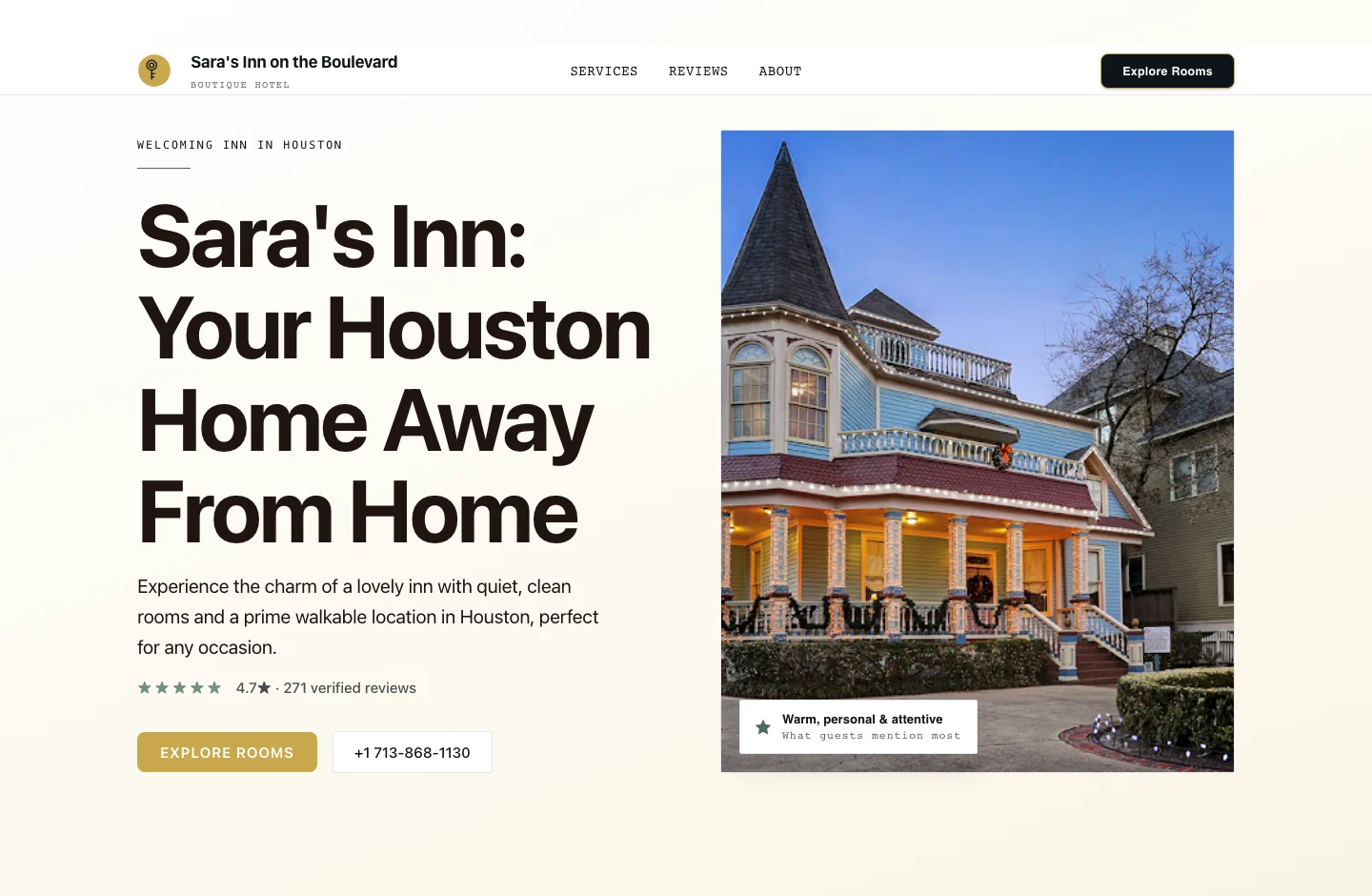
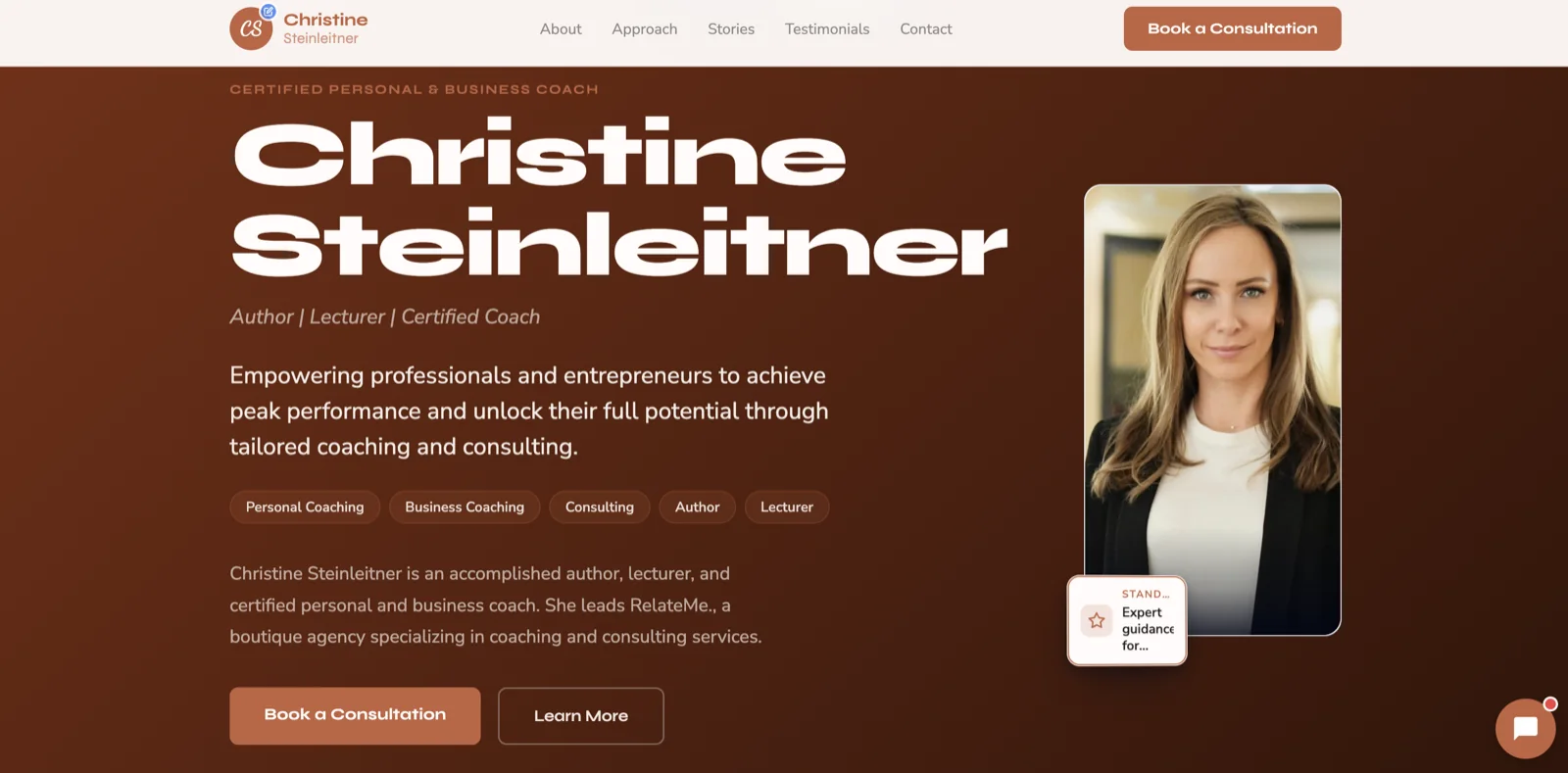

- A real website that loads on a phone — because that's where prospects check you
- Your real credibility on it — your story, credentials, and proof, not a stock template
- Answers to what clients ask before they commit — your approach, your services, who you help
- A way to book or enquire that's one tap away, at 10pm
- Structure that Google and AI assistants can read and cite
- Fresh thinking published over time, so you don't fossilize like that 2009 site
In the old playbook, that's a pricey freelancer plus a part-time job.
Here's the thing though.
Most of that already exists — in your LinkedIn, your CV, your bio. It just isn't a home yet.
Someone has to turn it into one.
How Neuro closes all five gaps in about a minute
This is exactly what we built Neuro to do.
Neuro is an AI team that turns your professional history into a website you own. Your story, your credentials, your services. Not a template with your name dropped in.
And the input is almost comically simple.
It's one file you already have: your LinkedIn profile.
Here's the whole process:
- Open your LinkedIn profile.
- Click More (•••) → Save to PDF.
- Drop that file into the demo form on siteneuro.com, on Professional mode.
That one PDF already holds your headline, experience, skills, even your recommendations.
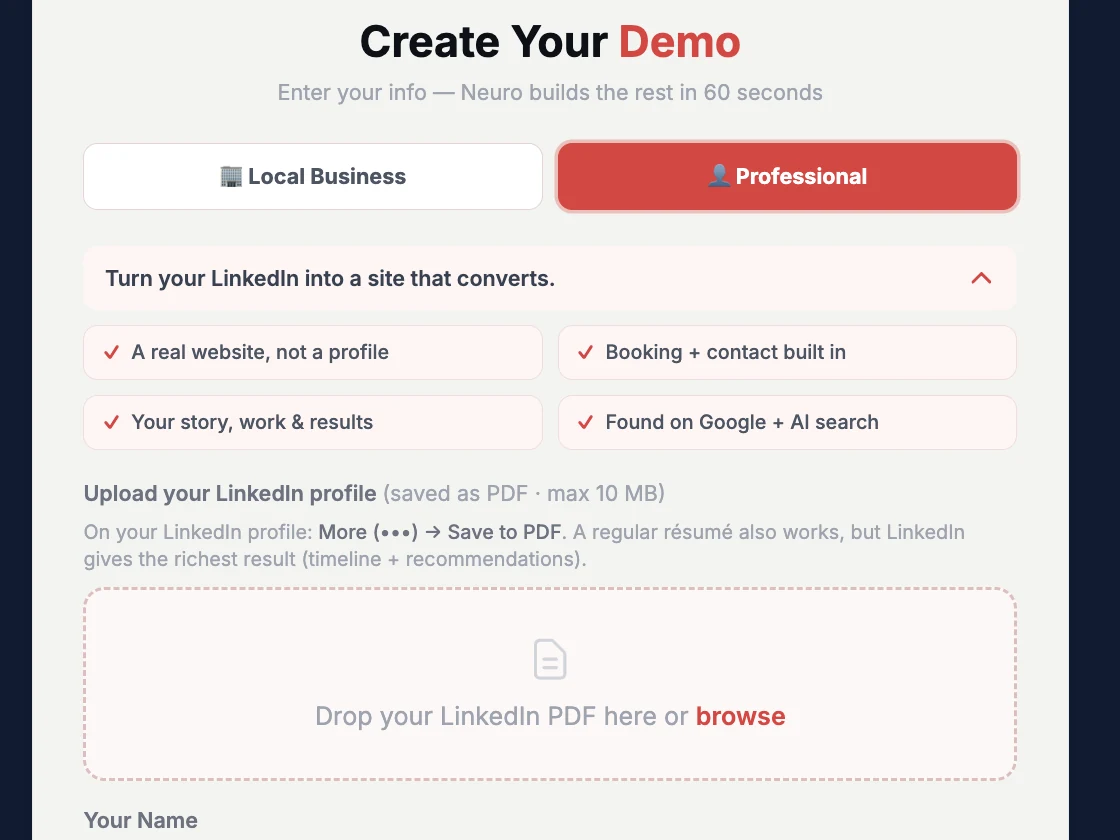
That's the whole input. No blank page, no design decisions, no writing from scratch. Neuro reads your career from that one PDF and builds the site — the profile you already maintain, turned into a home you own.
- A home you own — built in about 60 seconds, live today, with a free siteneuro.com address, and your own domain in a few clicks.
- Findable — structured for search from the first minute, answering the questions prospects actually type.
- Referrals with a destination — your proof and credibility sitting right next to a Book a call button.
- Content that compounds — Neuro drafts articles and updates so your expertise keeps working after launch.
- Citable by AI — clean structure and real data that answer engines can read and recommend.
Then your site goes to work — as a team
Here's what most people miss about Neuro: the website is day one, not the finish line.
Because Neuro doesn't just build the site — it runs it. And you can teach it everything it needs to represent you.
You give it a knowledge base. Your services, your process, the questions clients always ask, the things only you know. Drop them in, and Neuro answers as you — accurately, from your own material, not a generic script. It knows your work and your goals.
Then it never stops working:
- Your front desk, 24/7. It answers prospects at any hour — "do you take my insurance?", "is this who I need?" — and captures the lead or booking with a name and email, waiting for you in the morning.
- Your content team. Neuro drafts blog posts and social posts in your voice, so your expertise keeps compounding on a home you own instead of vanishing in a feed.
- Your analyst. It tracks visits, enquiries, and what's converting — so you can see what's working and where to double down next.
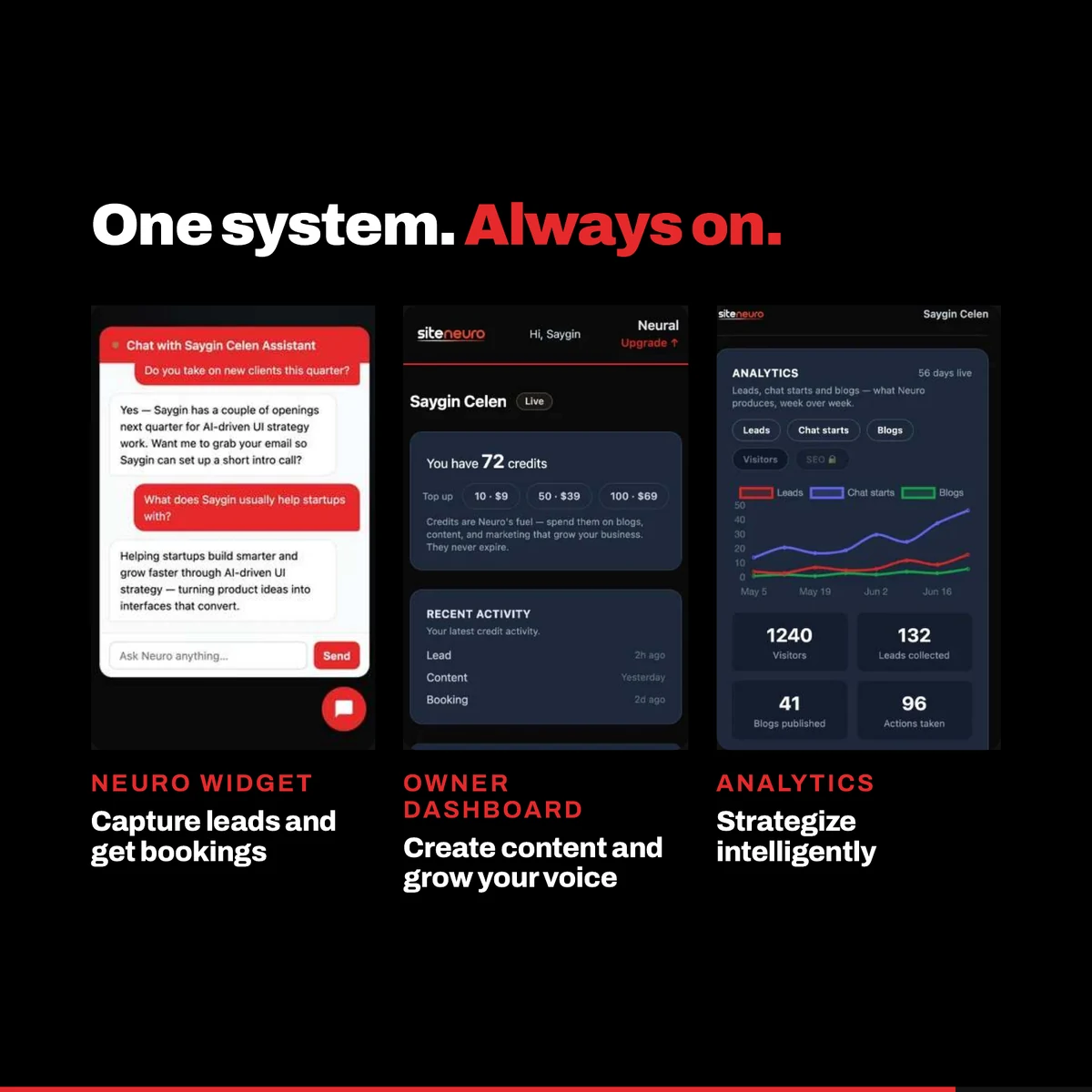
That's the part LinkedIn and a 2009 website could never do. Knowing your work and your goals, Neuro becomes your lead capturer, your support, your content creator, and your strategist.
Your growth team — always on.
Back to the referral
So picture that dinner again, replayed.
Your client says your name. The next morning, the prospect Googles you.
This time, they find a real home:
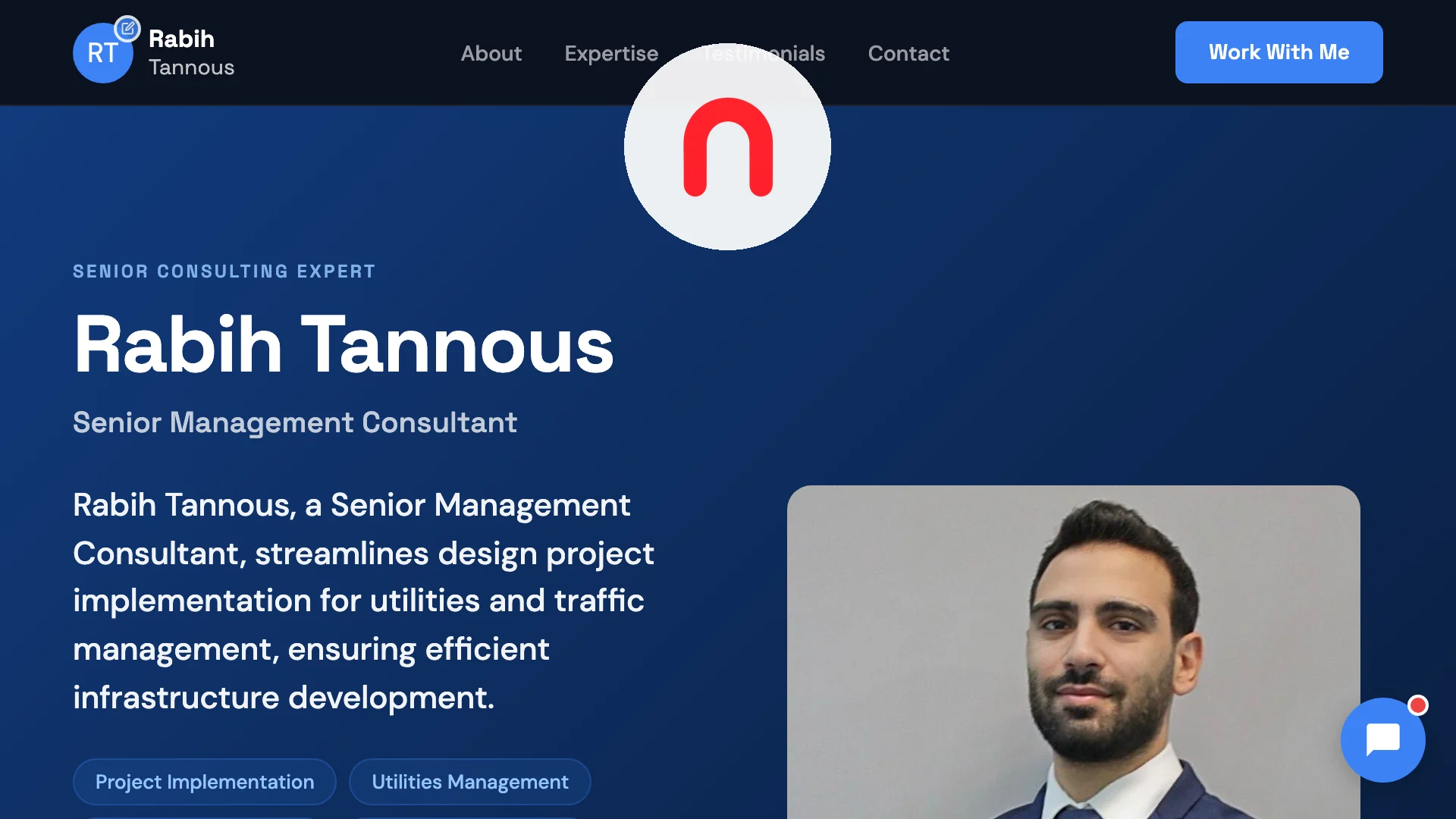
Your story and credentials up top. The exact service they need, spelled out. Proof they can trust. A Book a call button right where a ready-to-hire thumb lands. And Neuro, awake, answering "yes, that's exactly what she does — want me to set up an intro call?"
Same expertise. Same reputation. Same referral.
The only thing that changed is that the prospect could finally confirm what your client already knew.
If you'd rather build it yourself, a website builder is a fine choice — here's an honest comparison of Neuro vs Wix and the AI builders to help you pick. And if you want the step-by-step, here's how to build your professional website with Neuro.
Stop losing the clients you've already earned
You don't have to imagine your practice with all five gaps closed.
Upload your LinkedIn or CV, and watch Neuro build your site from the credibility you already have — in about a minute.
The referrals are already saying your name.
Make sure the internet backs them up.
Frequently asked questions
Do consultants need a website if they already have LinkedIn?
Personal website vs LinkedIn — which matters more for a professional?
What should a professional services website include?
Do AI assistants like ChatGPT recommend professionals?
What's the fastest way for a professional to get a website?
See what Neuro would build for you
Build your demo from your own data in about 60 seconds — then watch your AI team take it live and grow it.
Build my demo in 60 seconds → Explore the showcase