Professionals
How to Get Your First 10 Clients as a Consultant or Freelancer
How do you get your first clients as a consultant or freelancer? Start with people who already know your work, make one specific offer to one specific kind of client, and give them an easy way to check you out and say yes.
Your first 10 clients won't come from ads.
They won't come from a viral post.
They'll come from people who already know you — plus a few who find you because you made yourself easy to find.
Here's the step-by-step.
Why the first 10 are the hardest
When you're new, you have a chicken-and-egg problem.
Clients want proof. Proof comes from clients.
So you're asking strangers to take a risk on you, with nothing to show them.
The way out isn't to pretend you're bigger than you are.
It's to reduce the risk for the first people who say yes — and to start with people for whom you aren't a stranger at all.
Step 1: Start with your warm network
Your first clients are almost always within one or two steps of people you already know.
Former colleagues. Past managers. Old clients from your previous job. Friends who run businesses.
Make a list of 50 names. Really — write it down.
Then send a short, personal message to each. Not a mass announcement. Something like:
"Hi Sam — I've gone independent, helping mid-size manufacturers cut their supplier costs. If that's ever a headache for you or someone you know, I'd love to hear about it."
Notice what that does:
- It says what you do, for whom and what result.
- It doesn't ask them to buy.
- It makes it easy for them to think of someone else.
Most first clients are referrals from this list, not the people on it.
Step 2: Pick a niche narrow enough to be remembered
"I'm a marketing consultant" is forgettable.
"I help independent dental practices get more new patients" gets remembered — and passed on.
A narrow niche feels scary. It feels like you're turning work away.
But here's what actually happens:
- People can refer you, because they know exactly who you're for.
- Your message gets sharper, because you understand one type of client deeply.
- You can charge more, because specialists beat generalists.
You can always widen later. It's very hard to get remembered while being vague.
Step 3: Package one clear offer
New consultants often say "I can help with anything."
Clients hear "I don't know what I'm buying."
Instead, create one starter offer that is:
- Specific: a defined deliverable, not open-ended hours.
- Short: a few weeks, not a year-long commitment.
- Priced clearly: a fixed price is easier to say yes to than an hourly estimate.
For example:
- An accountant: "A one-time cleanup of your books, ready for tax season."
- A business coach: "A 90-day plan built in two working sessions."
- A designer: "A new logo and one-page brand guide in three weeks."
A small, clear yes today leads to bigger work later. Once a client trusts you, the next project sells itself.
Step 4: Borrow proof until you have your own
No clients yet? You still have proof. You just need to show it.
Curious what yours would look like?
Local business or professional — Neuro builds your site from your own data in about 60 seconds.
Build my demo in 60 seconds →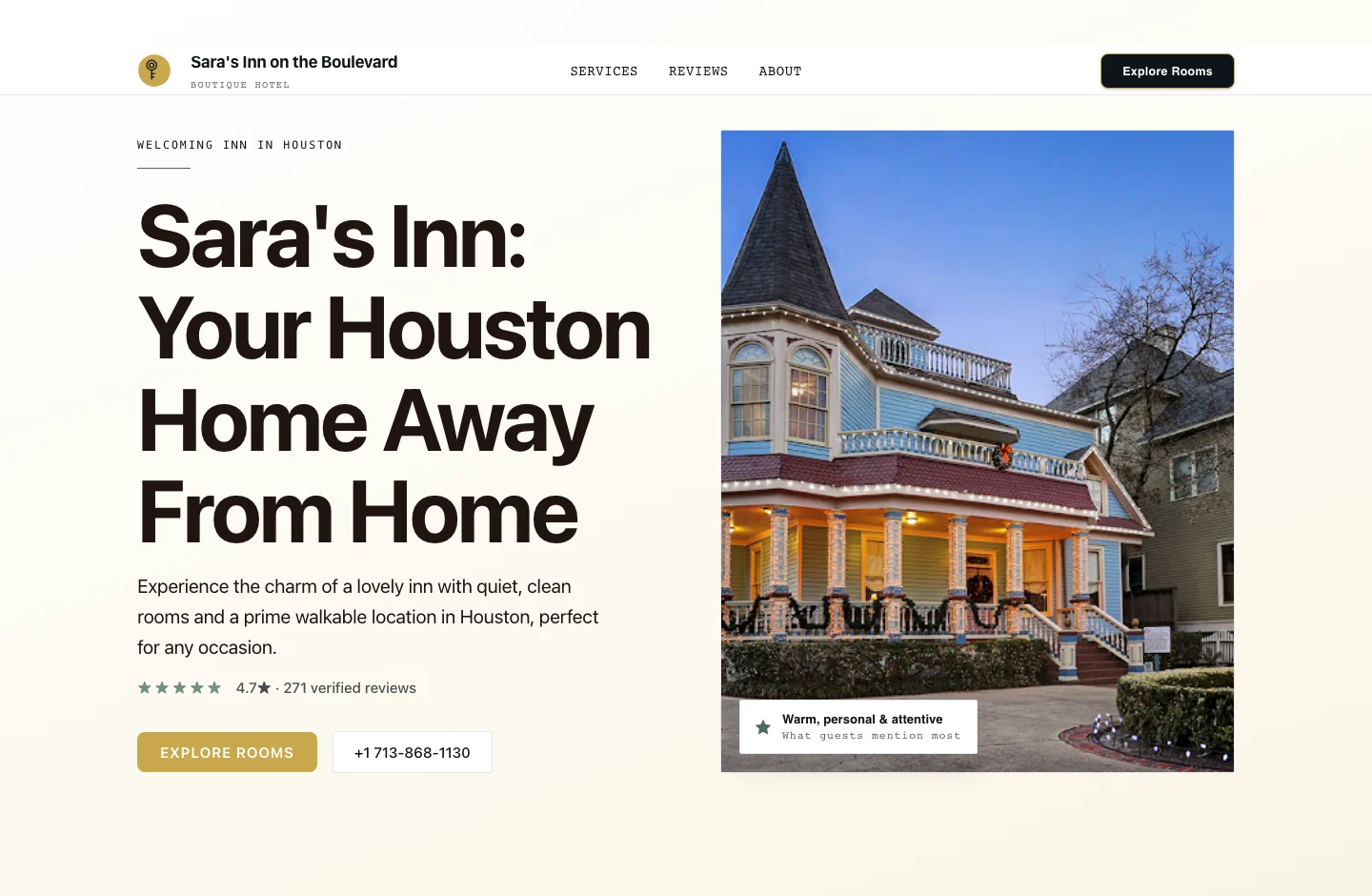

- Past results from your old job (without breaking confidentiality): "Led a project that cut onboarding time in half."
- Testimonials from former colleagues or managers about how you work.
- A small pilot for one client at a reduced price in exchange for a detailed testimonial and permission to share the result.
- A useful free resource — a checklist, a teardown, a short guide — that shows how you think.
Then, the moment you finish your first project, ask for a testimonial.
Every client after that gets easier.
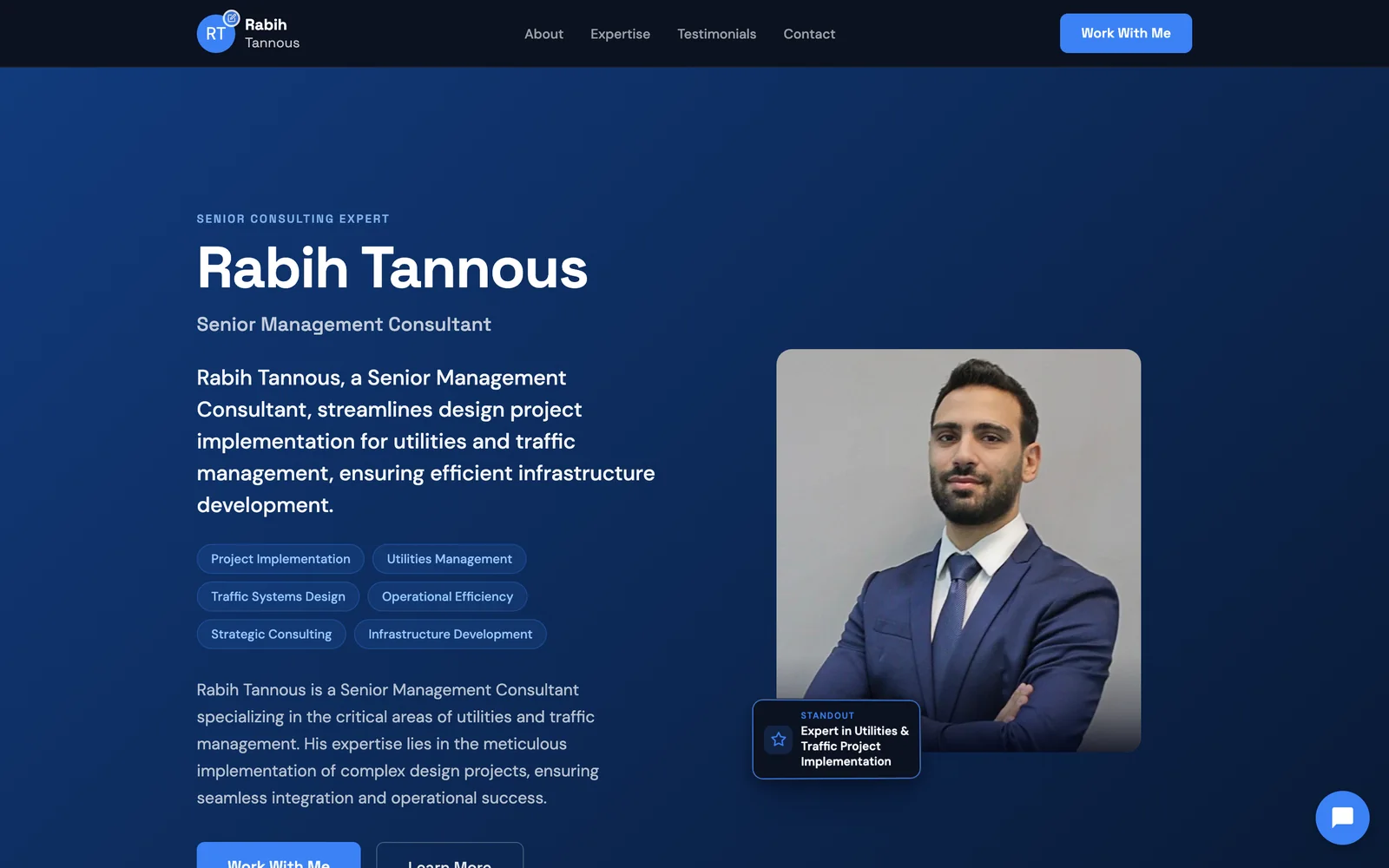
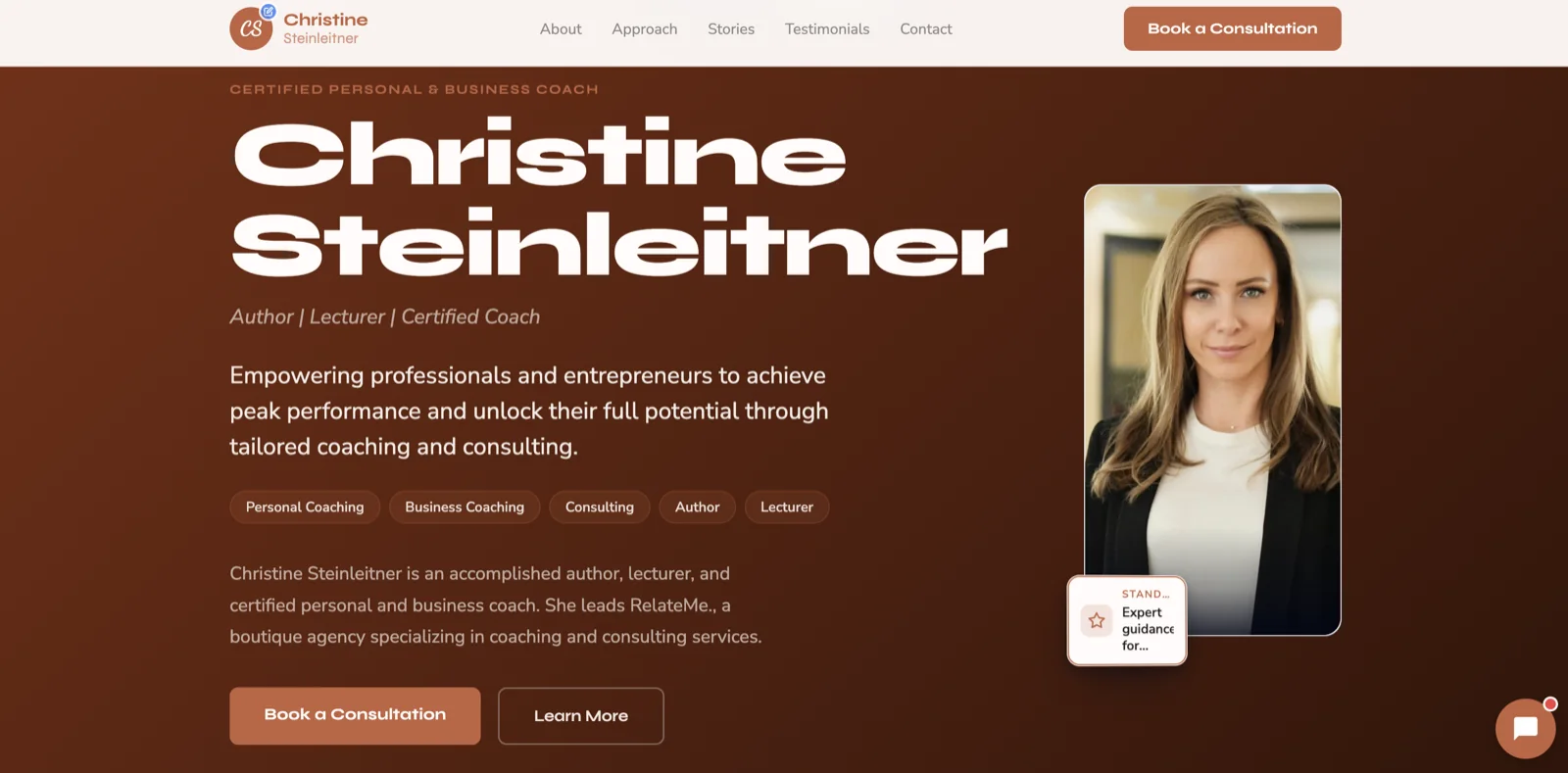
Step 5: Give people somewhere to check you out
Here's something new consultants underestimate.
Almost every referral gets checked.
Someone hears your name, and before they reply, they search for you. They look at your LinkedIn. They look for a website.
What they find decides whether they reach out.
LinkedIn is essential — but it's a profile on someone else's platform, surrounded by your competitors' posts. A simple site of your own says "this is a real practice" in a way a profile can't:
- Your offer, stated clearly at the top.
- Who it's for.
- Proof — testimonials, results, logos if you have them.
- One button to book a call.
We covered this gap in detail in the referral you never heard about: many professionals lose clients at the "let me look them up" step without ever knowing it.
Step 6: Show up where your clients already are
Once your warm network is contacted, widen the circle slowly:
- Post on LinkedIn once or twice a week about problems your niche faces — not about you.
- Join one or two communities your clients belong to: an industry association, a local business group, a Slack community.
- Offer a short talk or workshop to a group your clients attend.
- Partner with people who serve the same clients but don't compete — an accountant and a lawyer, a designer and a copywriter.
Pick two. Do them consistently. Ignore the rest for now.
Step 7: Follow up (this is where most deals are won)
Most first clients don't say yes the first time.
They say "sounds interesting" — and then get busy.
A polite follow-up a week or two later isn't pushy. It's professional:
"Hi Priya — following up on our chat about your onboarding process. Happy to share a short outline of what I'd do, if helpful."
Keep a simple list of everyone you've talked to and when you last followed up.
Consistency beats brilliance. The consultant who follows up wins more often than the one with the better pitch.
Your first-10-clients checklist
- Write your one-sentence niche: I help [who] get [result].
- Package one starter offer with a fixed price.
- Make your list of 50 warm contacts and message them personally.
- Gather three pieces of borrowed proof.
- Put up a simple page with your offer, proof and a booking button.
- Choose two channels and show up every week.
- Follow up with everyone, once.
Do that for eight weeks. The first 10 will come.
Frequently asked questions
How long does it take to get your first clients as a consultant?
Should a new consultant work for free?
Do consultants need a website or is LinkedIn enough?
How do I find my consulting niche?
How should I price my first consulting offer?
What's the fastest way to get consulting clients?
See what Neuro would build for you
Build your demo from your own data in about 60 seconds — then watch your AI team take it live and grow it.
Build my demo in 60 seconds → Explore the showcaseJust need the website itself — no ongoing marketing? See Essential — $39/year →