Get More Customers
How Accountants and Bookkeepers Get More Clients Online
Someone just typed "accountant near me" or "small business bookkeeper" into Google.
They're not browsing. They have a tax deadline, a messy set of books, or a business they just started.
The best website for accountants is the one that shows up in that moment — and answers the questions a nervous prospect is already asking.
Here's the thing about accounting and bookkeeping.
You're not selling a product. You're asking someone to hand you their financial life.
That's a trust decision before it's ever a service decision. And most firms lose that decision online before the phone even rings.
Why "accountant near me" decides who gets the call
Think about how people actually pick a financial professional.
They don't scroll through 20 options.
They search, glance at the first few results, and pick whoever looks the most credible in about ten seconds.
If your firm doesn't show up — or shows up looking thin — you were never in the running.
That's true any month. But it gets sharper at specific moments:
- A new business owner realizing they need payroll help.
- A freelancer filing quarterly estimates for the first time.
- A small business owner whose bookkeeper just quit.
Every one of those moments starts the same way — a search, not a referral. And whoever looks most credible in that search wins the click.
This isn't unique to accounting, either. The same credibility gap shows up for lawyers and healthcare providers too — any profession where trust has to be earned before someone will even book a call. If you want the fuller picture of why good businesses stay invisible online, this breaks down the core problem.
Why a LinkedIn profile isn't enough
A lot of accountants and bookkeepers treat LinkedIn as their website.
It's free. It's already built. It feels like enough.
It isn't — and here's the gap.
LinkedIn tells a prospect where you worked and what you're certified in. It doesn't tell them:
- What services you actually offer, in plain language.
- What it costs to work with you, even roughly.
- How to book a consultation without sending a cold message and waiting.
A prospect comparing you to another firm with a real website sees one side that looks established and one side that looks like a work history.
Same qualifications. Very different first impression.
And a financial professional's website has to work harder than most, because the ask is bigger. A prospect isn't buying a haircut. They're about to share bank statements, payroll numbers, and tax filings with a stranger.
They want proof, not just a profile, before they'll do that.
What actually earns trust before someone shares their financials
So what convinces a nervous prospect to pick up the phone?
It's not clever copy. It's a handful of specific, concrete signals — right where they can see them without hunting.
- A clear service list. Bookkeeping, tax prep, payroll, advisory — spelled out, not implied. A prospect should know in five seconds whether you do what they need.
- Credentials up front. CPA, EA, QuickBooks ProAdvisor, years in practice — whatever applies to you. This is the fastest trust shortcut you have. Don't bury it on an "About" page three clicks deep.
- Real client testimonials. Not a vague "great service!" — specifics. What kind of business, what problem you solved, in their words if you can get it.
- An easy way to book a consultation. Not just a phone number. A visible, obvious next step — a booking link, a contact form, or both — on every page, not just the footer.
Notice what's missing from that list: stock photos of calculators and handshakes. Nobody trusts a website more because of a stock photo. They trust it because it answers their actual questions.
Specifics beat polish, every time. A plain page with real credentials and a real client quote will outperform a beautiful page with none.
Tax season is a predictable search spike — are you ready for it?
Here's something most accounting practices underuse.
Curious what a financial professional website like this looks like for you?
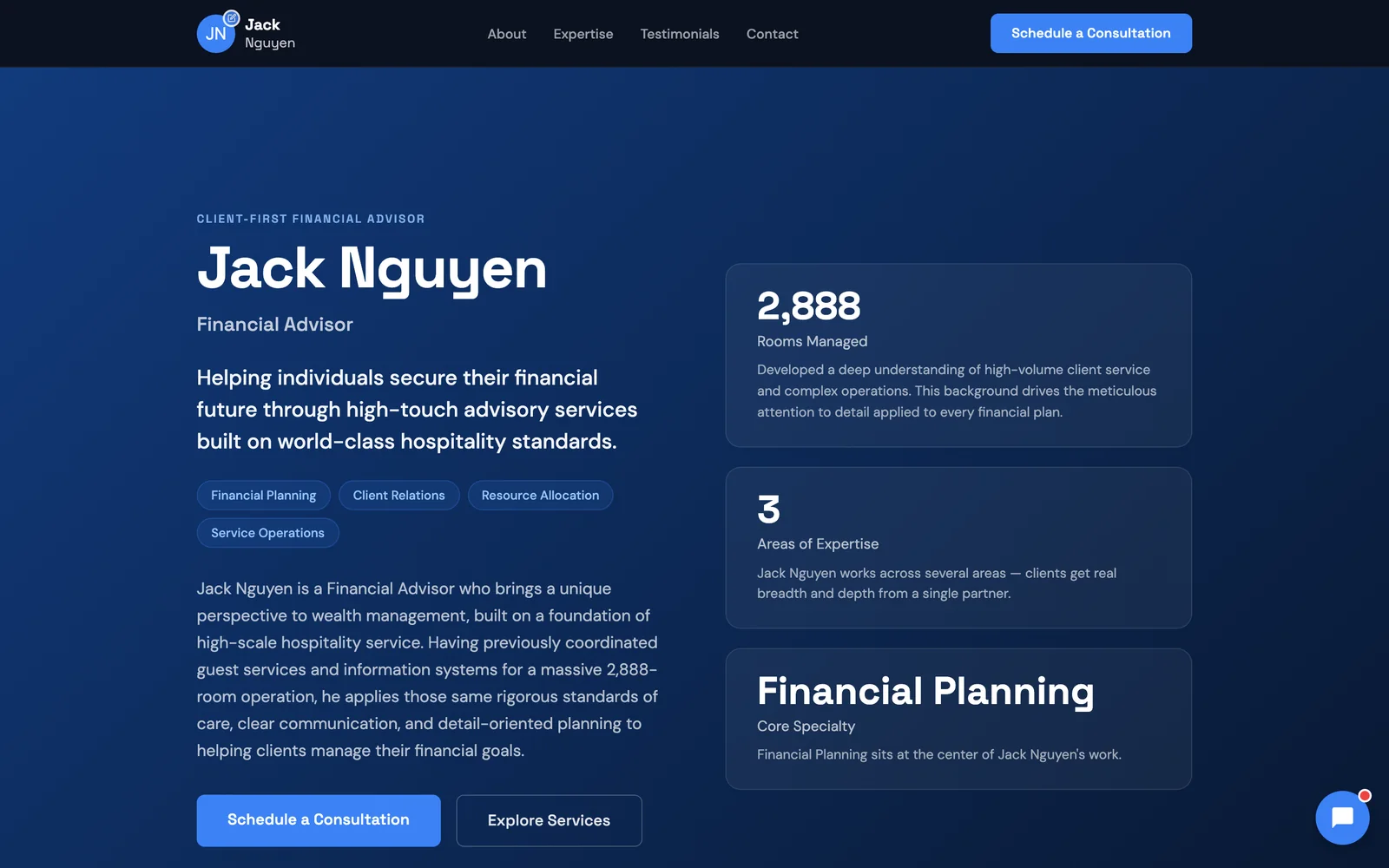
Neuro built Jack Nguyen (Financial Advisor)'s site from their own Google data — yours can be next, in about 60 seconds.
Build my demo in 60 seconds →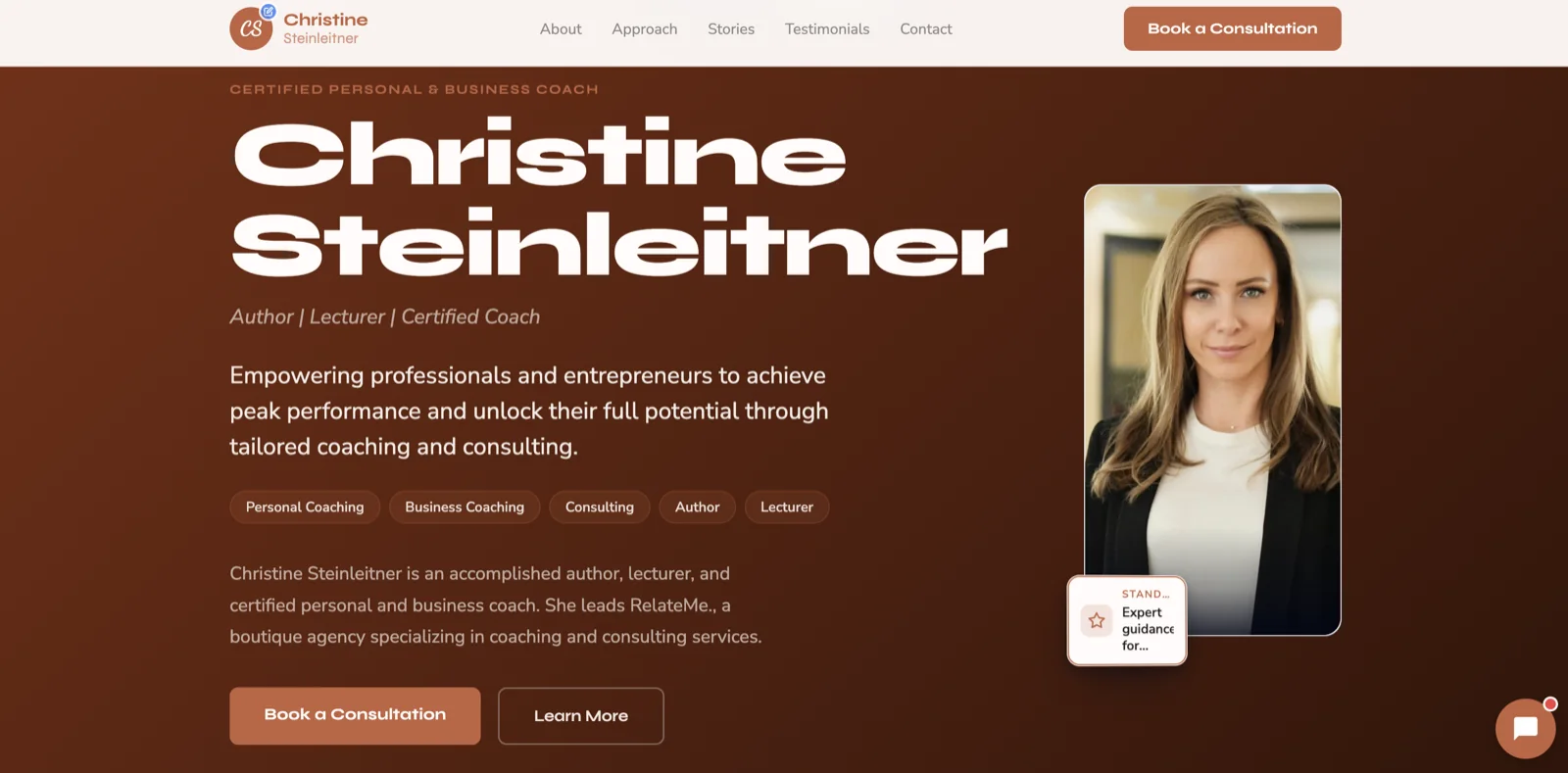

Client search demand for accountants and tax preparers isn't steady all year. It spikes hard around filing deadlines, then again when businesses are choosing a bookkeeper for the new fiscal year.
That spike is predictable. Most firms don't prepare for it.
If your site is thin, outdated, or missing entirely, you miss the exact window when the most people are actively searching and ready to switch. The demand shows up whether you're findable or not — the only question is whether it finds you or the firm down the street.
A site that's already solid going into that window doesn't need last-minute scrambling. It's just sitting there, ready to be found, while you focus on the actual work piling up on your desk.
Referrals still need a website behind them
Referrals feel different from cold search — but they're not as safe as they seem.
Here's what actually happens after a referral: someone recommends you, and the prospect googles your name before they ever call.
That's not optional. It's close to universal behavior now.
If what they find is thin — an outdated page, no reviews, no clear services — the referral loses some of its power right there. The recommendation got you the search. The website decides whether the search turns into a call.
A strong website doesn't replace referrals. It protects them. It's the difference between a warm lead that converts and one that quietly cools off after a five-second Google check.
What a trust-first financial services website looks like
You don't have to imagine what this looks like done well.
Neuro doesn't have a live demo built specifically for an accountant yet — but it builds accounting and bookkeeping sites in the same clean, trust-first style it uses for other financial professionals.
Here's a live example: a real website for a financial advisor, built by Neuro. It's a financial advisor's site, not an accountant's — but the layout is the same "Professional" style Neuro uses across accounting, law, and financial services: clear services up top, credentials front and center, and a direct path to book a consultation instead of a maze to find one.
If you want to see how the same style plays out across other niches, browse more real examples in the showcase.
The pattern holds regardless of the exact profession: name what you do, prove you're credible, make booking effortless. That's the whole job of a financial professional's website.
Building the case before the phone rings
None of this is complicated. It's also not optional.
Every prospect — cold search or warm referral — checks you out online before they trust you with their finances.
Show them a clear service list. Put your credentials where they can't miss them. Make booking a consultation take one click, not an email back-and-forth.
Do that, and the same searches that used to pass you by start turning into consultations instead. The same credibility gap that costs law firms and chiropractors clients costs accounting practices too — and it's just as fixable.
Frequently asked questions
Do accountants really need a website if most clients come from referrals?
What should be on an accountant's homepage?
Is a Google Business Profile enough on its own?
How much does credential placement really matter?
Does timing around tax season actually matter for a website?
How does Neuro fit into this?
See what Neuro would build for you
Build your demo from your own data in about 60 seconds — then watch your AI team take it live and grow it.
See a real financial professional example: Jack Nguyen (Financial Advisor)
Build my demo in 60 seconds → Explore the showcaseWant Neuro running this for you every week? See Apex Concierge — from $119/mo →