Professionals
Personal Branding for Professionals: Build Trust Before the First Call
Clients look you up before they call. Here's how to make sure what they find earns their trust.
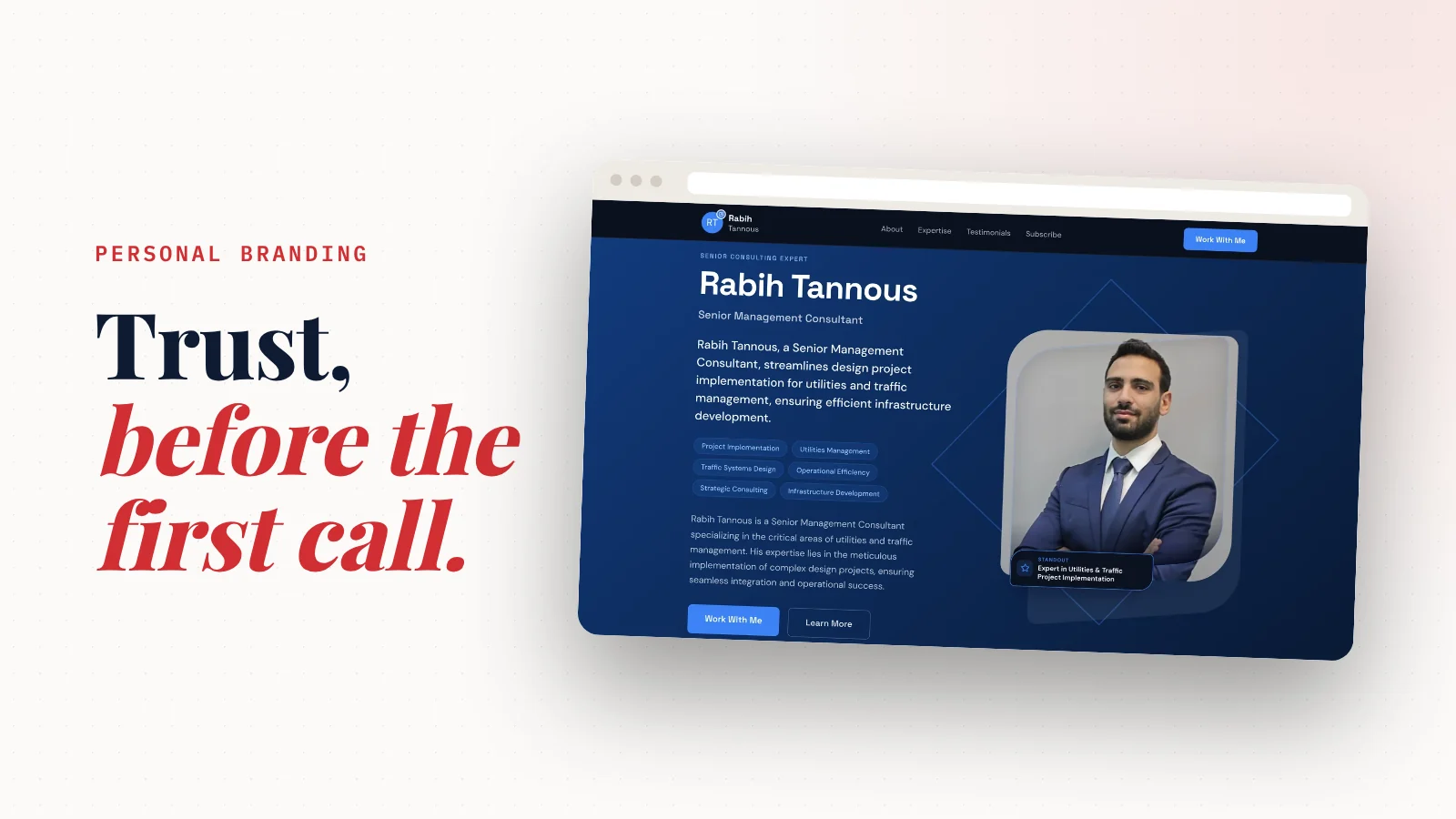
What is personal branding for professionals? It's what a potential client finds, and feels, when they look you up before deciding whether to call.
For consultants, coaches, advisors and other professionals, a strong personal brand means a clear specialty, proof you deliver, and a consistent presence on LinkedIn, Google and your own website.
It's built by being useful in public, not by becoming an influencer.
Someone just heard your name.
Maybe a colleague recommended you. Maybe they saw your comment on LinkedIn.
Before they ever contact you, they look you up.
In the next two minutes, they decide whether you're credible, whether you're the right fit, and whether you're worth a call.
That two-minute impression is your personal brand.
The good news: you don't need a big following, a podcast or a daily video habit. You need to be clear, findable and believable.
Personal brand vs. reputation
Your reputation is what people who've worked with you say.
Your personal brand is what strangers can find before they've worked with you.
Most professionals have a great reputation and a thin personal brand. Their past clients love them, but a stranger who searches their name finds an old LinkedIn profile and nothing else.
A referral gets you considered. Your personal brand gets you chosen.
The 5 places clients check before they call
1. Google (your name + your specialty)
Search your own name. Then search your name with your profession.
What shows up is your first impression for every new client.
2. LinkedIn
For most professionals, it's the most-checked profile. Your headline and the first lines of your About section matter most.
3. Your own website
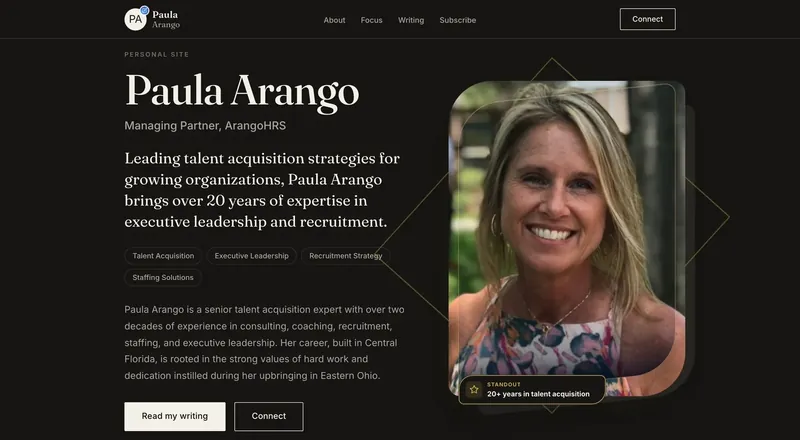
The place you control completely: your story, your services, your results and a clear way to book.
LinkedIn and a website do different jobs. There's a full breakdown in LinkedIn vs. a personal website.
4. AI assistants
More people now ask ChatGPT or Gemini "Who's a good [specialty] in [city]?" or "What do you know about [name]?" The answer comes from whatever the internet clearly says about you. Here's how to check whether ChatGPT would recommend you.
5. Reviews and testimonials
Google reviews, LinkedIn recommendations and testimonials on your site. Social proof from real clients is the most persuasive part of your brand.
The 5 places clients check before they call
Google
Your name, and your name with your specialty.
LinkedIn
Your headline and the first lines of your About.
Your own website
The one place you control completely.
AI assistants
"Who's a good [specialty] in [city]?"
Reviews and testimonials
The most persuasive part of your brand.
The 4 parts of a strong professional brand
1. A clear specialty
"Business consultant" is forgettable.
Your growth partner
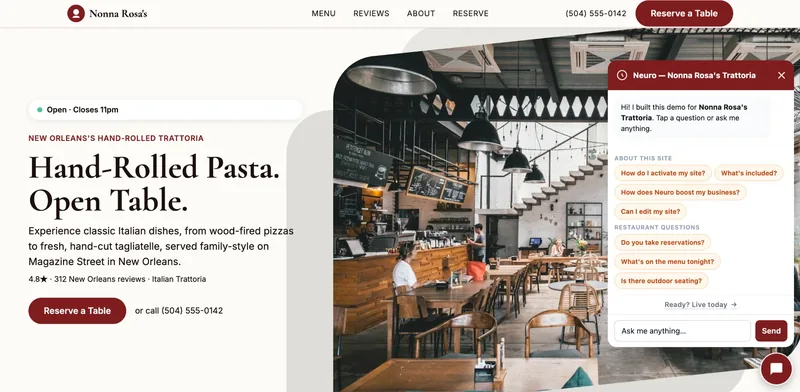
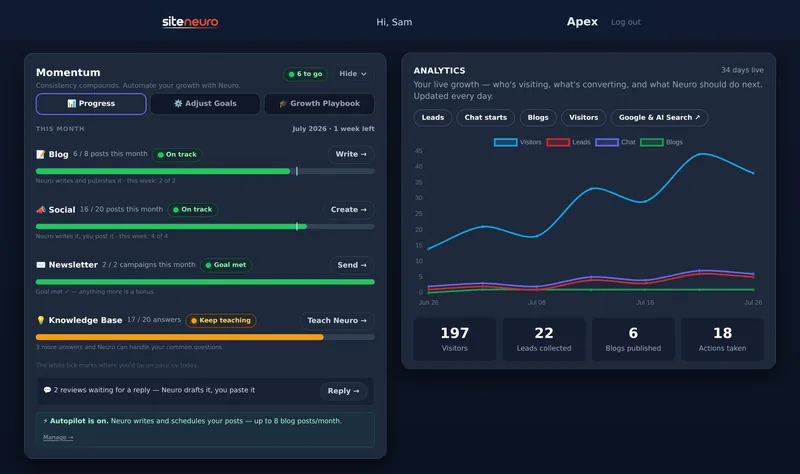
A website is the start. Neuro keeps it working.
- Built from your Google or LinkedIn
- Answers visitors, captures leads
- Drafts blog, social and newsletter
- Nothing goes out until you approve it
Rated Excellent on TrustpilotGlobal review platform · 300M+ reviews
"I help family-owned manufacturers cut production costs without layoffs" is memorable, and easy to refer.
Specific beats broad. The narrower your description, the easier it is for the right client to recognize themselves.
2. Proof
Claims are cheap. Proof is:
- Client results (with permission): before, after, numbers
- Case studies, even short ones
- Testimonials with names and roles
- Credentials and experience that matter to your clients
3. A point of view
The professionals people remember have opinions.
What do you believe that most people in your field get wrong? Say it, explain it, and back it up.
4. Consistency
Same photo, same specialty, same story everywhere: Google, LinkedIn, your website, your email signature.
Inconsistency makes people hesitate. Consistency makes you look established.
The 4 parts of a strong professional brand
A clear specialty
Specific beats broad.
Proof
Claims are cheap. Proof is what people believe.
A point of view
What most people in your field get wrong, and why.
Consistency
Same photo, specialty and story everywhere.
A 30-day personal branding plan
Week 1: Define it
- Write your one-sentence specialty: who you help, with what, and the result.
- List your three strongest client results.
- Pick one professional photo and use it everywhere.
Week 2: Fix your profiles
- Rewrite your LinkedIn headline around your specialty, not your job title.
- Rewrite the first three lines of your About section.
- Ask three past clients for a LinkedIn recommendation or a testimonial.
Week 3: Own your home base
- Get a simple personal website: your specialty, your story, your results, testimonials and a "book a call" button.
- Make sure it states your name, specialty and location in plain text, so Google and AI tools can read it.
Week 4: Be useful in public
- Publish one helpful post a week on LinkedIn: a lesson, a mistake clients make, a short case study.
- Comment thoughtfully on five posts from people your clients follow.
- Turn your best post into an article on your website.
That's it. Then keep week 4's habits going.
What to avoid
- Copying influencers. You don't need viral posts; you need the right 200 people to trust you.
- Vague claims. "Passionate about excellence" says nothing.
- Inconsistent profiles. Three different job titles across three sites look careless.
- Hiding your prices or process completely. Some transparency builds trust; total mystery creates friction.
For a deeper look at landing clients, see how to get your first 10 clients as a consultant.
Where a website fits
A personal website is the one part of your brand you fully own. LinkedIn can change its rules; your site stays yours.
SiteNeuro builds a professional's site from their LinkedIn profile, with their roles, results, skills and photo, set up for Google and AI search. Any good builder works too, as long as the site states clearly who you help and how to book.
Straight answers
What is personal branding for professionals?
Do professionals really need a personal brand?
How do I build a personal brand without social media fame?
Is LinkedIn enough for a personal brand?
How long does it take to build a personal brand?
Ready to put this to work?
Pick how much help you want. Both start with a free look at your site.
Apex Concierge $119/mo
Your website, plus a growth team every week.
- Your site in your inbox within 2 hours
- 30-minute setup call with a specialist
- Answers visitors, captures leads
- Drafts blog, social and newsletter
Essential $39/year
Just the website, done properly.
- Built from your Google or LinkedIn
- Set up for Google and AI search
- Hosting and security included
- Unlimited edits, no extra cost
Rated Excellent on TrustpilotGlobal review platform · 300M+ reviews